


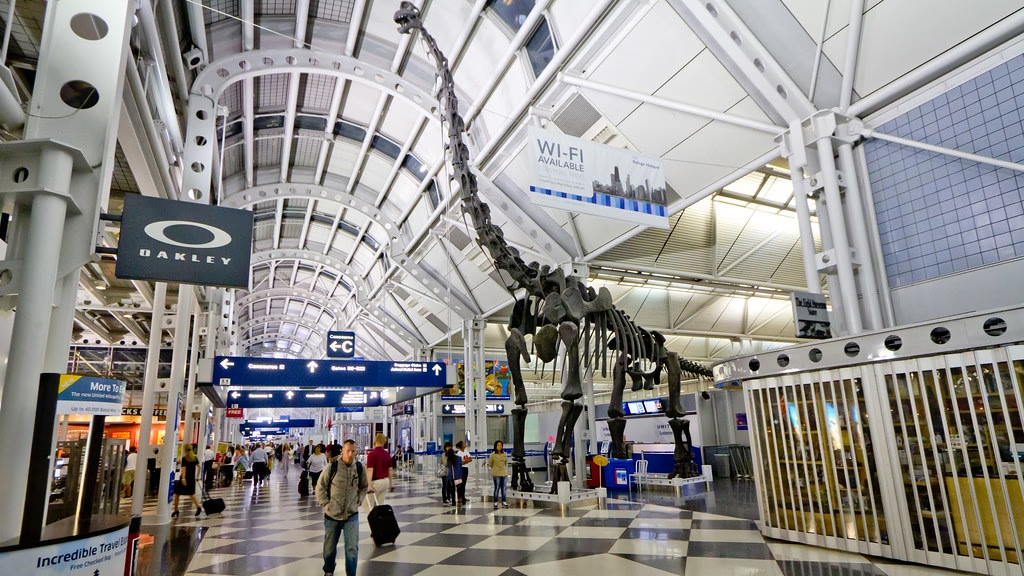
The incoming Trump administration is weighing a controversial proposal to strip international flight processing capabilities from airports located in so-called ‘sanctuary cities,’ a move that has triggered immediate alarm across the aviation and tourism industries. Homeland Security Secretary-designate Markwayne Mullin confirmed this week that the administration is evaluating the measure as a tool to exert federal pressure on municipalities that limit cooperation with federal immigration authorities.
The Policy Context
The concept of ‘sanctuary cities’ refers to jurisdictions that have adopted policies to limit local law enforcement cooperation with U.S. Immigration and Customs Enforcement (ICE). For years, these policies have been a flashpoint in American politics, but the proposal to weaponize international aviation infrastructure represents a significant escalation in federal-local tensions.
International travel requires specific federal oversight, primarily managed by Customs and Border Protection (CBP). By threatening to withdraw these federal assets, the administration could effectively force major international hubs—such as those in Los Angeles, New York, and Chicago—to cease handling flights arriving from abroad.
Economic Ripples Across Industries
Airlines and hotel operators argue that such a disruption would cause catastrophic economic damage. Industry analysts note that major hubs serve as critical nodes for global commerce, and rerouting international traffic would create a logistical nightmare for carriers and passengers alike.
‘The aviation industry operates on razor-thin margins and highly complex scheduling,’ said one industry consultant familiar with the matter. ‘Removing the ability to clear customs at a major port of entry would essentially force airlines to cancel or relocate thousands of flights, resulting in billions of dollars in lost revenue.’
The hospitality sector faces similar risks. Hotels in major metropolitan areas rely heavily on the steady stream of international visitors who contribute significantly to local tax bases. Industry data indicates that international travelers typically spend more per day than domestic tourists, making them a cornerstone of urban tourism economies.
Expert Perspectives and Regulatory Hurdles
Legal experts have already begun questioning the feasibility and legality of such a mandate. Constitutional scholars point to the Commerce Clause, which grants Congress the power to regulate interstate and foreign commerce, as a potential barrier to executive action that would unilaterally disrupt international travel.
Furthermore, the logistical burden on the federal government to relocate specialized customs personnel and equipment would be immense. ‘It is not as simple as flipping a switch,’ noted an aviation policy expert. ‘Customs facilities are integrated into the physical infrastructure of airports, and moving those operations elsewhere would require unprecedented coordination and funding.’
Implications for the Future
For the average traveler, the uncertainty surrounding this proposal is already creating friction. If implemented, the policy could lead to increased ticket prices, longer transit times, and significantly reduced connectivity for major U.S. cities.
As the transition period continues, stakeholders will be watching for specific administrative orders that might formalize these threats. Observers should monitor upcoming budget negotiations and potential litigation, as both will serve as primary battlegrounds for whether the administration can legally restrict aviation access to influence domestic policy. The industry is now preparing for a long legal and lobbying battle to maintain the stability of global travel hubs.




















Leave a Reply