


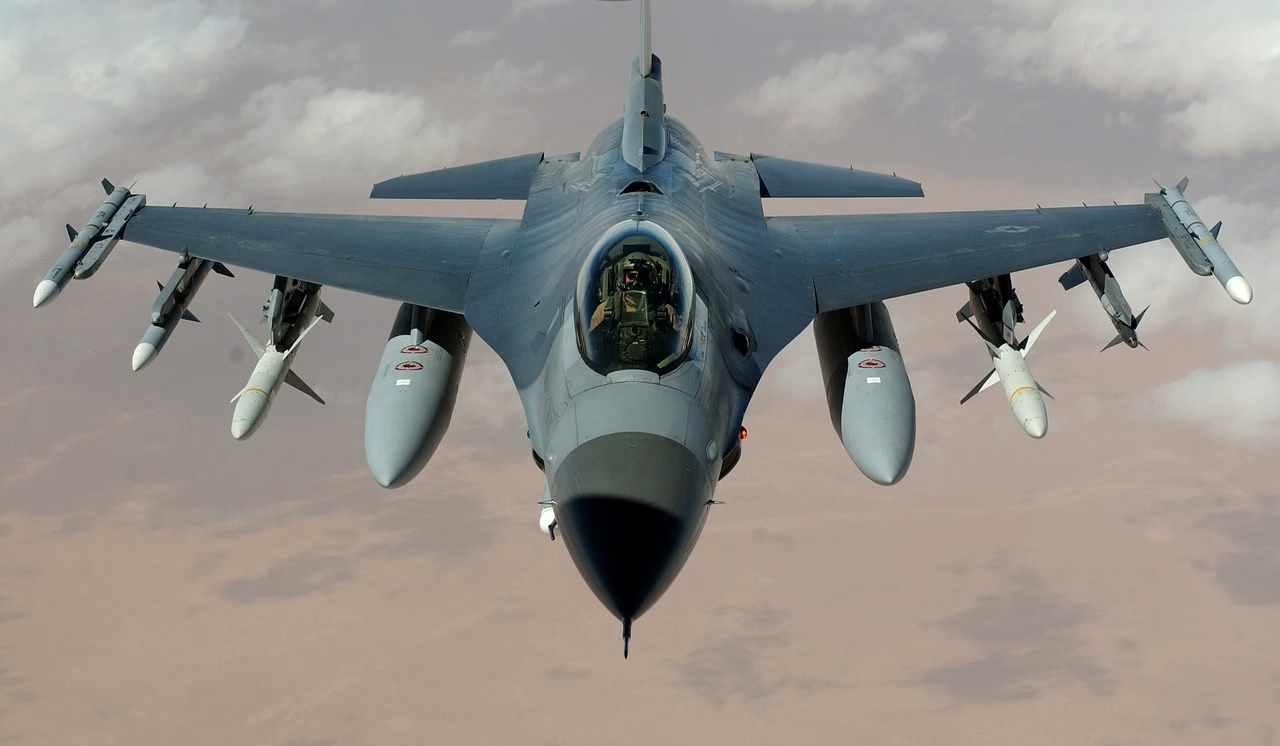
The United States military launched a new wave of airstrikes against Iranian targets across the Middle East this week following severe warnings from President Donald Trump of ‘major military punishment,’ marking a dramatic expansion of the regional conflict into strategic international shipping lanes.
Context Behind the Rising Hostilities
The latest strikes follow months of mounting tensions between Washington and Tehran over regional security, drone activity, and proxy operations. U.S. officials state that the immediate catalyst for the expanded military response was a series of targeted attacks on commercial vessels and allied defense positions in critical maritime corridors.
Previous engagements were largely localized, but recent exchanges have pushed the theater of conflict into new maritime territory. Both the Persian Gulf and adjacent international waterways have observed heightened naval presence and defensive maneuvers from international coalitions.
Defense analysts note that the rapid transition from localized retaliatory strikes to sustained air and naval operations signals a structural shift in U.S. military strategy toward Iran. The broader campaign aims to degrade Iran’s offensive launch capabilities and secure critical international trade arteries.
Logistical Buildup and Combat Preparedness
In a clear signal of preparations for extended operations, the U.S. Department of Defense relocated additional aerial refueling tankers to military installations throughout the Middle East. Aerial refuelers, such as the KC-135 Stratotanker and KC-46 Pegasus, are essential force multipliers that enable combat aircraft to execute long-range sorties and maintain continuous combat air patrols.
Simultaneously, military authorities ordered additional medical personnel and specialized trauma units to deploy to key regional facilities, including Landstuhl Regional Medical Center in Germany. Landstuhl serves as the primary evacuation hub for wounded American service members in the Europe and Middle East operational theaters.
Military logistics experts emphasize that surging both refueling assets and medical capacity typically precedes or accompanies prolonged high-intensity combat operations. These moves suggest military planners are bracing for potential counterstrikes and sustained attrition in the region.
Spillover into Strategic Waterways
The spread of hostilities into additional waterways poses an immediate threat to global maritime trade. Key maritime chokepoints, through which millions of barrels of crude oil and liquid natural gas pass daily, are now operating under elevated security threat levels.
Commercial shipping entities have begun rerouting vessels around dangerous passages, driving up operational costs and delaying global supply chains. Marine insurance providers have responded by raising war-risk premiums for vessels transiting the Middle East, further compounding economic pressures on global logistics.
Naval forces from allied nations have increased patrols to safeguard commercial traffic, but security officials acknowledge that guaranteeing total immunity against asymmetrical drone and missile threats in narrow waterways remains an immense operational challenge.
Expert Perspectives and Economic Data Points
Energy market analysts warn that prolonged instability in Middle Eastern maritime corridors could lead to severe volatility in global energy prices. Data from international energy agencies indicates that nearly 20 percent of global petroleum consumption transits through regional chokepoints currently affected by the heightened military footprint.
‘Moving refueling infrastructure and expanding casualty treatment facilities indicates the Pentagon is preparing for scenarios well beyond a brief demonstration of force,’ said Dr. Marcus Vance, a senior fellow in defense studies at the Global Security Institute. ‘This logistical footprint is designed to sustain operational pressure over weeks or months.’
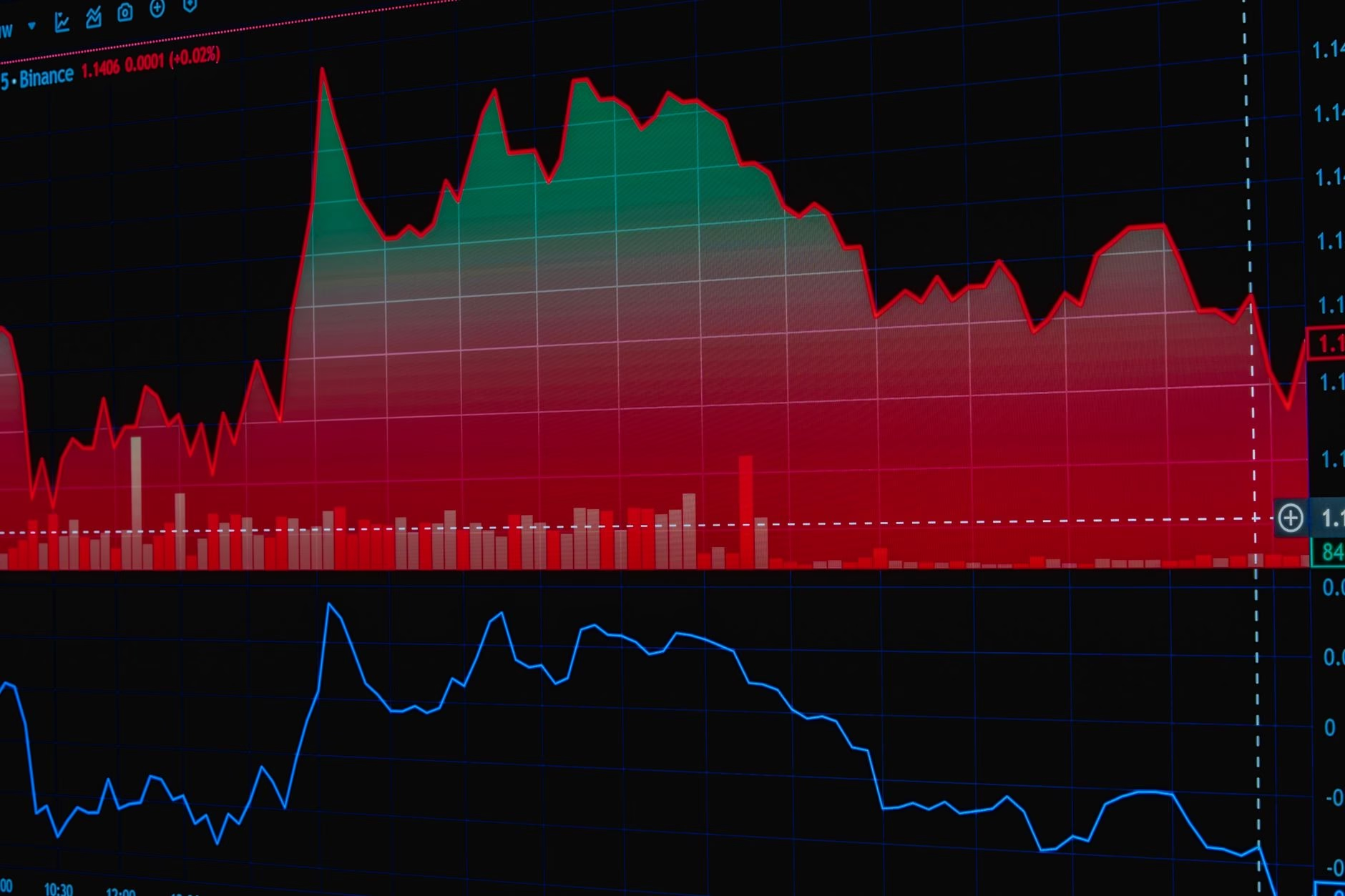
Maritime security analysts point out that commercial shipping disruptions are already manifesting in global indices, with container freight rates on Asia-to-Europe routes climbing steadily since the escalation began.
Implications for Global Markets and Defense Policy
The escalation carries profound consequences for international commerce, defense posture, and diplomatic relations worldwide. Global energy markets remain hyper-sensitive to operational developments in the region, with crude oil benchmarks reflecting heightened risk premiums.
For defense policymakers, the campaign highlights the ongoing challenge of protecting vast maritime areas against low-cost, high-impact asymmetric weapons. Governments in Asia and Europe, heavily reliant on Middle Eastern energy imports, are closely monitoring the security situation to assess potential supply disruptions.
Looking ahead, observers will be watching whether diplomatic channels can establish localized ceasefires or if the deployment of heavy U.S. logistical assets portends a prolonged conflict that could alter global supply chain dynamics and Middle Eastern geopolitical stability for years to come.



















Leave a Reply