


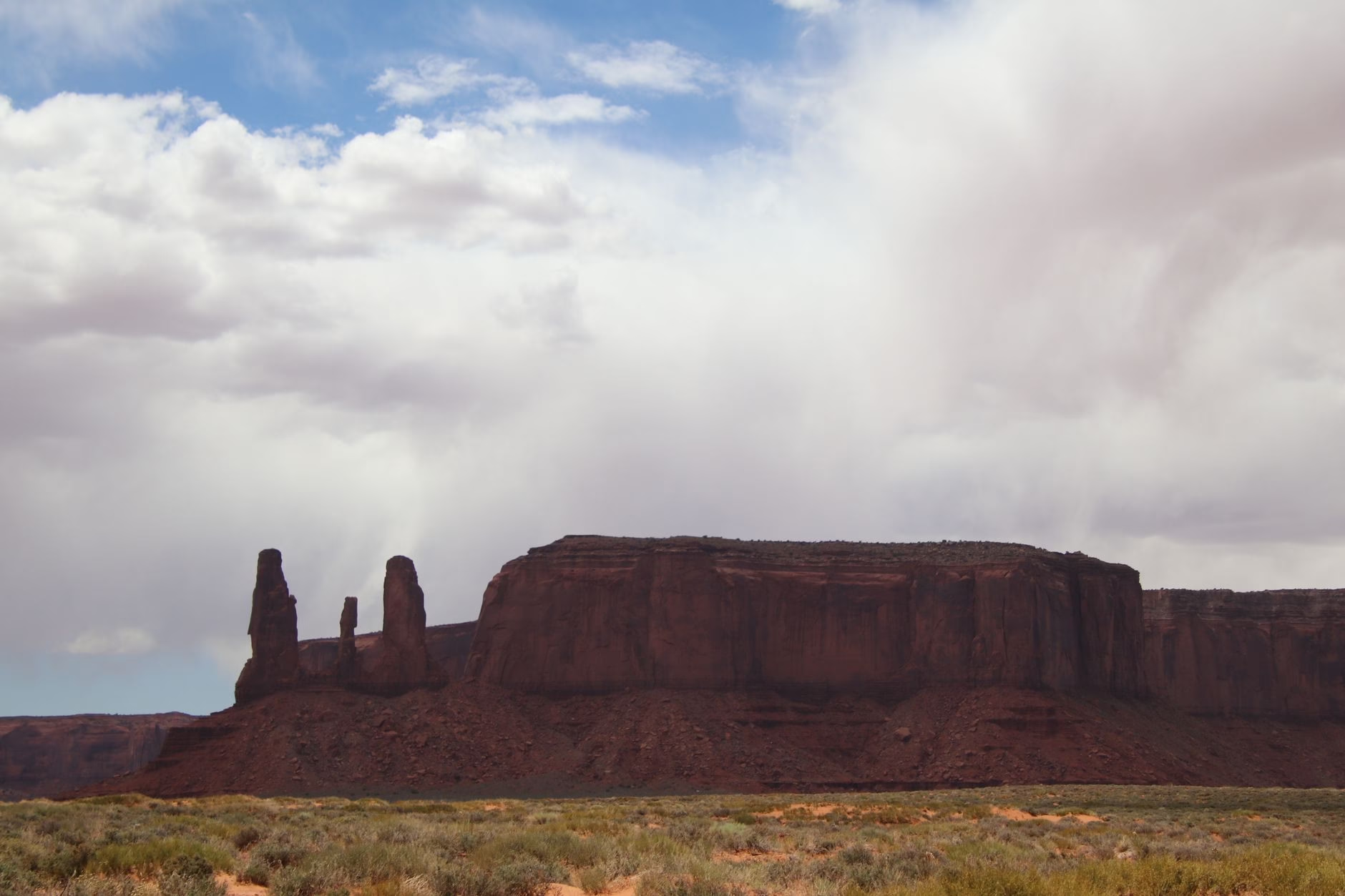
On Monday, President Donald Trump officially signed proclamations to significantly reduce the boundaries of the Bears Ears and Grand Staircase-Escalante national monuments in Utah. This sweeping executive action aims to roll back expansions made by the Biden administration and marks a major victory for Utah state officials who argue federal overreach stifles local economies. The move immediately reignites a long-standing legal and political battle over the scope of presidential authority under the 1906 Antiquities Act.
A History of Shifting Borders
The conflict over Utah’s red rock country spans decades and multiple presidential administrations. President Bill Clinton established the Grand Staircase-Escalante National Monument in 1996, and President Barack Obama designated Bears Ears in 2016, protecting millions of acres of culturally significant and ecologically fragile land.
During his first term, President Trump dramatically reduced both monuments, cutting Bears Ears by 85% and Grand Staircase-Escalante by nearly half. President Joe Biden subsequently restored and slightly expanded their original boundaries in 2021, setting the stage for the current administration’s reversal.
This back-and-forth cycle highlights how national monuments have become a volatile flashpoint in Western land-use policy. Under the Antiquities Act, presidents possess the authority to declare historic landmarks and prehistoric structures as national monuments, but the law does not explicitly state whether a president can shrink or abolish them.
The Battle Over Executive Authority and Local Control
Proponents of the reduction, including Utah’s top Republican lawmakers, argue that the original designations far exceeded the “smallest area compatible with the proper care and management” of the objects to be protected, as mandated by the Antiquities Act. They contend that massive monument designations lock up land, preventing traditional uses such as cattle grazing, motorized recreation, and mineral extraction.
Conversely, conservation groups and a coalition of Native American tribes—including the Navajo, Hopi, Zuni, Ute Mountain Ute, and Ute Indian Tribes—view the reductions as a direct assault on sacred ancestral lands. Bears Ears contains tens of thousands of archaeological sites, including ancient cliff dwellings and rock art, which tribal leaders argue require federal protection.
“These landscapes are not just scenic backdrops; they are living cultural repositories and sacred spaces,” said a representative from the Inter-Tribal Coalition in a statement responding to the order. Legal advocates for the tribes have already vowed to challenge the administration’s decision in federal court.
Legal Precedents and Economic Interests
Legal scholars point out that the core of the upcoming litigation will focus on whether the Antiquities Act grants a president the power to diminish existing monuments. While past presidents have reduced monuments on several occasions, no court has ever ruled definitively on the legality of such actions.
According to data from the Congressional Research Service, presidents have reduced national monuments 18 times in history, though none of those reductions faced the scale of legal challenges seen today. Environmental lawyers argue that Congress holds the ultimate authority over public lands under the Property Clause of the Constitution, meaning only Congress can shrink a monument once established.
The economic stakes are also high. Local communities near the monuments are divided, with some businesses relying heavily on the tourism and outdoor recreation industries fostered by monument status, while others favor the potential jobs associated with resource development and ranching.
What Lies Ahead for Public Lands
The immediate future of Bears Ears and Grand Staircase-Escalante will be decided in the federal court system, where conservationists and tribal nations are preparing to file injunctions to halt any immediate industrial development or mining claims in the excluded areas.
Industry analysts expect a surge in mining and drilling applications on the newly reopened lands, though companies may hesitate to invest heavily given the regulatory uncertainty and the potential for future policy reversals.
This ongoing tug-of-war suggests that the destiny of American public lands remains bound to the shifting tides of presidential administrations, leaving conservationists, local communities, and energy developers in a state of perpetual limbo. Observers will be watching closely to see if the Supreme Court ultimately takes up the case to establish a permanent precedent on the limits of executive power under the Antiquities Act.


















Leave a Reply