



A Collision of Sports and Politics
In the vibrant heart of Los Angeles, known colloquially as ‘Tehrangeles,’ Iranian expatriates gathered in record numbers this week to watch the national team face New Zealand in a high-stakes World Cup draw. While the match ended in a 2-2 scoreline, the event served as a flashpoint for a deeply divided diaspora, with many attendees brandishing the pre-1979 lion and sun flag as a pointed act of protest against the Islamic Republic.
The Weight of History in Los Angeles
Los Angeles hosts the largest concentration of Iranians outside of Iran, with estimates suggesting hundreds of thousands reside in the region. For decades, this community has acted as a mirror to the political tensions within their home country, balancing cultural pride with deep-seated grievances regarding the current regime. The World Cup, typically a unifying event, has increasingly become a stage for these geopolitical fractures to surface on a global platform.
A Divided Fanbase
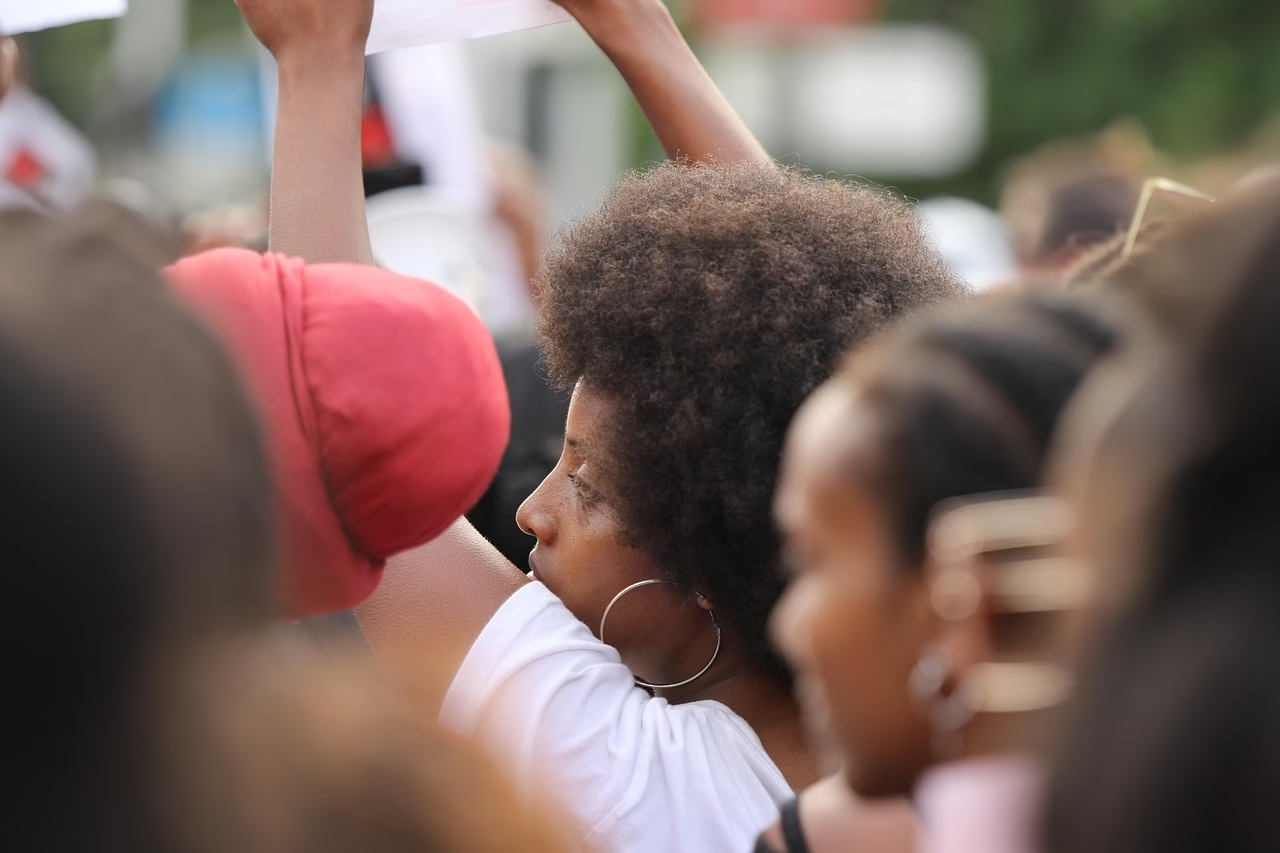
The atmosphere inside the viewing venues reflected a complex spectrum of allegiances. Some spectators wore the current official jersey of the national team, focusing purely on the athletic performance of the players. Others, however, viewed the team as a proxy for the Iranian state, choosing to use the international spotlight to highlight domestic human rights concerns.
“We are here for the players, but we cannot ignore the reality of what is happening back home,” said one attendee who requested anonymity. The presence of the lion and sun flag—a symbol banned by the current Iranian government—signaled a clear rejection of the political status quo for a significant portion of the crowd.
Expert Analysis on Sports Diplomacy
Political analysts note that sporting events are rarely immune to the political climate of the nations involved. According to data from the Center for Strategic and International Studies, international tournaments often serve as rare opportunities for diaspora groups to organize and express dissent when domestic avenues are restricted.
“The sports arena has become a surrogate space for political discourse,” explains Dr. Arash Azadi, a professor of Middle Eastern studies. “When the state controls the media at home, the diaspora takes on the role of the voice of the people, utilizing global events to bypass internal censorship.”
Broader Implications for the Diaspora
For the average fan, the tension creates a difficult paradox. The desire to celebrate national identity is frequently clouded by the necessity of political advocacy. This friction is expected to persist as long as the political instability in Iran remains unresolved, turning every future match into a potential site of activism.
Industry observers suggest that the coming months will likely see more organized displays of protest during international sporting events. As global attention remains fixed on Iran, the diaspora in cities like Los Angeles will continue to be a critical barometer for the sentiments of the Iranian people, potentially influencing how international organizations view the legitimacy of state-sponsored sports teams.













Leave a Reply