


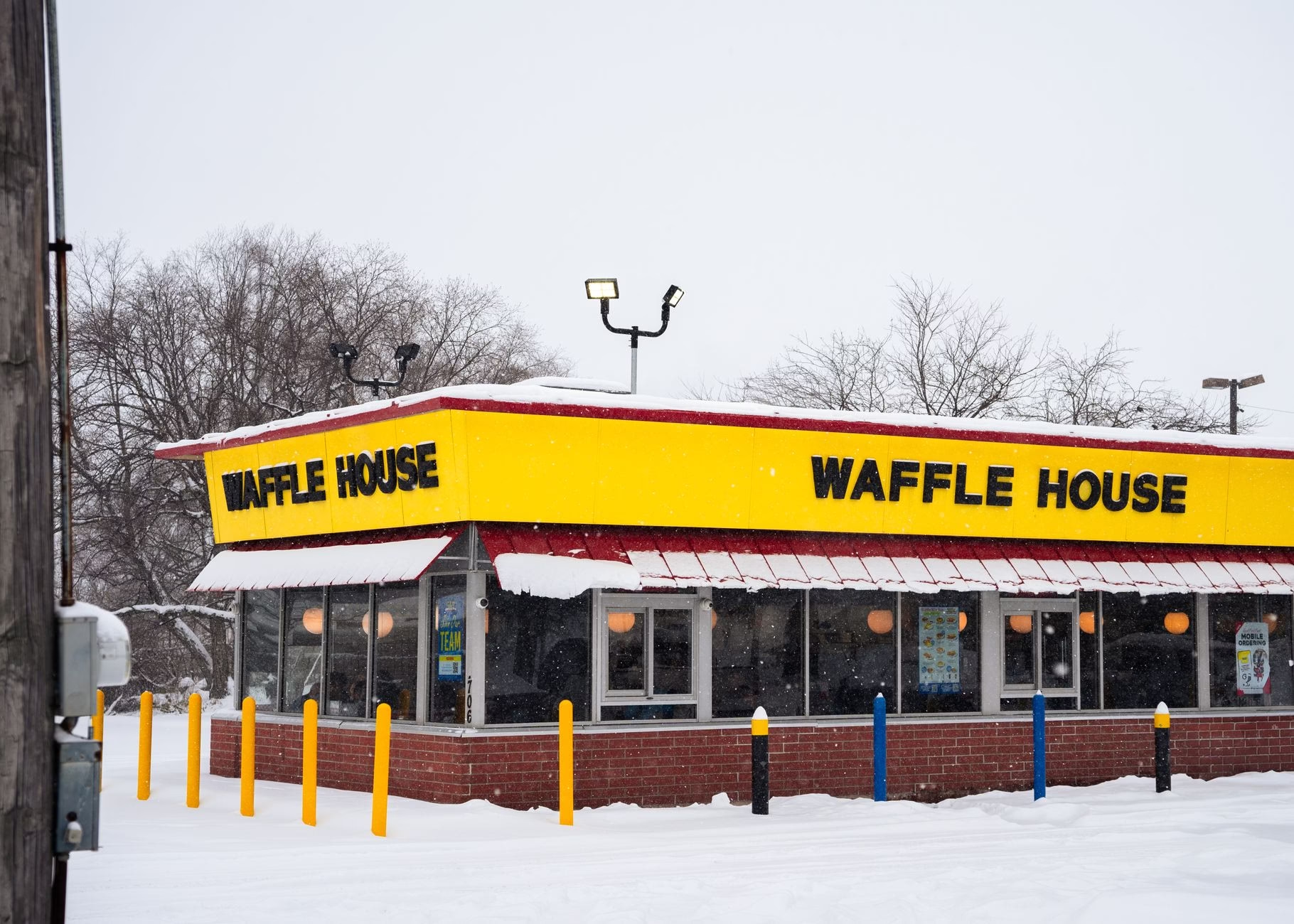
Severe weather events in the Southeastern United States often prompt unique community responses. Beyond official meteorological reports and local government alerts, residents frequently look to an unexpected casual dining establishment for real-time information. The operational status of the popular 24-hour restaurant chain has evolved into an informal yet surprisingly reliable gauge of natural disaster severity.
Understanding the Informal Metric
The concept revolves around the restaurant brand’s legendary commitment to remaining open under extreme conditions. When severe weather threatens a region, the business establishes protocols to maintain operations for as long as safety allows. Because these establishments are deeply embedded in communities throughout the hurricane-prone South, their immediate neighborhood presence makes them ideal observation points for assessing local infrastructure damage and utility availability.
Categorizing Operational Status
Emergency management personnel and locals generally divide the operational capacity into three distinct tiers. The green status indicates that the location is operating at full menu capacity, meaning power remains stable and supply chains are intact. A yellow status signifies a restricted menu, typically indicating that the restaurant is operating on backup generator power or dealing with limited food supplies due to disrupted delivery routes.
The red status represents the most severe scenario. When a location closes entirely, it serves as a stark indicator that local conditions have become too dangerous, infrastructure has failed catastrophically, or extensive structural damage has occurred in the immediate area. A closure of these normally resilient restaurants signals to disaster response teams that the surrounding community has likely sustained heavy impacts from the storm.
Utility of the Metric for Emergency Response
Emergency response agencies monitor commercial resilience patterns to allocate resources effectively. When primary communication channels fail during the initial hours following a major storm landfall, actionable ground-level data can be scarce. Observing which commercial hubs remain functional helps authorities identify areas where basic services might still be accessible or where immediate humanitarian assistance is most urgently required.
The philosophy behind this operational resilience stems from emergency preparedness planning. The organization maintains dedicated disaster response teams and mobile food units that can deploy rapidly into affected zones. This logistical readiness ensures that communities recovering from severe weather can access basic hot meals and safe spaces, reinforcing the establishment’s role as a cornerstone of local disaster recovery.
Broader Implications for Community Resilience
While the concept started as an internal management tool for tracking restaurant readiness during crises, it has captured public imagination as a symbol of Southern endurance. Residents facing impending hurricanes often track the status of nearby locations as part of their personal decision-making process regarding evacuation and storm preparation.
Ultimately, this unconventional barometer highlights how communities adapt to recurring environmental challenges. By combining corporate preparedness with local observation, residents and emergency planners gain an additional layer of insight when navigating the unpredictable nature of severe regional storms.





















Leave a Reply