


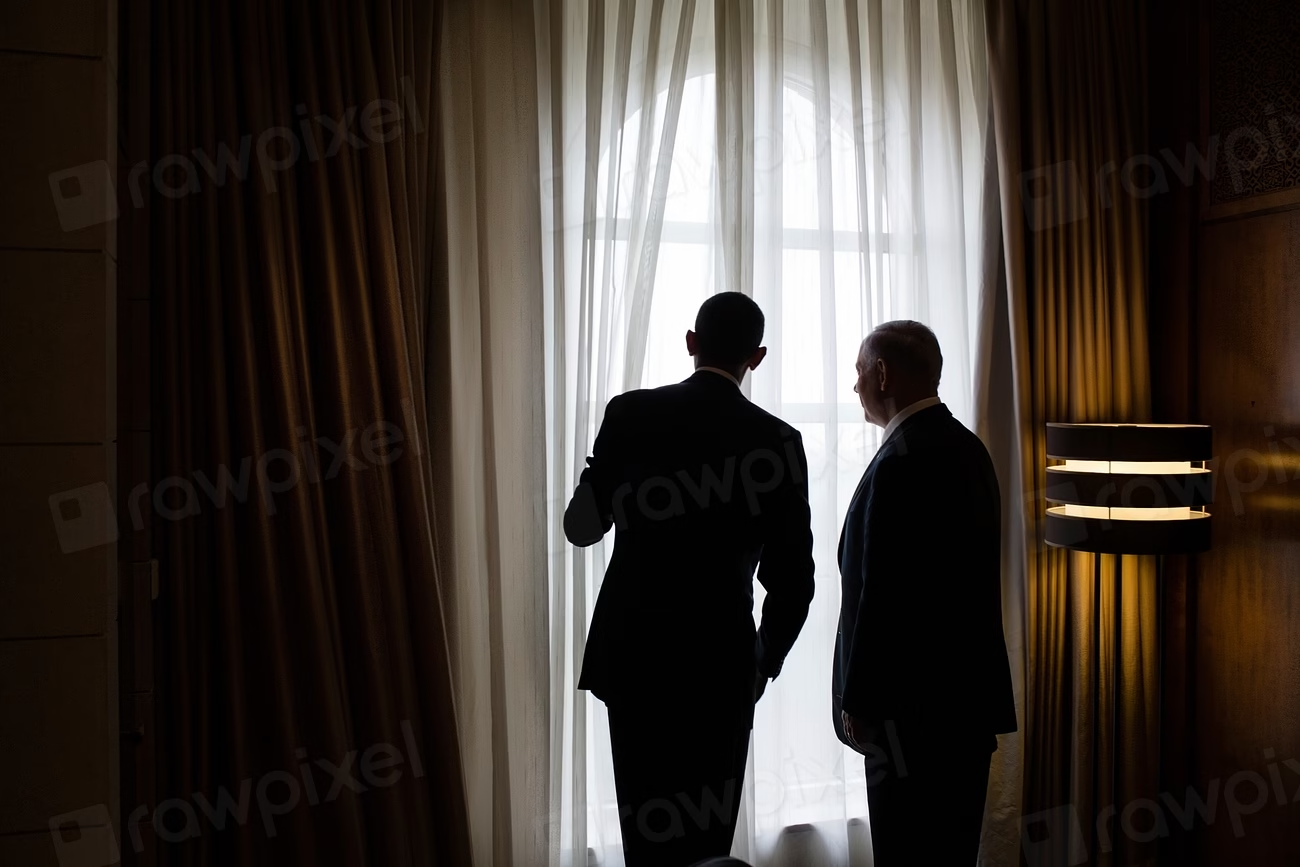
Israeli Prime Minister Benjamin Netanyahu is currently grappling with a severe convergence of domestic political volatility and frayed international alliances following a night of direct military exchanges between Israel and Iran. As regional tensions escalate, the Prime Minister faces mounting pressure from a disillusioned Israeli public demanding security and accountability, while simultaneously navigating a cooling relationship with U.S. President-elect Donald Trump, who has expressed frustration over the ongoing conflict’s trajectory.
The Weight of Regional Escalation
The recent direct strikes between Israel and Iran mark a significant departure from the shadow war that has defined the two nations’ interactions for decades. By moving the conflict into the open, Netanyahu has shifted the security landscape, forcing his administration to justify the necessity of high-stakes military engagements to an exhausted Israeli electorate.
Domestically, the Prime Minister’s coalition government remains fragile, with public protests intensifying over the handling of the war and the fate of hostages held in Gaza. Political analysts suggest that the ongoing security crisis has exacerbated existing divisions, leaving Netanyahu’s approval ratings at historic lows as voters scrutinize his strategic decision-making.
Shifting Geopolitical Sands
Internationally, the dynamic between Jerusalem and Washington has undergone a noticeable shift. While the United States has historically provided unconditional support for Israel’s defensive maneuvers, recent reports indicate that Donald Trump has grown increasingly critical of the prolonged nature of the fighting.
Trump’s recent rhetoric suggests a desire for a swift conclusion to regional hostilities, a stance that complicates Netanyahu’s objective of achieving a decisive military victory. This friction creates a precarious position for the Israeli leader, who must balance the demands of his right-wing cabinet with the expectations of his most critical strategic ally.
Expert Analysis and Economic Impact
Security experts note that the direct exchange of fire has forced a recalibration of regional deterrence strategies. “The move from clandestine operations to overt missile barrages has fundamentally altered the risk profile for every nation in the Middle East,” says Dr. Elena Rossi, a senior analyst at the Institute for Strategic Studies.
Beyond the geopolitical implications, the Israeli economy is feeling the strain of sustained mobilization. Data from the Bank of Israel indicates that the cost of the conflict, coupled with the disruption of key industries, has significantly impacted the national budget and slowed quarterly growth projections.
Future Outlook and Strategic Hurdles
The coming weeks will prove critical as Netanyahu attempts to stabilize his domestic coalition while avoiding a total breakdown in communication with the incoming Trump administration. Observers are closely watching how the Prime Minister manages the potential for further direct engagement with Iran, as any miscalculation could trigger a wider regional war that would further alienate international partners.
Market volatility remains a primary concern for local businesses, with investors waiting for signs of a long-term cease-fire or a clear de-escalation roadmap. The central question remains whether Netanyahu can pivot from a war-time footing to a diplomatic strategy that satisfies his domestic critics without sacrificing the security posture he has built his career upon.























Leave a Reply