


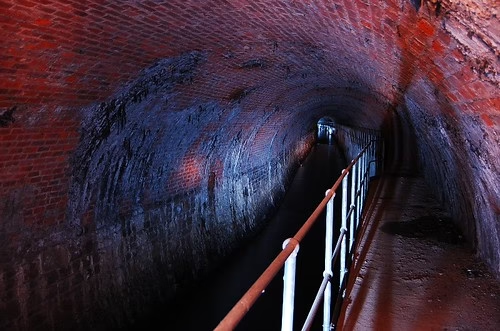
The Reality of Urban Exploration
In New York City, a small subculture of urban explorers continues to risk arrest and physical harm to navigate the city’s vast, aging sewer network, revealing a subterranean world defined by toxic air, structural instability, and pervasive insect infestations. Recent accounts from former explorers highlight that while the physical dangers of the tunnels are well-documented, the psychological toll—specifically the overwhelming presence of cockroaches—remains the most harrowing aspect of the experience.
A Legacy of Infrastructure
New York City’s sewer system is a sprawling, 19th-century marvel that spans roughly 7,500 miles of pipe. Much of this infrastructure predates modern safety standards, creating a labyrinthine environment that was never intended for human occupation. Historically, these tunnels have served as a forbidden playground for those seeking to document the city’s “hidden history,” despite the constant threat of flash flooding, methane gas pockets, and collapse.
The Sensory and Biological Challenge
While the threat of drowning or structural failure occupies the minds of safety officials, explorers report that the biological reality is far more visceral. Former explorers describe a sensory overload defined by stagnant, noxious air and a persistent, damp darkness. Contrary to popular folklore regarding rats, veterans of these expeditions emphasize that the sheer volume of cockroaches is the most distressing element of the journey.
These insects often coat the walls and ceilings in such density that they create a shifting, undulating texture. The sound of their movement, coupled with the humidity of the tunnels, creates an environment that many find impossible to ignore, regardless of their preparedness for the physical dangers of the architecture.
Expert Perspectives on Tunnel Hazards
Urban safety experts caution that the risks of entering these spaces extend far beyond the immediate discomfort of pests. According to data from the New York City Department of Environmental Protection, the sewer system is prone to rapid water level spikes, especially during rainfall, which can turn a dry tunnel into a high-velocity torrent within minutes. Furthermore, the presence of hydrogen sulfide gas poses a lethal threat to those without specialized breathing apparatus, as the gas can quickly overwhelm an individual’s sense of smell before causing unconsciousness.
Implications for Urban Safety
The allure of the “underground” reflects a growing interest in extreme tourism, yet the legal and safety consequences are severe. Trespassing into municipal infrastructure carries heavy fines and potential incarceration, complicating the city’s efforts to maintain security in a post-9/11 landscape. For the city, the continued intrusion of explorers forces a constant diversion of resources toward surveillance and infrastructure hardening.
Moving forward, the tension between urban exploration and municipal security is expected to intensify as high-resolution mapping technology makes these hidden spaces easier to locate. Observers should watch for increased sensor deployment within the sewer network, which may serve the dual purpose of monitoring water quality and detecting human movement in restricted zones.



















Leave a Reply