



The United States and Iran are engaged in a cycle of retaliatory military strikes across the Middle East, a situation that has effectively stalled diplomatic efforts to reach a de-escalation agreement. As of this week, the ongoing exchanges in the Persian Gulf and the intensification of Israel’s military campaign in Lebanon have created a volatile security environment that threatens to derail weeks of fragile negotiations aimed at curbing regional hostilities.
The Fragile State of Diplomacy
The current diplomatic impasse follows months of back-channel communications intended to establish a framework for regional stability. However, the alignment of various proxy militias and state actors has complicated the path forward, making a singular agreement increasingly elusive.
Negotiators have struggled to reconcile the conflicting demands of both nations. While the U.S. continues to push for a cessation of attacks against its military outposts, Tehran maintains that regional stability is inextricably linked to the broader geopolitical outcomes in Lebanon and the Gaza Strip.
Escalating Military Engagements
The intensity of the latest strikes marks a departure from the calculated, low-level skirmishes seen earlier this year. Military analysts note that the use of advanced drone technology and precision-guided munitions by Iranian-backed groups has forced the U.S. to maintain a heightened defensive posture across the Gulf.
According to data from the Center for Strategic and International Studies, the frequency of maritime and aerial provocations has increased by 15% since the beginning of the current quarter. This uptick in activity suggests that traditional deterrence strategies are facing significant pressure from non-state actors operating with increased autonomy.
The Impact of the Lebanon Conflict
The broadening war in Lebanon serves as a critical catalyst for the current friction. Because the U.S. remains a primary security guarantor for Israel, Tehran views the expansion of that conflict as a direct challenge to its regional influence.
Security experts suggest that the interconnected nature of these conflicts means that a localized ceasefire is unlikely. “The regional theater is currently operating as a single, integrated battleground,” noted a senior fellow at the Atlantic Council. “Any event in Lebanon inevitably reverberates through the diplomatic channels in the Gulf, creating a cascading failure of peace talks.”
Economic and Global Implications
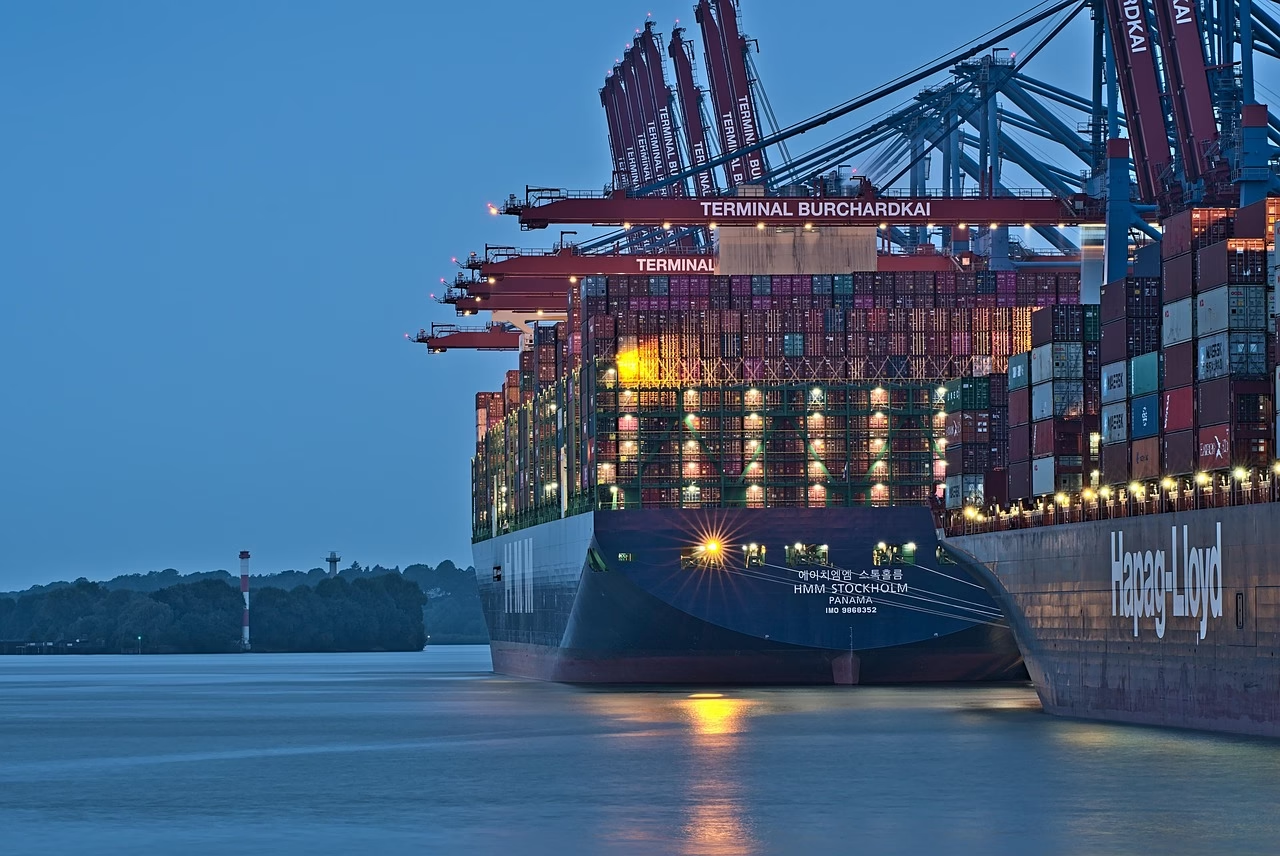
For the global community, the persistent instability poses a clear risk to energy markets and international shipping lanes. The Strait of Hormuz remains a focal point of concern, as any significant escalation could disrupt the flow of oil, leading to immediate volatility in global commodity prices.
Industry analysts warn that shipping insurance premiums for vessels operating in the region have already begun to climb. This economic friction is expected to persist as long as the diplomatic deadlock continues, forcing companies to reconsider their supply chain logistics in the Middle East.
Looking Toward the Future
Observers are now focused on whether the U.S. and Iran will attempt to compartmentalize their regional disputes or if the current cycle of violence will necessitate a complete restructuring of the negotiation process. Upcoming high-level summits in Europe may provide a final window for a breakthrough before the end of the year.
Attention is currently shifting toward potential back-channel mediators, such as Oman and Qatar, who have historically facilitated communication between Washington and Tehran. Whether these intermediaries can bridge the widening gap between the two powers remains the most critical variable in preventing a broader regional confrontation.























Leave a Reply