



The 2026 Middle Corridor Pivot: Why Your Supply Chain Just Moved to Central Asia
As of May 2026, the global logistics map has been redrawn. With the Red Sea remaining a high-risk zone and Northern rail routes through Russia effectively siloed by expanded sanctions, the Middle Corridor (Trans-Caspian International Transport Route – TITR) has moved from a theoretical backup to a primary trade artery for 2026.
The Current Event: The ‘May Breakthrough’ in Baku
This month, the completion of the digital customs integration between Kazakhstan, Azerbaijan, and Georgia has reduced transit friction by 30%. For business owners and logistics managers, this means the ‘bottleneck’ reputation of the Caspian Sea is fading. Goods moving from Shenzhen to Duisburg via the Middle Corridor are now averaging 12–15 days, competing directly with ocean freight that is still dodging drones in the Bab el-Mandeb.
Why This Matters for Your Business
- For Logistics Managers: If you are still relying on Suez-heavy routes, your lead times are volatile. The Middle Corridor offers a fixed-rail and ferry alternative that avoids the Cape of Good Hope detour.
- For Investors: Infrastructure bonds in Kazakhstan (KZT) and Azerbaijan (AZN) are seeing high yields as the EU’s Global Gateway initiative pours billions into Caspian port expansions.
- For Freelancers/E-commerce: Shipping costs for small-batch electronics and textiles from Central Asian hubs are stabilizing, while ocean freight surcharges remain unpredictable.
Strategic Risk: What Could Go Wrong?
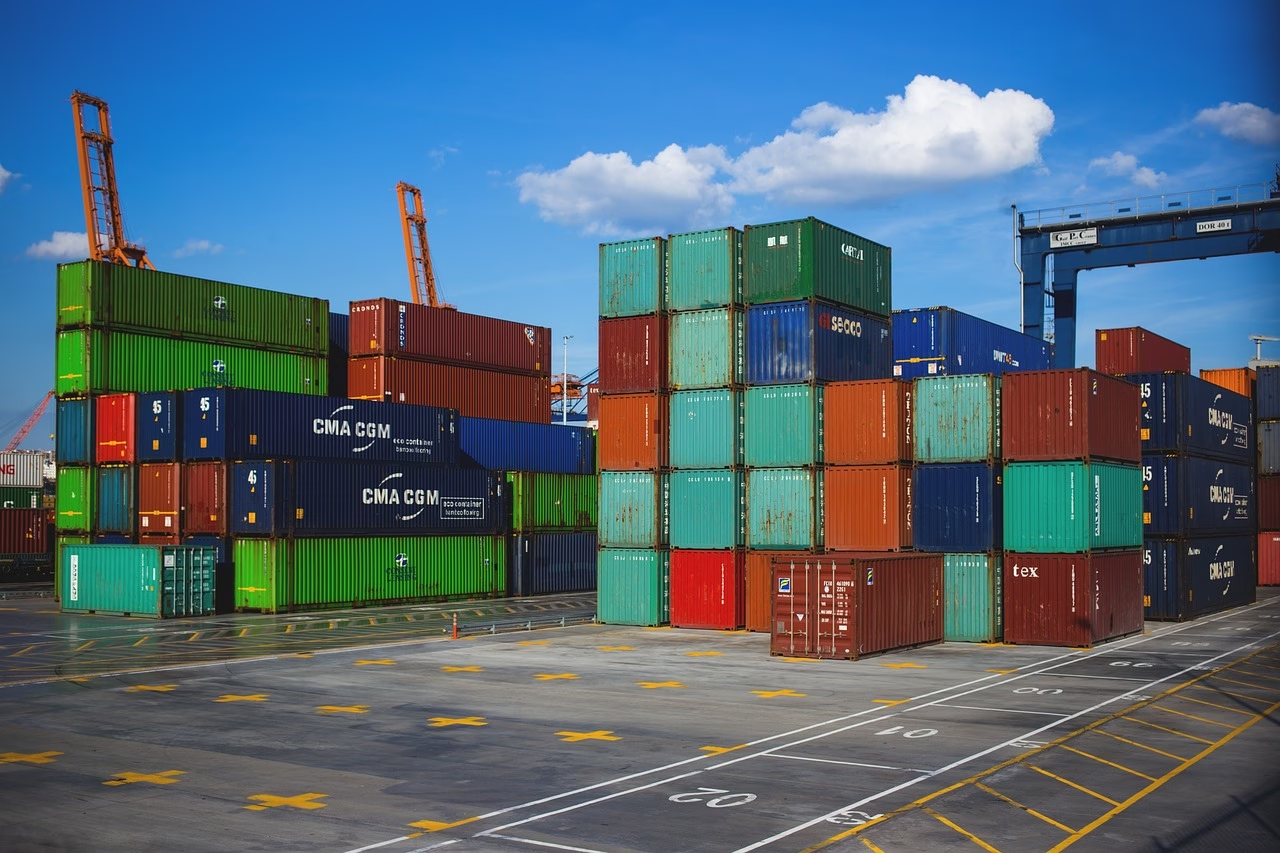
The primary risk isn’t pirates; it’s geopolitical congestion. As everyone rushes to the Middle Corridor, the ports of Aktau and Baku are hitting capacity. Furthermore, any flare-up in the South Caucasus could freeze this route instantly. You are trading maritime kinetic risk for terrestrial political risk.
How to Track This (Real-World Tools)
To monitor this shift in real-time, do not wait for the evening news. Use the tools the pros use:
- ACLED Data (Armed Conflict Location & Event Data Project): Filter for the South Caucasus and Central Asia. Watch for “protest” or “state interference” events that signal labor strikes at ports.
- The Middle Corridor Official Portal (TITR.org): Use their live ‘Transit Calculator’ to compare current lead times against historical averages.
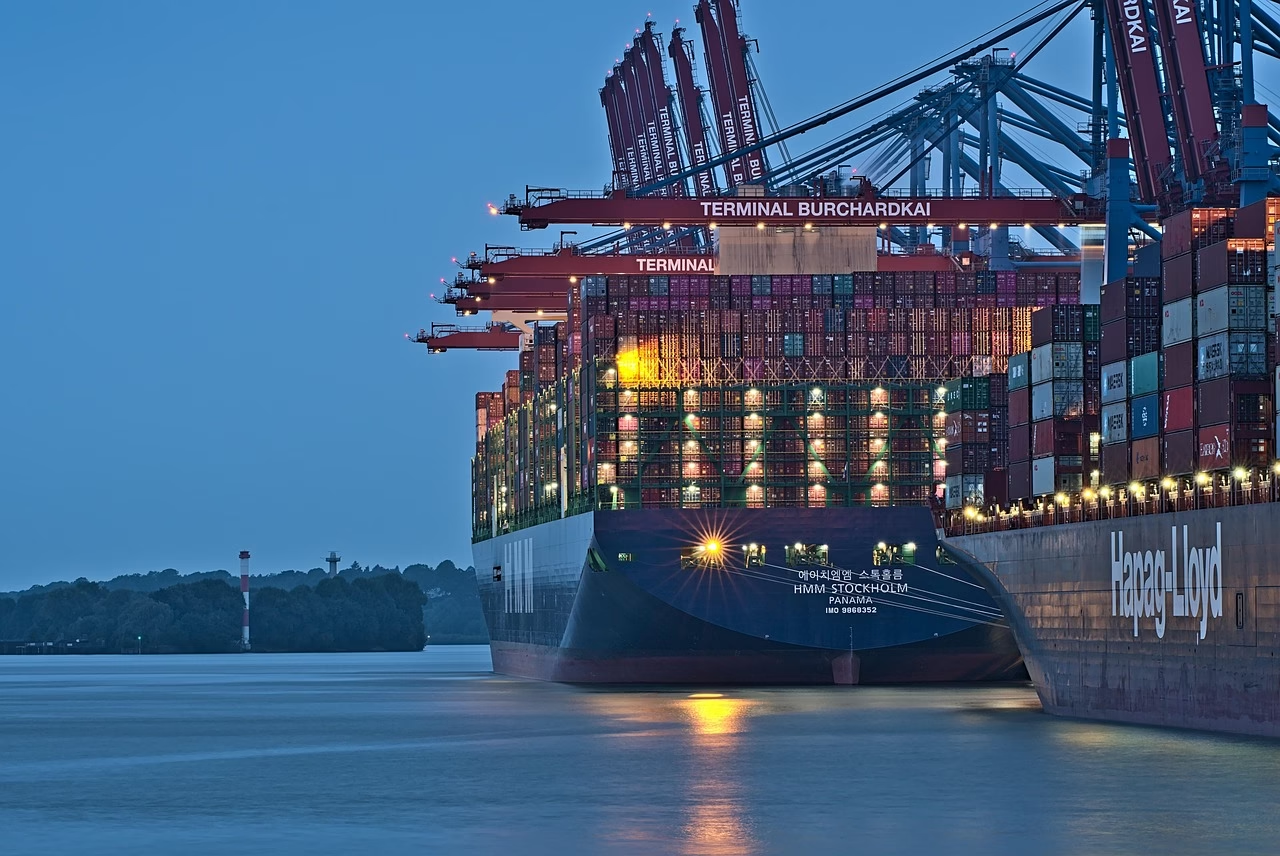
- MarineTraffic (Caspian Sea Filter): Track the number of Ro-Ro (Roll-on/Roll-off) vessels waiting outside the Port of Baku. If the queue exceeds 10 ships, expect a 5-day delay in your supply chain.
The 2026 Action Plan
- Diversify Port Entry: If you ship to Europe, split your cargo. Route 20% through the Middle Corridor to establish a relationship with Caspian freight forwarders.
- Currency Hedge: If you are dealing with regional logistics providers, hedge against the Georgian Lari (GEL) and Kazakh Tenge (KZT), as increased trade volume is driving local inflation.
- Review Insurance: Ensure your ‘Goods in Transit’ insurance specifically covers ‘Intermodal Rail-Sea Transfers’ in non-EU territories.
























Leave a Reply