


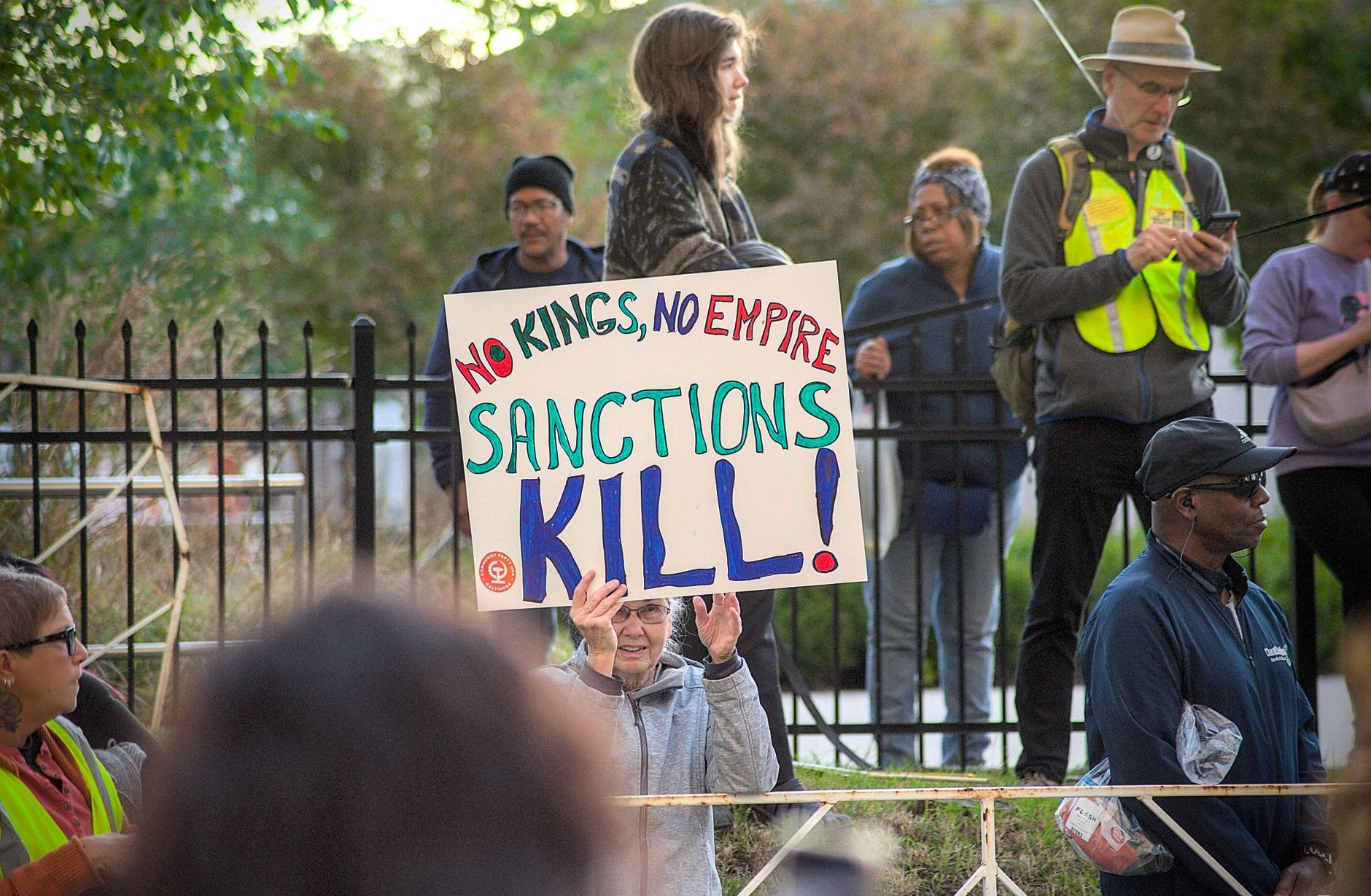
The United States is poised to implement a new round of economic measures against Iran, described by Treasury Secretary Scott Bessent as the “greatest financial offensive” ever undertaken. This impending announcement signals a significant escalation in Washington’s strategy to exert pressure on Tehran, with potential far-reaching implications for global finance and geopolitical stability. The declaration of an “economic D-Day” underscores the comprehensive and impactful nature of the anticipated sanctions, aiming to reshape economic interactions with the Islamic Republic.
Understanding Economic Sanctions
Economic sanctions are punitive measures imposed by one or more countries against another nation, group, or individual. Their primary purpose is to compel a change in behavior, often related to foreign policy, human rights, or nuclear proliferation. These measures can take various forms, including trade restrictions, asset freezes, travel bans, and limitations on financial transactions. They are a tool of foreign policy, designed to achieve specific objectives without resorting to military intervention. The effectiveness of sanctions often depends on their scope, the willingness of other international actors to comply, and the target country’s economic resilience.
Historical Context of US-Iran Economic Pressure
The relationship between the United States and Iran has been marked by periods of intense tension and the recurrent application of economic sanctions. Following the 1979 Iranian Revolution, the U.S. imposed its first set of sanctions. Over the decades, these measures have evolved, targeting various sectors of the Iranian economy, including its oil industry, banking system, and access to international financial markets. Past sanctions have aimed to curb Iran’s nuclear program, support for regional proxies, and human rights record. The impending “greatest financial offensive” builds upon this complex history, indicating a renewed and intensified approach to economic pressure.
The Nature of a “Financial Offensive”
When a Treasury Secretary refers to a “greatest financial offensive,” it suggests a multi-faceted and highly coordinated effort to disrupt a nation’s economic lifelines. Such an offensive typically involves targeting key revenue streams, particularly the energy sector, which is vital for Iran’s economy. It could also entail stringent measures against the country’s central bank and other financial institutions, aiming to restrict access to the global financial system. Furthermore, secondary sanctions, which penalize foreign entities for doing business with sanctioned Iranian entities, are often a crucial component, extending the reach of U.S. financial restrictions globally. The goal is to isolate the target economy and make it exceedingly difficult for it to conduct international trade and financial transactions.
Potential Objectives and Mechanisms
The objectives behind such a significant economic offensive are typically multifaceted. They often include compelling a change in specific policies, such as halting nuclear enrichment activities, ceasing support for certain regional groups, or improving human rights. Another objective might be to degrade the target country’s capacity to fund activities deemed destabilizing. The mechanisms employed are likely to be comprehensive, potentially involving freezing assets of key individuals and entities, banning transactions with designated Iranian banks, and imposing strict export controls. The U.S. Treasury Department, with its extensive authority, plays a central role in identifying targets, issuing regulations, and enforcing compliance, often leveraging the dollar’s dominance in global finance.
Anticipated Economic Impact on Iran
The implementation of a “greatest financial offensive” is expected to have a profound impact on Iran’s economy. Restricting access to international banking systems can severely impede trade, making it difficult for Iranian businesses to import essential goods or export non-oil products. Measures targeting the oil sector, if effective, would significantly reduce the government’s primary source of revenue, potentially leading to budget deficits and currency depreciation. The cumulative effect could be increased inflation, unemployment, and a general decline in living standards for ordinary citizens. While the Iranian economy has shown resilience in the face of past sanctions, a “greatest financial offensive” implies an unprecedented level of economic pressure.
Geopolitical Ramifications
Beyond the immediate economic effects, these new sanctions carry significant geopolitical weight. Such a move could heighten tensions in the Middle East, potentially influencing regional conflicts and alliances. International reactions will also be critical; while some allies may align with the U.S. position, others might express concerns about the extraterritorial reach of U.S. law or the humanitarian impact. The sanctions could also prompt Iran to seek closer economic and political ties with non-Western powers, potentially altering global power dynamics. The “economic D-Day” moniker suggests a deliberate and strategic maneuver with broad international implications.
Challenges and Considerations
Implementing such extensive sanctions is not without its challenges. One major consideration is the potential for humanitarian consequences, as broad economic restrictions can inadvertently affect the availability of essential goods like medicine and food. There is also the risk of sanctions evasion, where entities find alternative, often illicit, channels to conduct trade and finance. Furthermore, the effectiveness of sanctions can be debated; while they can inflict economic pain, they do not always achieve their desired policy outcomes and can sometimes lead to unintended consequences, such as increased domestic repression or a hardening of resolve in the target country. Maintaining international consensus and enforcement will be crucial for the success of these measures.
Conclusion
The impending “greatest financial offensive” against Iran, as articulated by Treasury Secretary Scott Bessent, marks a pivotal moment in international relations. These comprehensive economic measures are designed to exert maximum pressure on Iran, aiming to compel significant policy shifts. While the specific details of the sanctions are yet to be fully unveiled, the rhetoric surrounding them indicates an unprecedented scale of economic engagement. The global community will closely watch the implementation and effects of these measures, as they are poised to redefine economic interactions with Iran and potentially reshape the geopolitical landscape of the Middle East and beyond.





















Leave a Reply