


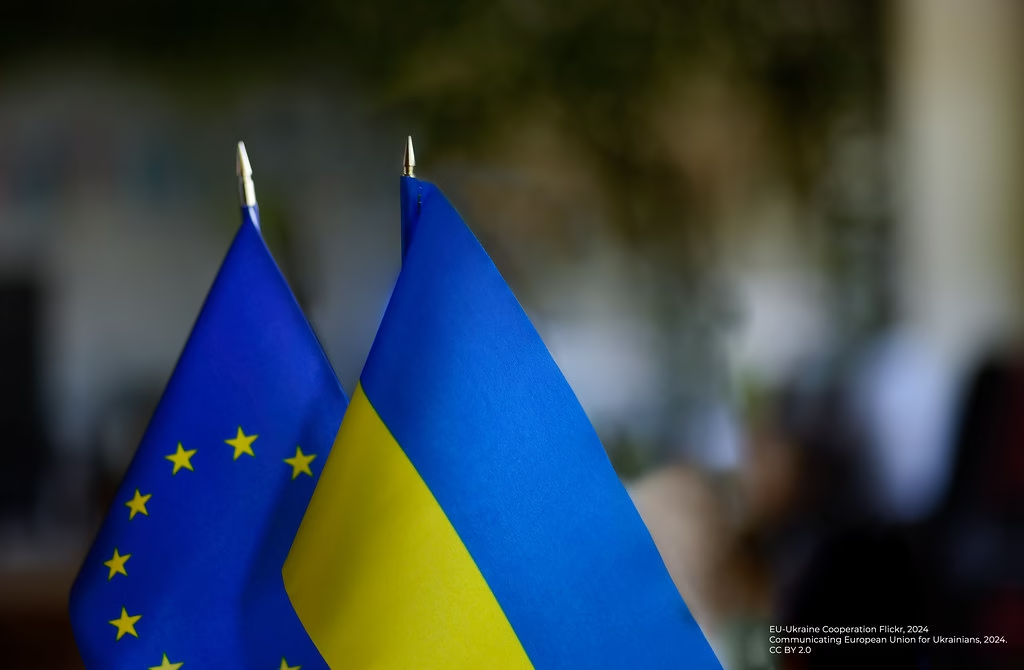
Ukraine officially initiated the first stage of European Union membership negotiations this week in Luxembourg, marking a historic geopolitical shift for the nation amidst its ongoing conflict with Russia. The intergovernmental conference, held on June 25, 2024, signaled the formal commencement of the accession process, a move that aligns Kyiv closer to Western economic and political structures than at any point in its history.
The Road to Accession
The path to this moment began shortly after the full-scale Russian invasion in February 2022, when Ukraine formally applied for EU membership. By June 2022, the European Council granted Ukraine candidate status, setting off a rigorous period of legislative reform and institutional alignment. The transition to formal negotiations signifies that the European Commission has deemed Ukraine sufficiently prepared to begin the complex process of harmonizing its national laws with the EU’s extensive legal framework, known as the acquis communautaire.
Navigating Complex Reforms
The accession process is structured around 35 negotiation chapters, covering everything from judicial independence and anti-corruption measures to environmental standards and agricultural policy. Officials in Brussels emphasize that the process is merit-based, requiring Ukraine to maintain momentum on institutional reforms despite the strain of war. The Ukrainian government has already implemented significant changes to its judicial system and media laws to meet the initial benchmarks set by the European Commission.
Expert Perspectives and Economic Impacts
Analysts note that while the start of negotiations is a major diplomatic victory, the technical process will be arduous. According to data from the European Bank for Reconstruction and Development (EBRD), integrating an economy the size of Ukraine’s—with its massive agricultural and industrial sectors—will require substantial structural adjustments. Experts argue that the integration will ultimately bolster the EU’s security architecture while providing Ukraine with access to the single market, a critical component for long-term post-war reconstruction.
Geopolitical Significance
The timing of this milestone is widely viewed as a clear political message to Moscow regarding Ukraine’s sovereignty and European future. European Commission President Ursula von der Leyen recently stated that the start of talks reflects the resilience of the Ukrainian people and their commitment to European democratic values. However, the process remains subject to the unanimous approval of all 27 current EU member states, meaning diplomatic consensus must be maintained throughout every phase of the negotiations.
Implications for the Future
Looking ahead, the primary hurdle involves maintaining progress on internal anti-corruption reforms while navigating the practical challenges of war-time governance. Observers are closely watching the upcoming screening process, where EU officials will evaluate the compatibility of Ukrainian legislation with the bloc’s standards. The speed at which these chapters are closed will depend on both the evolution of the conflict and the success of internal Ukrainian policy adjustments, setting the stage for a transformative decade for the European continent.























Leave a Reply