


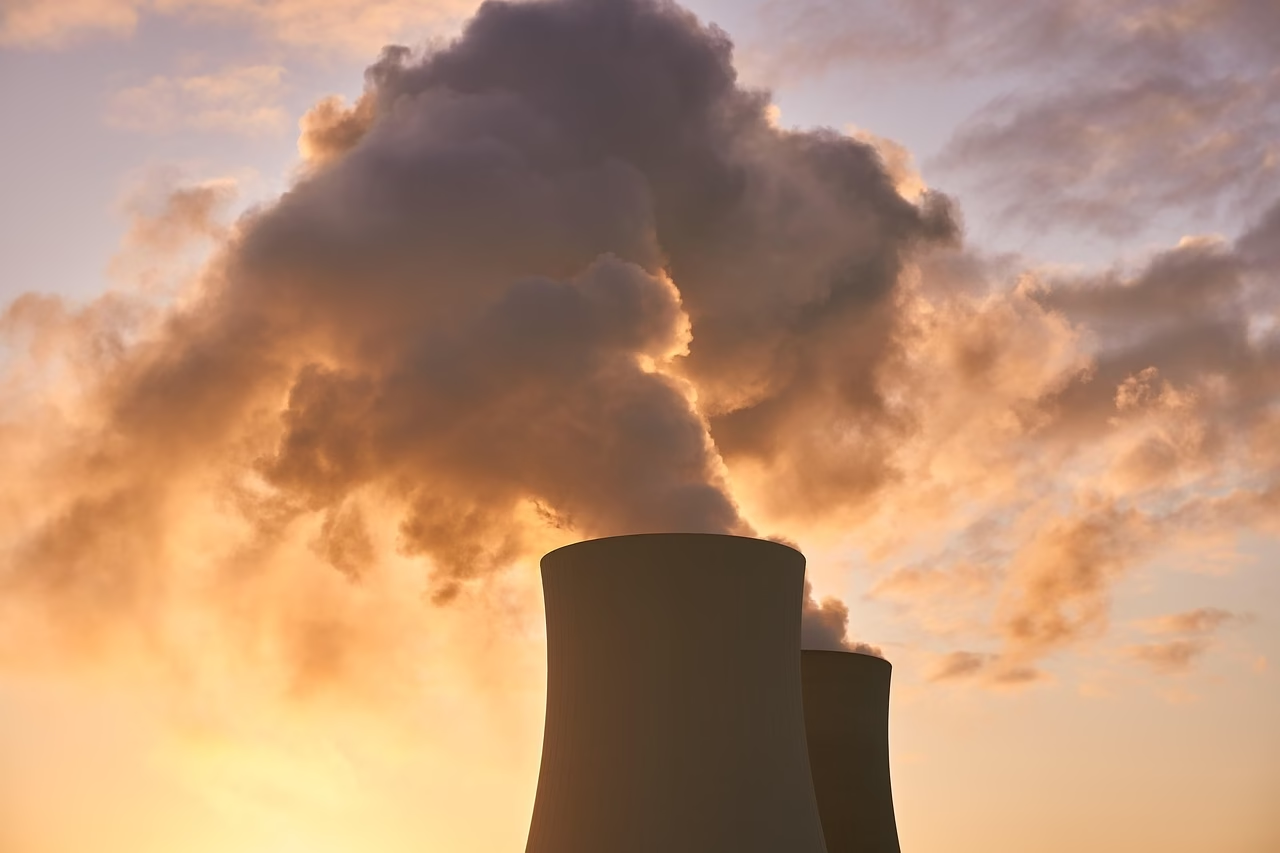
On Wednesday, the United States and Saudi Arabia signed a bilateral civil nuclear cooperation agreement in Washington, creating a formal legal framework for the transfer of American nuclear technology, equipment, and expertise to the Middle Eastern nation. The historic accord aims to assist Saudi Arabia in diversifying its national energy grid away from crude oil while bolstering bilateral strategic ties in an increasingly complex global energy landscape.
Contextualizing Saudi Arabia’s Energy Shift
Saudi Arabia remains the world’s largest exporter of crude oil, but its domestic energy consumption has risen dramatically over the last two decades. During peak summer months, the Kingdom burns between 400,000 and 600,000 barrels of crude oil per day solely to generate domestic electricity for air conditioning and water desalination.
Under Crown Prince Mohammed bin Salman’s Vision 2030 initiative, Riyadh has committed to sourcing half of its domestic power from renewable energy and nuclear power by the end of the decade. Securing advanced nuclear power capability is seen as essential to freeing up valuable domestic petroleum reserves for commercial export rather than inefficient power generation.
Previous negotiations between Washington and Riyadh had repeatedly stalled over civil nuclear safeguards and non-proliferation benchmarks. United States law, governed by Section 123 of the Atomic Energy Act, mandates strict controls to prevent the enrichment of uranium or reprocessing of spent nuclear fuel for non-civilian applications.
Strategic Alignment and Geopolitical Competition
The agreement marks a significant evolution in U.S. foreign policy toward the Arabian Peninsula, signaling a renewed commitment to counter growing foreign diplomatic influence in the Middle East. In recent years, both Beijing and Moscow had actively courted Saudi energy planners, offering state-backed nuclear reactor designs with fewer regulatory conditions attached.
By securing a U.S.-led agreement, Riyadh gains access to cutting-edge American reactor technology, modern safety standards, and long-term supply chain integration. In turn, Washington retains a central diplomatic role in monitoring Saudi Arabia’s civil nuclear infrastructure, reinforcing long-standing regional security arrangements.
U.S. State Department officials emphasized that the deal includes stringent verification protocols aligned with international non-proliferation standards. These measures aim to ensure that all transferred nuclear material and facilities remain strictly dedicated to civilian power generation and scientific research.
Expert Perspectives and Economic Impacts
Energy analysts view the accord as a critical milestone for global nuclear supply chains and clean energy deployment. According to data from the International Energy Agency (IEA), global nuclear capacity must double by 2050 to meet net-zero targets, with emerging markets driving the majority of new commercial capacity additions.
“This pact provides a predictable regulatory environment that American nuclear vendors desperately need to compete globally,” said Dr. Ellen Vance, a senior fellow at the Global Energy Policy Institute. “It allows U.S. nuclear technology suppliers to bid on multi-billion dollar construction tenders across the Gulf region.”
However, non-proliferation specialists urge continued vigilance during the implementation phase. “The true diplomatic test lies in maintaining complete technical transparency and rigorous oversight,” noted Dr. Marcus Reynolds, a senior arms control researcher at the Center for Security Studies. “The international community will monitor how physical safety protocols and IAEA inspections are operationalized on the ground.”
Industry Implications and What to Watch Next
For the global energy sector, the deal opens commercial opportunities for equipment suppliers, engineering firms, and technical workforce development programs. It also accelerates the Middle East’s transition toward low-carbon baseload power, complementing massive ongoing investments in utility-scale solar projects across the region.
In the United States, the pact must undergo a mandatory 90-day Congressional review period under the Atomic Energy Act before officially entering into force. Lawmakers on Capitol Hill are expected to hold committee hearings in the coming weeks to examine the specific monitoring mechanisms embedded in the finalized text.
Industry observers will be watching closely for the release of formal requests for proposals (RFPs) from Saudi energy authorities to construct the Kingdom’s first commercial nuclear power reactors. Additional key milestones will include potential supplementary accords between Riyadh and the International Atomic Energy Agency regarding enhanced safeguard agreements.























Leave a Reply