


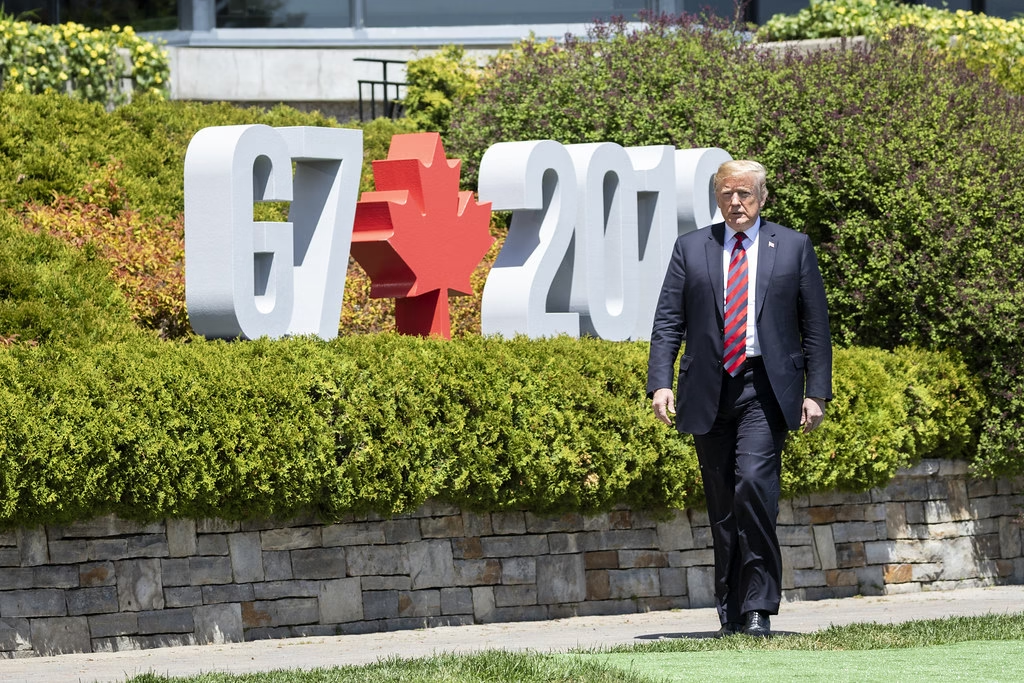
President Donald Trump explicitly rejected the possibility of providing financial assistance to Iran on Sunday, speaking to reporters while attending the G7 summit in Biarritz, France. The statement follows the surprise announcement of a Memorandum of Understanding between Washington and Tehran, aimed at de-escalating rising tensions in the Persian Gulf.
The Context of Diplomatic Tensions
The relationship between the United States and Iran has deteriorated significantly since the U.S. withdrew from the 2015 Joint Comprehensive Plan of Action (JCPOA) in 2018. The subsequent imposition of heavy economic sanctions by the Trump administration triggered a series of maritime incidents and regional provocations.
Negotiators have been working behind the scenes to find a diplomatic off-ramp to avoid direct military conflict. The Memorandum of Understanding represents the first tangible sign of progress in months, though the specifics of the agreement remain largely undisclosed to the public.
The Stance on Financial Commitments
During a briefing with international leaders at the G7, President Trump clarified that his administration would not offer monetary compensation or bailouts to facilitate these talks. “We are not looking for money for Iran,” Trump stated, emphasizing that the U.S. remains committed to its maximum pressure campaign despite the ongoing dialogue.
Analysts suggest this rhetoric is designed to reassure domestic critics who argue that any financial relief would effectively reward Iranian regional behavior. The administration maintains that the goal of the current diplomatic push is to force Tehran back to the negotiating table for a broader deal that includes ballistic missile development and regional influence.
Expert Perspectives and Economic Reality
Economic experts note that Iran is currently facing severe inflationary pressure and currency devaluation due to existing U.S. sanctions. Data from the International Monetary Fund (IMF) indicates that Iran’s GDP contracted significantly throughout 2019, making the prospect of sanctions relief a critical priority for the Iranian government.
However, geopolitical analysts warn that the divide between the two nations remains vast. While European allies at the G7, particularly French President Emmanuel Macron, have pushed for a more conciliatory approach to prevent a total collapse of the nuclear deal, the White House continues to prioritize unilateral leverage.
Future Implications and Regional Stability
The success of this memorandum will likely hinge on whether the two sides can agree on a framework for limited sanctions waivers. Observers are closely monitoring whether Iran will agree to scale back its uranium enrichment in exchange for the ability to export oil, a move that would provide immediate relief to their struggling economy.
Moving forward, the international community will be watching to see if the G7 summit serves as a catalyst for a formal summit between Trump and Iranian leadership. Any further escalation in the Strait of Hormuz or new incidents involving regional proxies could quickly derail the fragile diplomatic progress established over the weekend.



















Leave a Reply