


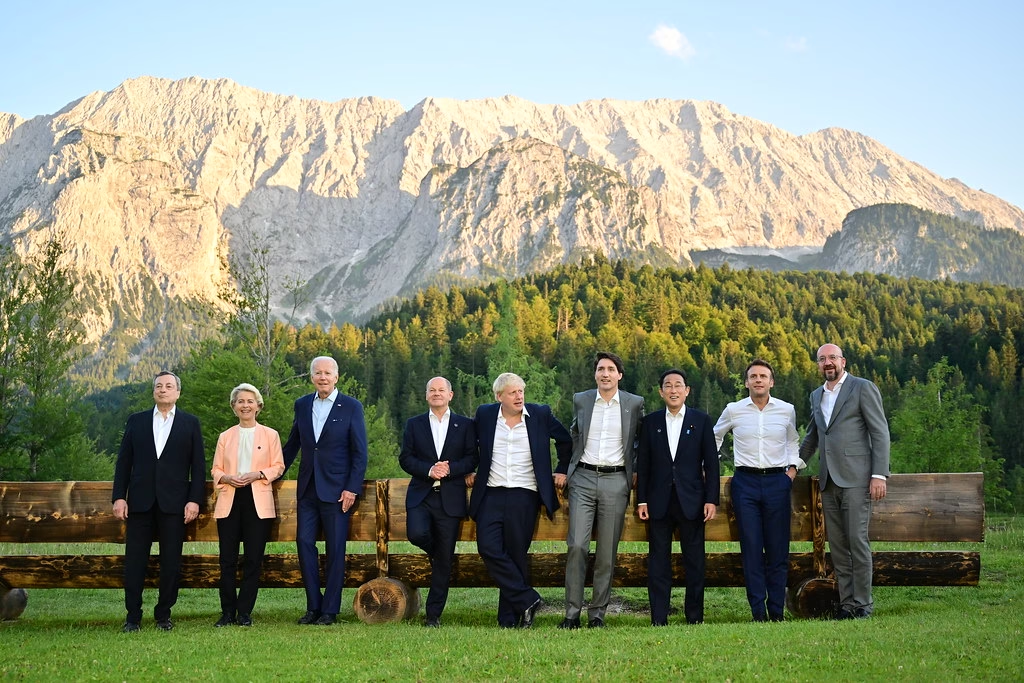
Diplomatic Stakes Rise in France
World leaders are gathering in France this week for the G7 summit, an urgent diplomatic assembly convened to address a volatile global landscape dominated by the threat of conflict in the Middle East and the ongoing war in Ukraine. U.S. President Donald Trump has arrived at the summit, where he faces intense pressure from international allies to stabilize the Iran nuclear situation while maintaining a unified front against Russian aggression in Eastern Europe.
The Shadow of Rising Tensions
The G7, consisting of the world’s leading industrialized nations, historically serves as a forum for economic cooperation and policy coordination. However, recent developments have forced security concerns to the forefront of the agenda. The standoff with Iran has reached a critical juncture, with regional tensions threatening global oil markets and maritime security.
Navigating the Ukraine Crisis
Parallel to the Iranian crisis, the G7 remains deeply concerned with Russia’s continued military campaign in Ukraine. Despite international sanctions and diplomatic isolation, the conflict in the Donbas region shows no signs of abatement. Member states are expected to discuss the extension of economic sanctions and the provision of further aid to Kyiv to bolster regional stability.
Expert Perspectives on Global Stability
Geopolitical analysts suggest that the G7 serves as a vital barometer for Western unity. According to data from the Council on Foreign Relations, the cohesion of the G7 is essential for implementing effective multilateral sanctions. Experts note that without a consensus among the G7 nations, economic pressure on Moscow and Tehran remains significantly less effective.
Economic and Strategic Implications
For the average reader, the outcomes of these meetings carry weight beyond diplomatic rhetoric. The volatility in the Middle East directly influences global energy prices, which could lead to inflationary pressures on consumer goods. Furthermore, the commitment of G7 leaders to the defense of Eastern Europe signals a long-term strategic shift that may require increased defense spending and shifts in trade policy among member nations.
What Lies Ahead
As the summit progresses, observers are watching for a concrete joint statement regarding the Iran deal. Markets will be closely monitoring any shifts in rhetoric concerning oil supply routes and the potential for new sanctions. The ability of the G7 to present a unified front in the coming days will serve as a key indicator of the international community’s capacity to manage cascading security crises through the remainder of the year.



















Leave a Reply