


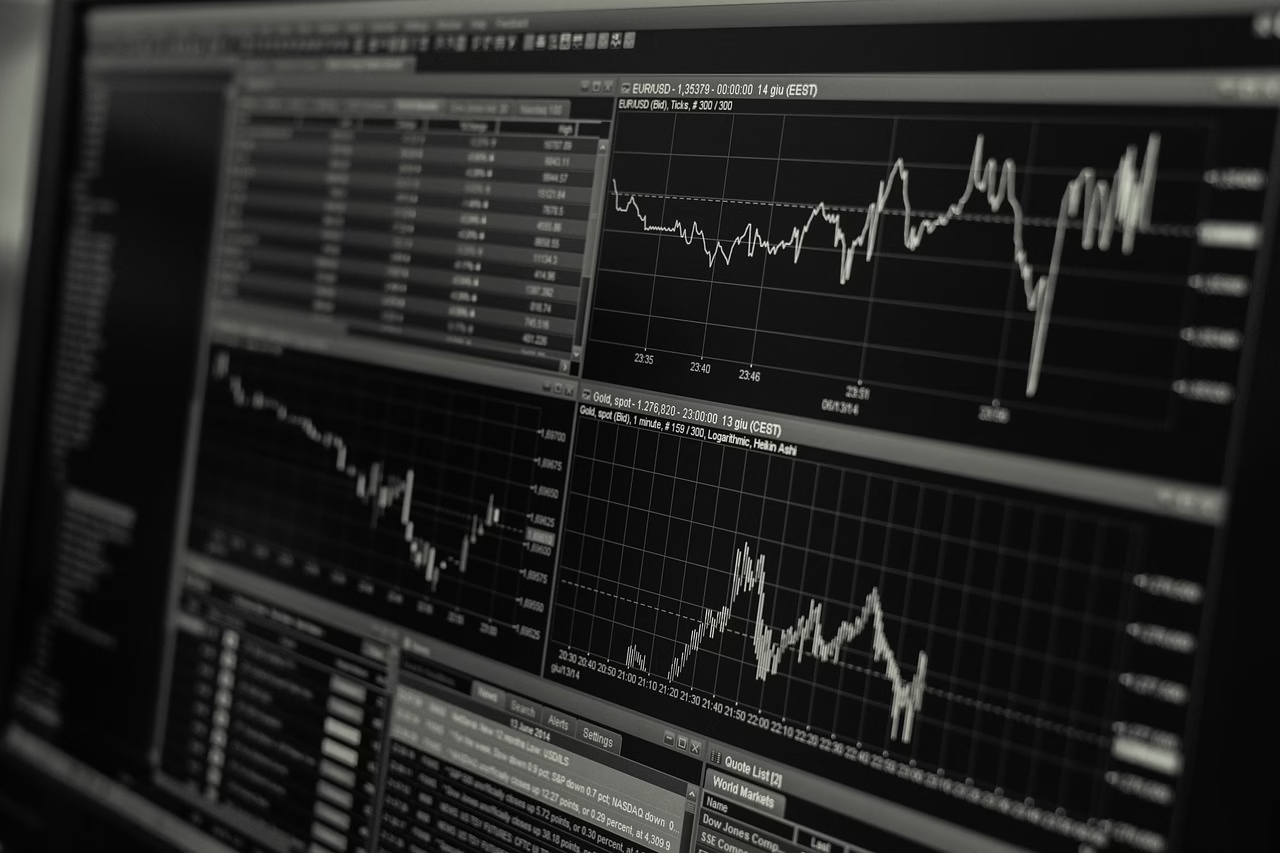
Former President Donald Trump has repeatedly signaled that a diplomatic breakthrough regarding Iran is imminent, fostering a persistent belief among global financial markets that a resolution to the ongoing regional conflict is on the horizon. Despite persistent hostilities and a lack of formal confirmation from Tehran or Washington, traders continue to price in the eventual reopening of the Strait of Hormuz, a critical artery for global energy supplies.
The Context of Diplomatic Speculation
The Strait of Hormuz remains one of the world’s most significant maritime chokepoints, through which approximately 20% of the world’s total oil consumption passes daily. Tensions in the region have historically spiked oil prices and rattled equity markets, creating a volatile environment for global investors.
Trump’s rhetoric regarding an impending deal has served as a recurring catalyst for market optimism throughout his public discourse. Investors, wary of the economic fallout from a prolonged blockade or escalation, have largely chosen to trust the former president’s projections over the more cautious assessments provided by geopolitical analysts.
Analyzing the Disconnect
There is a notable divide between the aggressive posturing on the ground and the sanguine outlook maintained by financial institutions. While military analysts point to the continued exchange of fire and the hardening of rhetoric from both sides, market participants appear to be operating on the assumption that economic necessity will eventually force a diplomatic resolution.
Data from recent trading sessions shows that energy futures often dip whenever optimistic statements about a potential deal are released. This sensitivity suggests that the market is not necessarily ignoring the conflict, but rather betting on the inevitability of a transactional agreement that prioritizes trade stability.
Expert Perspectives and Economic Data
Financial analysts note that the current market behavior is driven by a ‘hope premium.’ Many firms are hedging against a worst-case scenario, yet they remain heavily invested in the prospect of a de-escalation that would see energy prices stabilize at lower levels.
Energy economists warn that relying on political rhetoric as a substitute for verifiable diplomatic progress carries significant risk. If the expected deal fails to materialize, the sudden reversal in market expectations could trigger a sharp spike in volatility across global indices, particularly within the energy and shipping sectors.
Implications for Future Stability
For investors, the primary concern is the duration of the current stalemate. The longer the Strait of Hormuz remains a flashpoint, the more the global economy is exposed to inflationary pressures stemming from increased shipping insurance costs and supply chain delays.
Market participants should monitor official diplomatic channels rather than relying solely on political commentary as the primary barometer for risk. The next few months will be critical, as observers look for tangible evidence of back-channel negotiations or a formal cessation of hostilities that could validate the current market trajectory. If no formal framework emerges by the end of the current quarter, a significant recalibration of asset prices is likely to follow as the reality of the geopolitical impasse sets in.




















Leave a Reply