


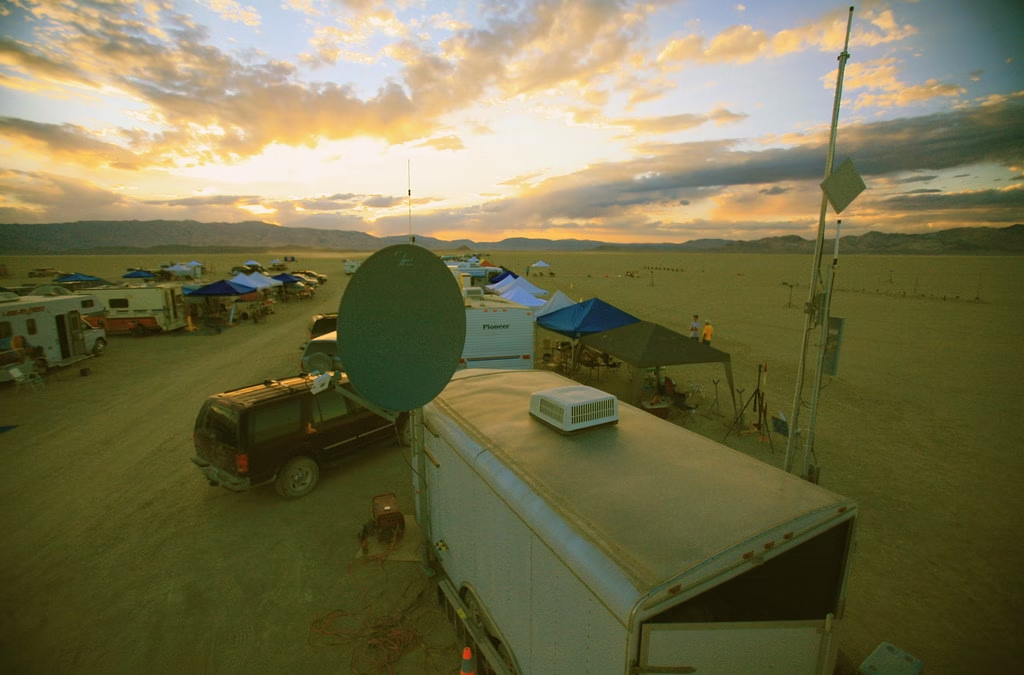
Iranian state media outlets have declared that all companies owned by Elon Musk operating within the Middle East are now considered legitimate military targets, marking a sharp escalation in regional tensions following ongoing geopolitical friction with the United States. The declaration, which surfaced this week, serves as a direct retaliatory warning amid heightened hostilities between Tehran and Washington. This development places Musk’s diverse corporate portfolio, which includes satellite communication networks and infrastructure ventures, in the crosshairs of state-sponsored rhetoric.
Context of the Escalation
The threat arrives against a backdrop of deteriorating diplomatic relations between Iran and the U.S. government. For years, Tehran has utilized state-controlled media to broadcast warnings to entities it perceives as extensions of American influence.
Musk’s companies, particularly SpaceX and its Starlink satellite internet service, have increasingly become focal points for international security discussions. In various conflict zones, Starlink has provided critical connectivity, leading Iranian officials to view the technology as a tool of Western interference in domestic and regional affairs.
Strategic Implications for Corporate Operations
The categorization of private commercial entities as military targets represents a significant shift in how non-state actors and sovereign nations interact in the digital age. By targeting the infrastructure of a private citizen, Iran is signaling that the boundaries between corporate technology and state-level geopolitical strategy have effectively dissolved.
Industry analysts suggest that this move could force a rapid reassessment of risk for tech giants operating in volatile regions. Companies often rely on international legal protections and neutrality, but these frameworks are frequently ignored during periods of intense geopolitical brinkmanship.
Expert Perspectives and Data
Security experts note that the rhetoric highlights the growing vulnerability of space-based assets. According to a recent report by the Space Foundation, the global space economy is projected to reach $1.8 trillion by 2035, yet the legal framework for protecting private satellites from state aggression remains largely underdeveloped.
Dr. Arash Azizi, a scholar of Middle Eastern studies, observed that the threat is likely intended to exert psychological pressure rather than immediate kinetic action. However, he cautioned that such declarations often set a precedent for future cyber warfare or sabotage attempts against satellite ground stations located in or near the Middle East.
Industry Outlook and Future Risks
The immediate consequence for Musk’s companies will be a heightened security posture and potential legal challenges regarding regional operations. Insurance premiums for satellite infrastructure and data centers in the Middle East are expected to rise as underwriters factor in the increased risk of state-sponsored interference.
Observers should watch for any subsequent actions taken by Iranian cyber units against localized tech infrastructure or satellite downlink facilities. Furthermore, the international community will be monitoring how the U.S. Department of State responds to these threats against a prominent American business leader, as it could set a new standard for how private corporations are defended by their home nations in foreign theaters.




















Leave a Reply