


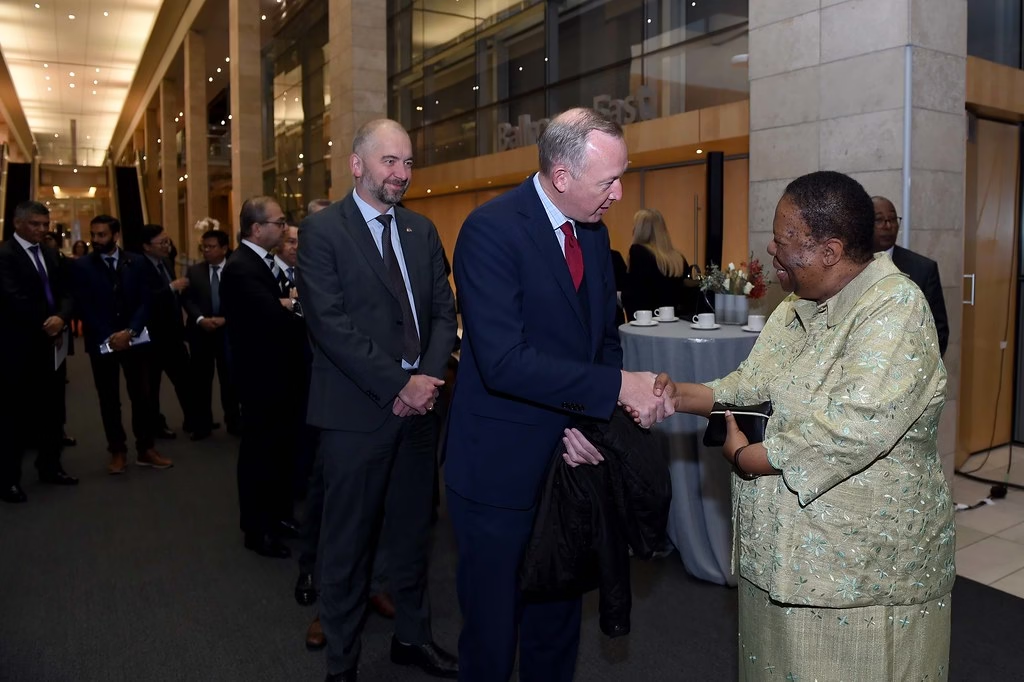
German President Frank-Walter Steinmeier is set to embark on a significant diplomatic mission to Indonesia, the Philippines, and Uzbekistan this week, aiming to bolster political ties and expand economic cooperation in the Indo-Pacific and Central Asian regions. The visit, which begins in Jakarta, marks a concerted effort by Berlin to diversify its international partnerships amid shifting global geopolitical landscapes.
Expanding Strategic Horizons
The decision to visit Indonesia and the Philippines reflects Germany’s growing commitment to the Indo-Pacific region, a cornerstone of its current foreign policy strategy. As the European Union seeks to reduce dependencies on single-market trade, Southeast Asia has emerged as a vital hub for manufacturing and digital innovation.
In Indonesia, President Steinmeier is expected to hold high-level talks focused on sustainable development and the energy transition. Indonesia’s vast natural resources, particularly nickel, make it a critical partner for Germany’s automotive industry and its broader green technology ambitions.
Navigating Security and Trade
The Philippines leg of the tour underscores Germany’s interest in maritime security and the upholding of international law. As tensions in the South China Sea remain a point of global concern, Berlin is positioning itself as a reliable partner for Manila, emphasizing the importance of open trade routes and the rule of law.
Economically, both Indonesia and the Philippines offer burgeoning markets for German engineering and services. Data from the German Chambers of Commerce Abroad indicate a steady increase in German investment in these nations, driven by the desire to integrate into regional supply chains and bypass traditional reliance on Chinese production hubs.
Central Asia’s Geopolitical Significance
The final stop in Uzbekistan signals Germany’s renewed focus on Central Asia, a region currently navigating the complex fallout of the conflict in Ukraine. Uzbekistan has become a focal point for European diplomacy as it seeks to balance its traditional ties with Moscow against the need for modernization and connectivity with the West.
Experts note that Uzbekistan’s strategic location makes it an essential partner for regional stability. Analysts at the German Institute for International and Security Affairs suggest that Berlin is interested in securing reliable energy supplies and rare earth minerals while encouraging political reforms within the region.
Broader Implications for European Policy
This diplomatic tour represents a departure from a traditionally Eurocentric focus, reflecting a broader trend among European leaders to engage more directly with the ‘Global South.’ By strengthening bilateral relations, Germany aims to create a more resilient network of allies that can withstand global economic volatility.
For the business community, this trip serves as a precursor to potential new trade agreements and infrastructure projects. Companies operating in the renewable energy, logistics, and digital sectors should monitor the outcomes of these meetings for signs of state-backed incentives or loosened regulatory frameworks.
Looking ahead, observers should watch for concrete announcements regarding joint ventures in green hydrogen production and educational exchange programs. These initiatives will serve as the litmus test for whether these diplomatic visits translate into long-term policy shifts or remain largely symbolic gestures of intent.




















Leave a Reply