


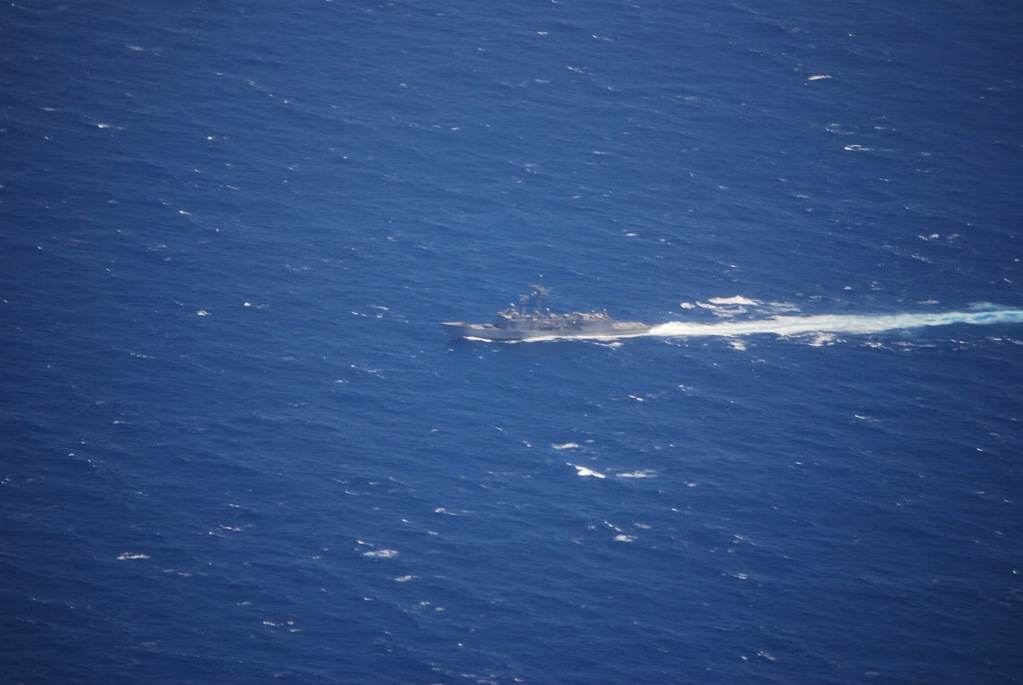
President Donald Trump announced on Thursday that a potential agreement between the United States and Iran is in the works, aimed at reopening the Strait of Hormuz and lifting long-standing economic sanctions on Tehran. The diplomatic breakthrough, reported by Iranian state media, signals a significant pivot in regional policy that could restore global oil transit flow through one of the world’s most critical maritime chokepoints.
The Strategic Significance of the Strait
The Strait of Hormuz serves as the primary artery for global energy, with approximately 21 million barrels of oil passing through the narrow passage daily, according to data from the U.S. Energy Information Administration. This volume represents roughly one-fifth of the world’s total petroleum consumption.
For decades, the waterway has been a flashpoint for geopolitical tension. Iran has frequently threatened to close the strait in response to Western sanctions, creating volatility in global energy markets and driving up insurance premiums for commercial shipping vessels.
Economic Implications of Sanctions Relief
The proposed deal seeks to address the economic isolation of Iran, which has faced stringent U.S. sanctions targeting its oil exports since 2018. Economists suggest that the sudden reintegration of Iranian crude into the market could provide a stabilizing effect on global prices.
Industry analysts at S&P Global Platts indicate that a full return of Iranian production could add up to 1.5 million barrels per day to the global supply. This influx would likely shift the current supply-demand balance, forcing a recalibration of strategy for OPEC+ member nations.
Geopolitical Realignment and Regional Security
The potential for a thaw in U.S.-Iran relations carries profound implications for regional security architecture. Neighboring nations in the Gulf, who have long relied on a heavy U.S. naval presence to deter maritime disruptions, are now evaluating how a bilateral deal might alter their own defense postures.
Military experts note that the reopening of the strait is not merely an economic concern but a logistical necessity for global trade. Security guarantees accompanying the deal would likely focus on monitoring mechanisms to ensure safe passage for tankers, reducing the need for the persistent naval escorts that have characterized the region for years.
Future Outlook and Market Watch
Market participants are now closely monitoring the technical details of the proposed agreement, particularly regarding verification and compliance. The speed at which shipping insurance rates adjust will serve as a primary indicator of market confidence in the durability of the deal.
As negotiations proceed, observers should watch for potential pushback from regional stakeholders who remain wary of shifts in the balance of power. The ultimate success of this diplomatic initiative will hinge on the implementation of transparent, long-term safeguards that ensure the Strait of Hormuz remains an open, neutral conduit for international commerce.






















Leave a Reply