


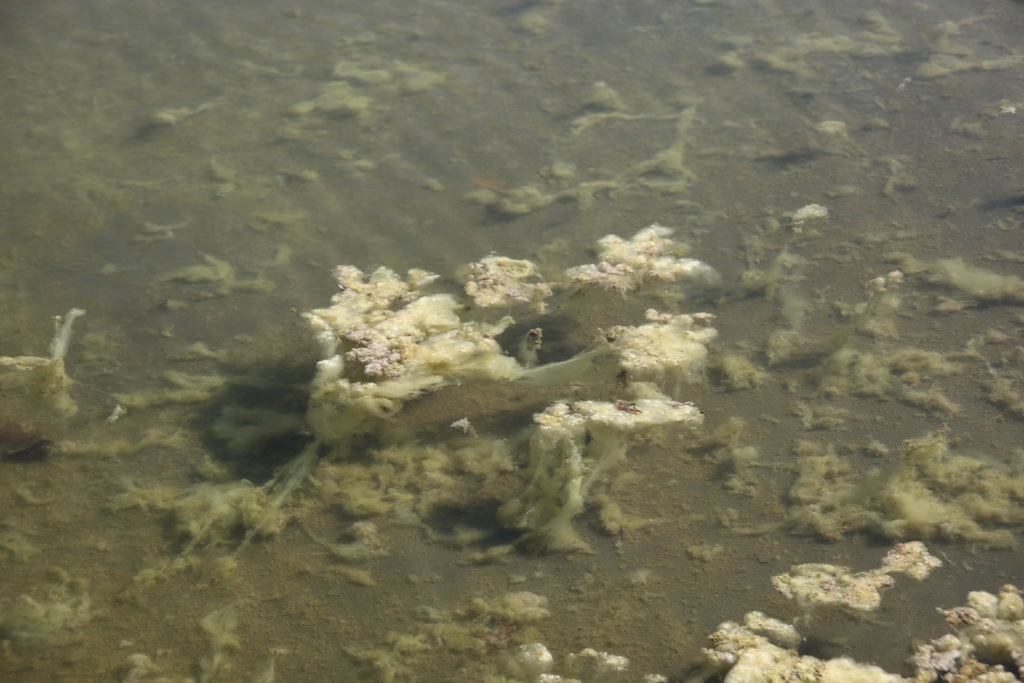
The Trump administration has authorized the use of hydrogen peroxide treatments this week at the Lincoln Memorial Reflecting Pool in Washington, D.C., following the sudden emergence of a thick, chartreuse algal bloom that has obscured the historic monument’s waters. National Park Service officials initiated the emergency chemical intervention on Tuesday to restore the visual clarity of the site, which serves as a centerpiece for the National Mall and attracts millions of annual visitors.
Understanding the Algal Growth
The Lincoln Memorial Reflecting Pool is a complex hydraulic system that requires constant maintenance to prevent stagnation. Algal blooms typically occur when excessive sunlight, warm temperatures, and nutrient runoff—often from fertilizer used in surrounding park grounds—combine to create an ideal environment for biological growth.
While the pool is designed with a recirculating filtration system, the recent spike in water temperatures has accelerated the proliferation of phytoplankton. These microscopic organisms rapidly consume the available oxygen in the water, leading to the distinctive, opaque green discoloration that has recently drawn public attention.
The Role of Hydrogen Peroxide
Hydrogen peroxide is frequently employed in aquatic management as an environmentally sensitive algaecide. Unlike harsher chemical treatments, it breaks down into water and oxygen, leaving behind no toxic residues that could harm local wildlife or the surrounding landscape.
Environmental engineers overseeing the project confirmed that the treatment targets the cellular structure of the algae, causing the blooms to die off and settle to the bottom. From there, the specialized filtration systems integrated into the pool’s infrastructure are expected to remove the dead organic matter over the coming days.
Expert Perspectives on Water Quality
Water quality experts note that managing a body of water of this scale involves a delicate balance. According to data from the Environmental Protection Agency, managing nitrogen and phosphorus levels is critical to preventing long-term eutrophication in urban water features.
“The use of hydrogen peroxide is a standard, temporary mitigation strategy for high-traffic public water features,” said a spokesperson for the National Park Service. “However, it does not address the underlying nutrient loading issues that trigger these blooms during peak summer months.”
Implications for Monument Maintenance
For visitors, the treatment marks a shift toward more frequent, short-term chemical interventions to maintain the aesthetic integrity of the National Mall. As climate patterns shift toward hotter, more humid summers in the capital, the frequency of such blooms may increase, necessitating a more robust long-term management plan for the park’s water infrastructure.
Industry analysts suggest that the administration may need to evaluate more permanent solutions, such as enhanced filtration or biological nutrient removal systems, to reduce reliance on chemical additives. Observers are now watching to see if the current treatment successfully clears the water before the upcoming weekend peak in tourist foot traffic, and whether future policy changes will prioritize long-term infrastructure upgrades over reactive chemical measures.


















Leave a Reply