


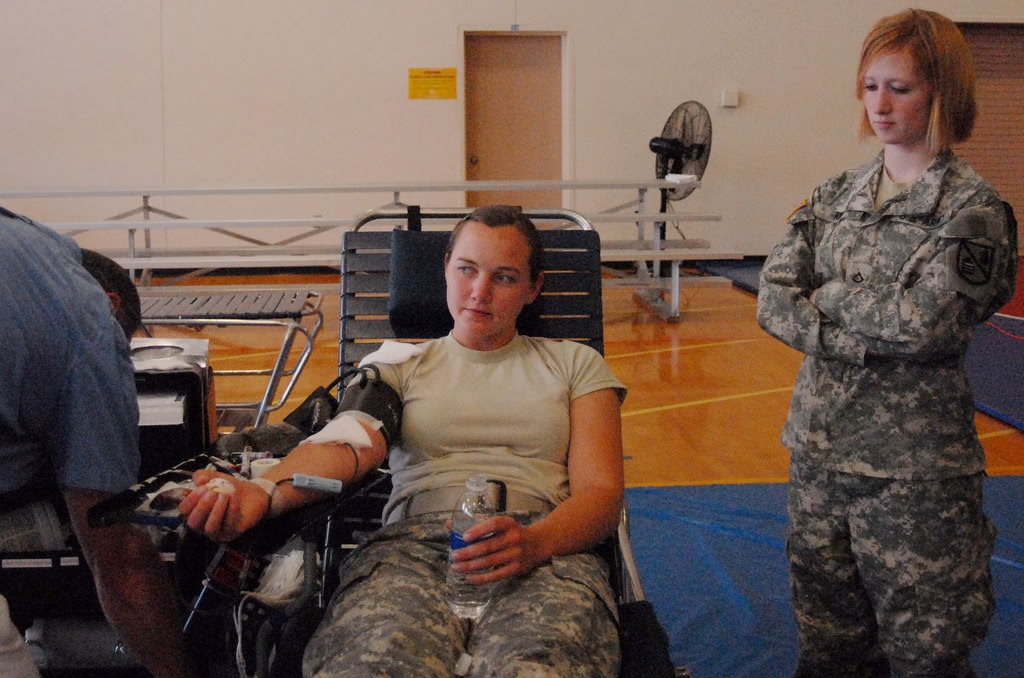
The Growing Crisis in German Healthcare
Germany’s national healthcare system is facing an escalating crisis as the nation’s aging population leads to a sharp decline in available blood donors. Health officials and the German Red Cross (DRK) reported this week that the number of active donors has failed to keep pace with the rising demand for life-saving transfusions, threatening to create systemic shortages across major urban hospitals.
The Demographic Squeeze
The core of the issue lies in Germany’s shifting demographic landscape, characterized by a rapidly aging citizenry. As the ‘baby boomer’ generation enters their senior years, the cohort of individuals eligible and physically able to donate blood is shrinking significantly.
Simultaneously, the demand for blood products is increasing. Older patients typically require more frequent surgeries and treatments for chronic illnesses, which often necessitate blood transfusions. According to the Robert Koch Institute, Germany requires approximately 15,000 units of blood every day to maintain medical operations, a target that is becoming increasingly difficult to hit.
Shifting Donor Demographics
The traditional donor base, which has historically relied on middle-aged volunteers, is no longer being replenished by younger generations. Data from the German Red Cross indicates that the number of first-time donors has dropped by nearly 20% over the last decade.
Experts suggest several factors contribute to this decline, including busy modern lifestyles and a lack of awareness regarding the necessity of regular donation. While seasonal shortages are common during summer months and flu seasons, the current trend suggests a permanent structural deficit that requires long-term intervention.
The Impact on Medical Services
Hospitals are already feeling the strain of the reduced supply. Many elective surgeries have faced rescheduling as clinics prioritize emergency procedures that require immediate blood access.
Dr. Elena Fischer, a hematologist based in Berlin, notes that the impact is not merely a logistical inconvenience but a potential public health risk. ‘When we operate with limited reserves, the margin for error in emergency trauma cases narrows significantly,’ Fischer stated. The scarcity forces medical institutions to adopt stringent rationing protocols, which can delay patient recovery times and increase overall stress on the healthcare infrastructure.
Technological and Policy Responses
In response, health authorities are exploring new strategies to broaden the donor pool. Recent legislative discussions have centered on relaxing some of the restrictive health criteria for donors, provided that safety standards for the blood supply remain uncompromised.
Digital transformation is also playing a role, with new mobile applications launched by the DRK aimed at simplifying the appointment-booking process. These platforms provide real-time updates on local supply levels to encourage donors to visit centers when stocks are critically low.
Future Outlook and What to Watch
The long-term viability of Germany’s blood supply will depend on the success of national awareness campaigns targeted at university students and younger workforce demographics. Observers should monitor whether the federal government introduces new incentives for blood donation, such as workplace programs or tax-related credits.
As medical technology continues to advance, the focus may also shift toward synthetic blood alternatives, though these remain years away from large-scale clinical application. For now, the stability of the system rests on the willingness of a younger generation to step into the role left vacant by their predecessors.






















Leave a Reply