



A Growing Movement for Change
A burgeoning grassroots campaign is challenging Hamas’s long-standing grip on power in Gaza, as local activists increasingly urge residents to take to the streets in protest against the governing militant group. This shift in public sentiment, which has intensified throughout late 2023 and early 2024, reflects deep-seated frustrations regarding the ongoing humanitarian crisis and the severe repercussions of the current conflict. Reports from the region indicate that these calls for civil disobedience are circulating primarily via social media and word-of-mouth, marking a rare and dangerous public departure from the group’s authoritarian control.
The Context of Internal Dissent
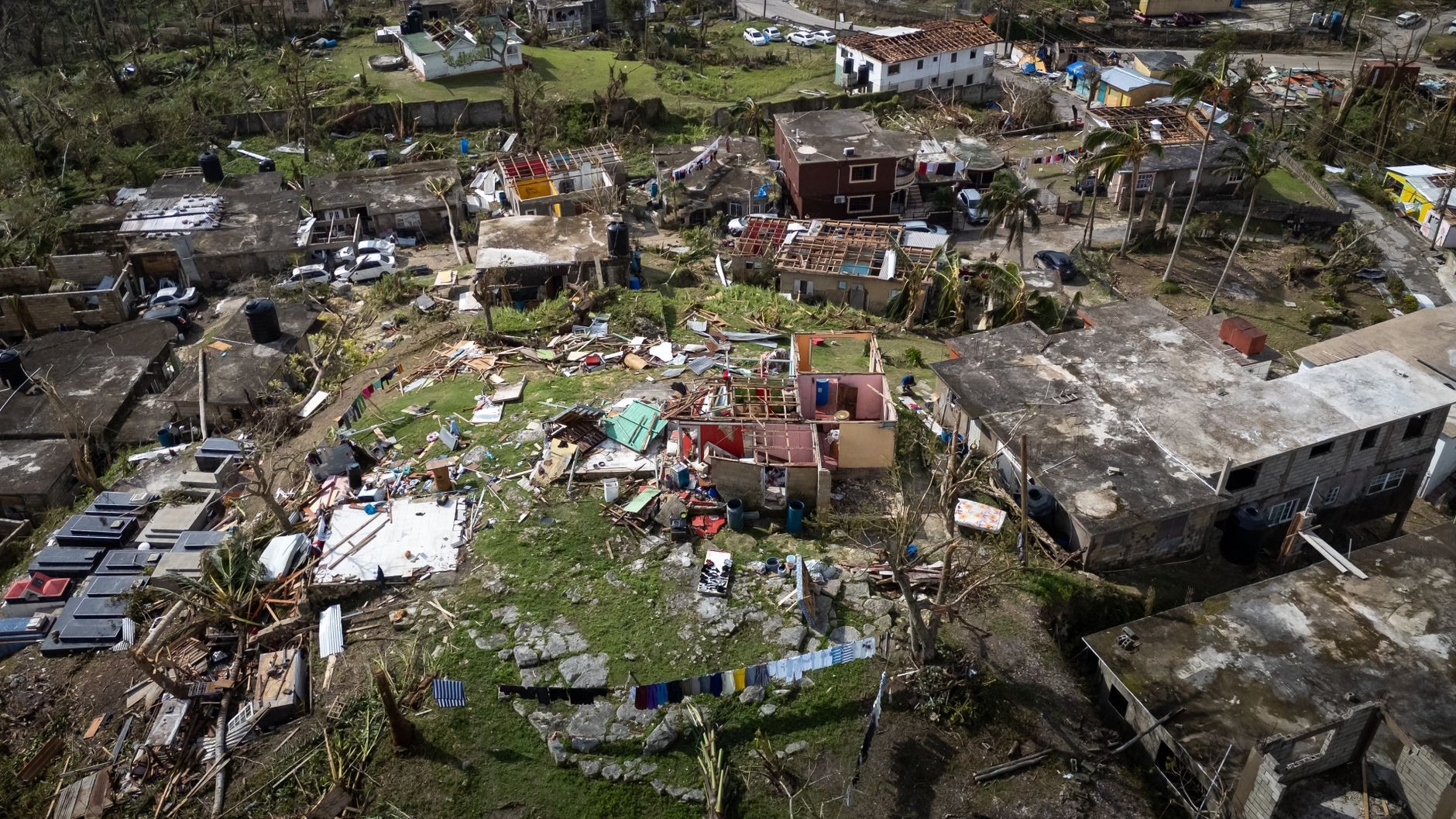
For nearly two decades, Hamas has maintained strict governance over the Gaza Strip, suppressing open political opposition through a combination of security apparatus control and social influence. However, the catastrophic destruction caused by the current war and the resulting collapse of basic services have created a vacuum of accountability. Many residents now openly blame Hamas leadership for prioritizing military objectives over the civilian population’s survival, a sentiment that has historically been suppressed by fear of retaliation.
The Dynamics of Public Protest
The movement, often referred to by the social media hashtag #WeWantToLive, has seen sporadic but significant instances of residents voicing their anger in public squares and near aid distribution centers. These activists argue that the group’s decision-making process has led to widespread displacement and starvation, leaving the population with little left to lose. Observers note that while these protests are currently localized and disparate, they represent a significant psychological shift where the fear of the ruling authority is being eclipsed by the desperation of daily life.
Expert Analysis and Regional Data
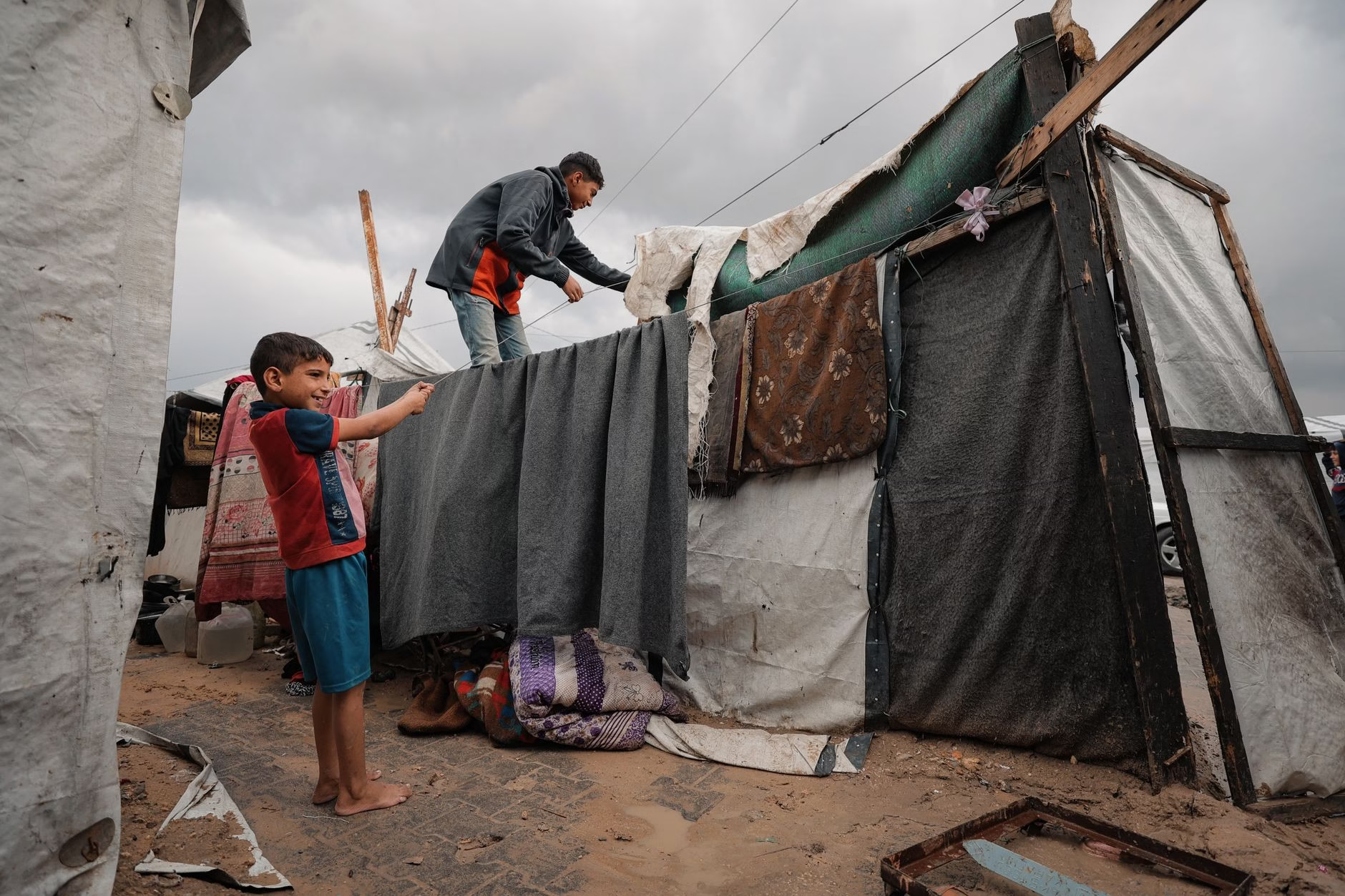
Regional analysts suggest that the erosion of Hamas’s legitimacy is a direct outcome of the economic isolation and the total loss of infrastructure. According to data provided by the United Nations Office for the Coordination of Humanitarian Affairs (OCHA), over 80% of the population in Gaza has been displaced, with food insecurity reaching critical levels. Political experts state that when a governing entity fails to provide basic protection or sustenance, its social contract with the governed is effectively voided, creating fertile ground for civil unrest.
Implications for Future Governance
The emergence of this internal pushback poses a significant dilemma for both local leadership and international mediators involved in ceasefire negotiations. If the protests gain substantial momentum, they could force a change in the internal political landscape, potentially shifting the focus away from militant resistance toward a survival-oriented civilian movement. International observers are now closely monitoring whether these demonstrations will be met with further suppression or if they will lead to a broader fracturing of the group’s internal cohesion.
Future Developments to Watch
The critical factor to observe in the coming weeks is whether these disparate acts of protest coalesce into a unified, organized movement capable of sustaining pressure on the authorities. Any escalation in the use of force by Hamas security units to quell these demonstrations could further alienate the local population, while a lack of response might signal a weakening grip on power. Analysts suggest that the international community will look to these civil developments as a barometer for potential post-conflict governance structures in the region.















Leave a Reply