


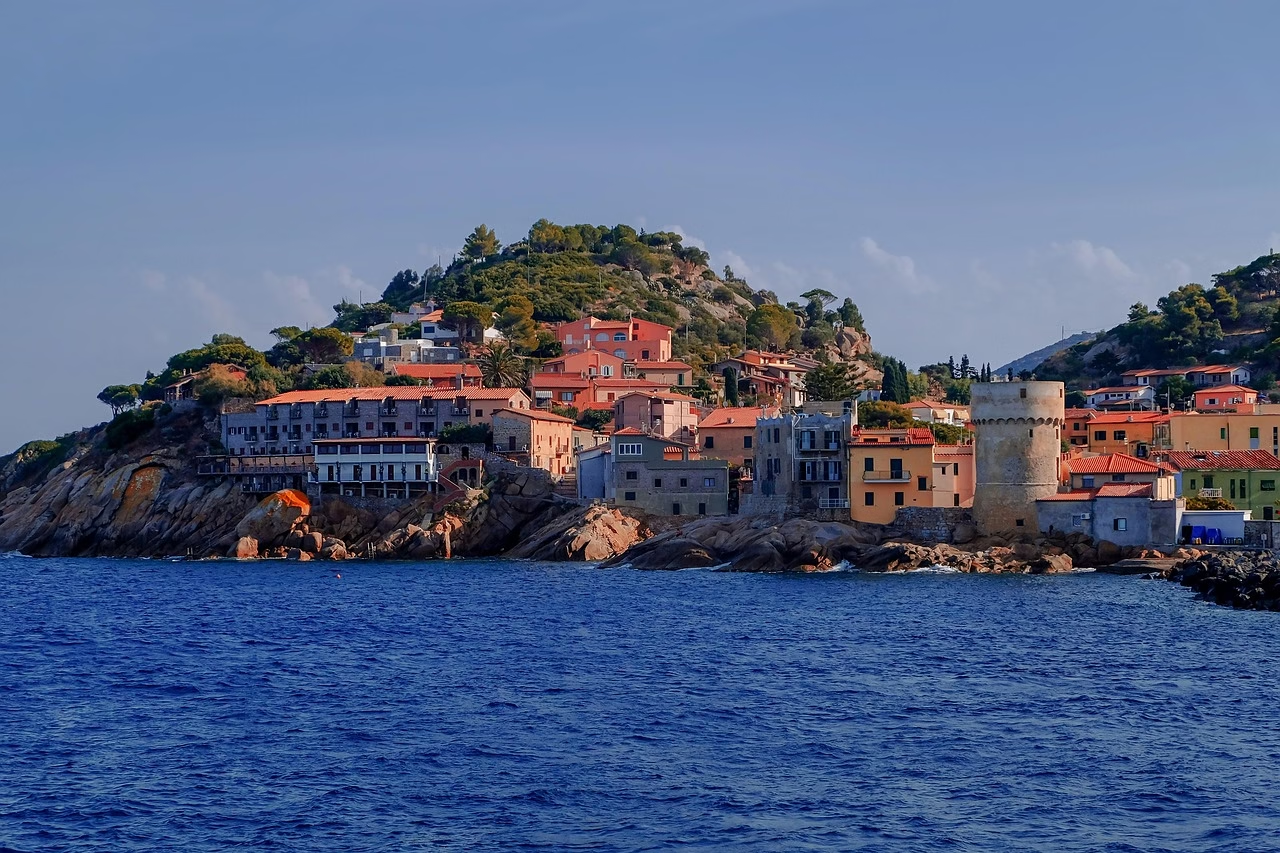
Architects, heritage preservationists, and international buyers across central Italy are completing a milestone wave of rural restorations this season, breathing new life into 200-year-old stone farmhouses to meet a historic surge in demand for eco-conscious living. Centered in regions like Tuscany, Umbria, and Le Marche, these restoration projects transform abandoned 19th-century agricultural structures into high-tech, energy-efficient residences. The movement addresses a growing global desire for wellness-centric, low-density housing that preserves cultural history without sacrificing modern comfort.
The Historical Context of Italy’s Rural Built Environment
Italy’s countryside is dotted with thousands of casali—traditional stone farmhouses built between the late 18th and early 20th centuries. These structures originally served as multi-generational agrarian hubs, housing farmworkers on upper floors and livestock below.
A massive post-World War II industrial migration left tens of thousands of these properties vacant for decades, leading to structural decay. In recent years, local municipal initiatives alongside national building subsidies have incentivized developers and private owners to rescue these historic architectural landmarks.
Today, these restoration efforts are no longer just about aesthetic preservation. They represent a fundamental shift in how historic real estate is valued in a rapidly changing European housing market.
Balancing 19th-Century Masonry with Modern Engineering
Restoring a two-century-old structure presents complex engineering challenges that require specialized craftsmanship. Master masons meticulously dismantle decaying walls to re-lay original fieldstone using traditional lime mortar, which allows the ancient masonry to breathe.
Behind these rustic surfaces lies cutting-edge technology. Structural engineers install subterranean geothermal heat pumps, solar arrays hidden behind traditional pantiles, and radiant underfloor heating systems embedded beneath reclaimed terracotta floor tiles.
To maintain thermal efficiency without altering historical facades, interior insulation systems utilize natural hemp-lime composites. These materials match the moisture-regulating properties of original stone, preventing mold and structural degradation while achieving modern energy performance ratings.
Data Points and Expert Insights
According to data from the Italian Real Estate Federation (FIMAA), international inquiry rates for restored rural properties in central Italy increased by 34 percent year-over-year. Buyers are increasingly prioritizing renovated homes over turn-key modern builds due to their unique character and long-term asset resilience.
“The objective is invisible intervention,” says Dr. Elena Moretti, a Florence-based architectural conservator specializing in historic rural structures. “We are preserving the building’s historical soul while rebuilding its mechanical heart from scratch. A successful project looks as though it has stood untouched for 200 years, yet functions with the energy footprint of a contemporary eco-home.”
Market analyses from European heritage real estate groups indicate that fully modernized historic farmhouses retain property values up to 28 percent higher than un-restored regional equivalents, driven by strict regional planning laws that prohibit new construction on agricultural land.
Economic Impact on Rural Communities
The influx of capital into rural real estate is breathing new life into regional economies that suffered decades of depopulation. Traditional trades—such as stonemasonry, custom carpentry, and ironwork—are experiencing an unprecedented resurgence, creating specialized apprenticeship programs for local youth.
Furthermore, local supply chains benefit directly from the demand for authentic materials. Salvage yards, local brick kilns, and regional timber mills are seeing steady commercial growth as restoration standards become increasingly strict.
This micro-economic revival helps maintain community infrastructure, supporting local bakeries, markets, and municipal services in villages that once faced economic stagnation.
Implications for Sustainable Architecture and Future Trends
The success of Italy’s farmhouse restoration trend offers a scalable model for adaptive reuse projects worldwide. By prioritizing circular construction practices—reusing stone, wood, and tiles directly from the original site—these projects significantly reduce the embodied carbon footprint associated with new residential builds.
As European Union energy efficiency standards tighten for residential buildings over the next decade, developers are increasingly looking to historical restoration methodologies to meet stringent environmental benchmarks without demolishing legacy architecture.
Industry observers should watch for an expansion of this trend into lesser-known Italian regions such as Abruzzo, Molise, and northern Puglia. As prices peak in traditional hotspots like Chianti and the Val d’Orcia, investors and preservationists are turning their attention toward eastern and southern rural corridors, setting the stage for the next phase of Mediterranean architectural conservation.



















Leave a Reply