


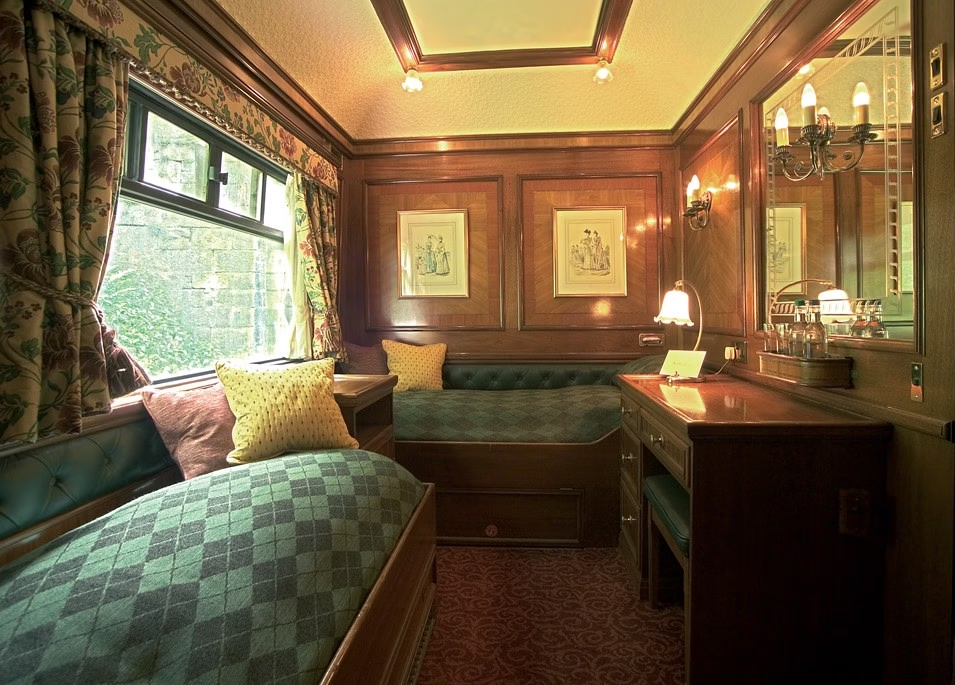
A New Chapter for Legendary Rail Travel
Accor Group’s Orient Express division has officially unveiled a new luxury rail route connecting Rome to Istanbul, set to launch as a five-day journey through the heart of Europe’s history. Travelers will board the reimagined vintage carriages in Italy, traversing the Balkans and the Bulgarian countryside before arriving in Turkey’s cultural capital. This route revives the historic spirit of the original 1883 service, blending modern hospitality with the opulence of the early 20th-century golden age of travel.
The Legacy of the Orient Express
The Orient Express has long stood as the gold standard of luxury travel, originally established by Georges Nagelmackers to connect Paris to Constantinople. After decades of fluctuating service and changing ownership, Accor acquired the brand and has invested heavily in restoring historic carriages and commissioning new designs. This latest addition represents a strategic effort to capitalize on the growing demand for ‘slow travel’—a movement prioritizing the journey over the destination.
Engineering the Ultimate Experience
The five-day itinerary is designed to offer more than just transportation; it serves as a moving boutique hotel. Passengers will experience curated gastronomy, private suites, and butler service throughout the transit. The route itself is meticulously planned to pass through scenic corridors that are difficult to access by conventional commercial rail, offering panoramic views of the Alps and the rolling landscapes of the Thracian Plain.
Market Trends and Economic Impact
According to the World Travel & Tourism Council (WTTC), luxury rail travel is experiencing a post-pandemic resurgence as affluent travelers seek immersive, low-carbon alternatives to short-haul aviation. Industry analysts note that the average spend per passenger on luxury rail packages has increased by approximately 15% since 2022. This shift reflects a broader consumer preference for high-end, experiential tourism that emphasizes sustainability and heritage.
Expert Perspectives
Tourism economist Dr. Elena Rossi suggests that the revival of these routes is a calculated gamble on historical prestige. ‘Travelers are increasingly fatigued by the logistical stresses of modern air travel,’ Rossi explains. ‘The Orient Express offers a curated, stress-free environment that turns the journey into a destination in its own right, appealing to the growing demographic of high-net-worth individuals looking for unique, status-driven experiences.’
Implications for the Industry
The success of the Rome-to-Istanbul route will likely trigger a competitive ripple effect across the European rail sector. As luxury operators scramble to secure track time and refurbish vintage rolling stock, smaller boutique rail firms may find new opportunities in regional luxury travel. Observers suggest that the next phase of this trend will be the integration of ‘rail-to-cruise’ packages, where train travel serves as a seamless extension of luxury maritime voyages. Travelers should monitor upcoming booking windows, as limited passenger capacity and high demand suggest that reservations will mirror the exclusivity of the world’s most sought-after cruise lines.





















Leave a Reply