



The ‘Silent’ Chokepoint: Subsea Cable Escalation in the South China Sea
As of May 2026, the South China Sea has moved beyond surface-level naval posturing into a high-stakes ‘grey zone’ conflict targeting the literal backbone of the global economy: subsea fiber-optic cables. For business owners and investors, this isn’t just a political story—it is a direct threat to the latency of financial transactions and the stability of the digital supply chain.
The Current Situation
Recent ‘maintenance delays’ and mysterious cable cuts near the Luzon Strait have disrupted data flows between Singapore, Tokyo, and San Francisco. Unlike the Suez Canal blockage of years past, these disruptions are invisible until your cloud-based ERP systems lag or your cross-border payment gateways timeout. The geopolitical friction between the ASEAN bloc and regional powers has led to a ‘permit war,’ where cable repair ships are being denied access to disputed waters, leaving broken infrastructure dormant for weeks.
Real-Time Tracking Tool: TeleGeography Submarine Cable Map
To monitor this risk, strategic managers should use the TeleGeography Submarine Cable Map alongside MarineTraffic. By layering these, you can identify where cable-laying vessels (like those from Orange Marine or SubCom) are being stalled. If you see a cluster of repair ships idling outside the ‘Nine-Dash Line,’ expect a 15-20% spike in data latency and potential regional internet outages within 48 hours.
Impact on Your Operations
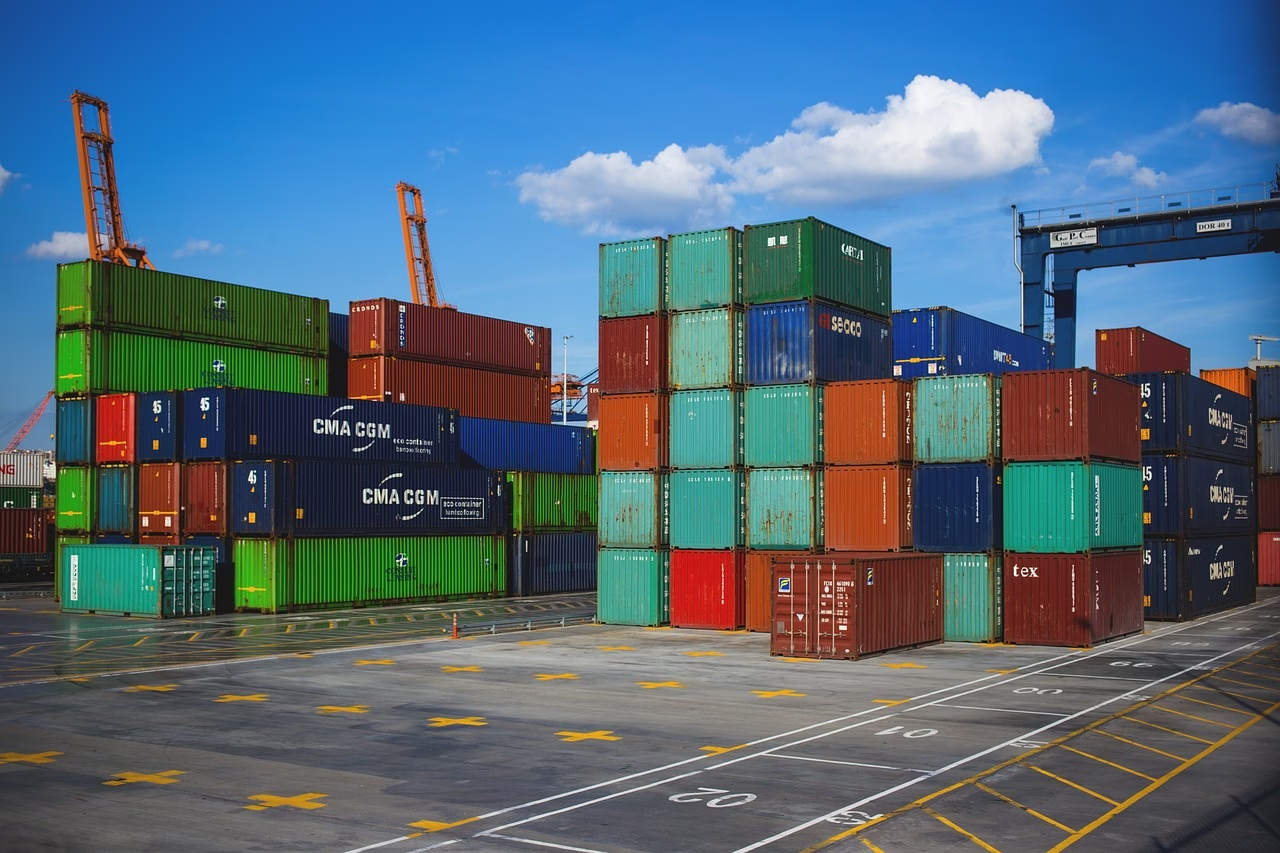
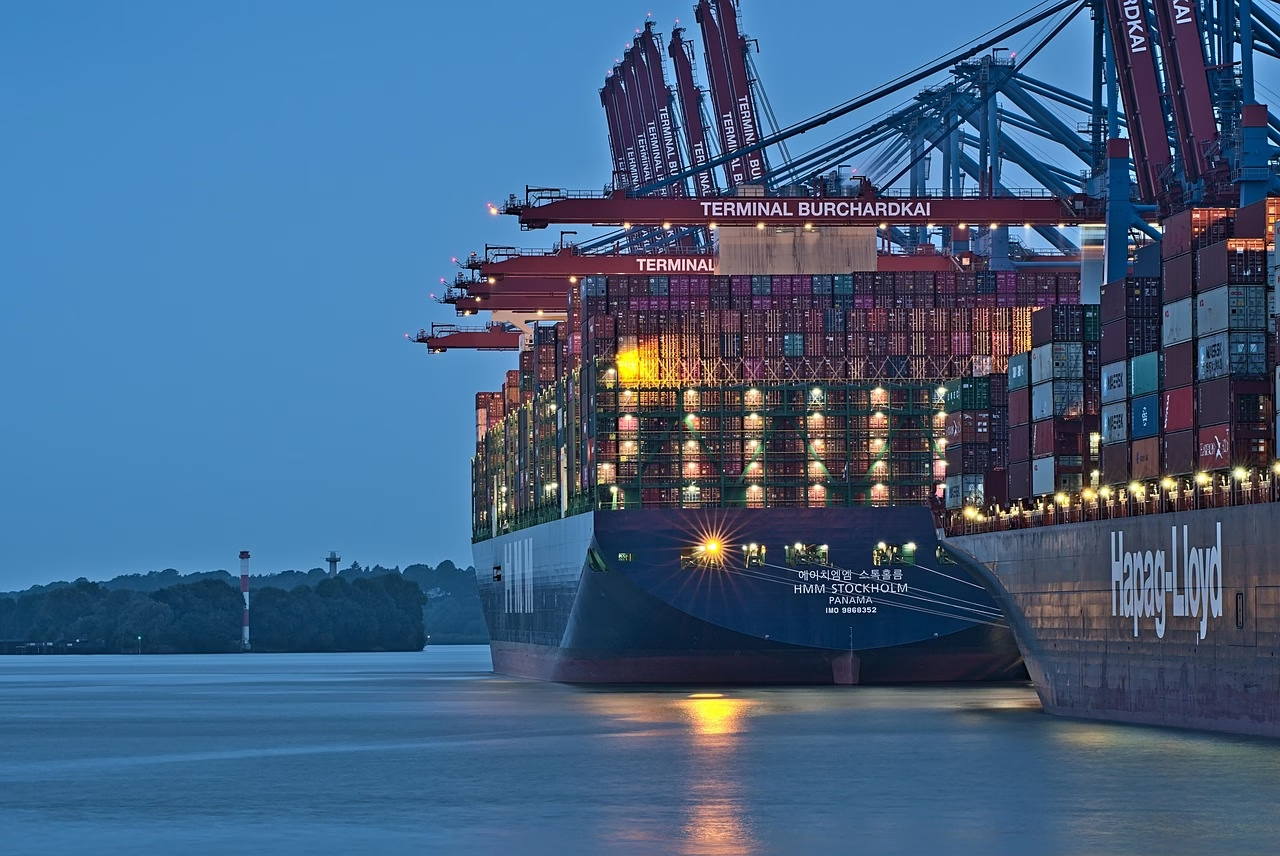
- For Logistics Managers: Real-time tracking of cargo depends on consistent satellite and cable uplinks. A disruption in the South China Sea routes means switching to higher-latency satellite backups, which can lead to ‘dark periods’ for containers moving through the Malacca Strait.
- For Global Investors: High-frequency trading and fintech platforms focused on Asian markets (HKEX, SGX) are highly sensitive to these micro-delays. We are seeing a capital flight toward data centers in ‘neutral’ zones like Guam and Northern Australia.
- For Freelancers: If your client base is in North America but you are based in Southeast Asia, these cable tensions are already causing packet loss in VOIP and video conferencing. Reliance on a single ISP is no longer a viable business strategy.
Actionable Risk Mitigation
1. Data Redundancy: If your business relies on AWS or Azure, ensure your instances are mirrored across regions that do not rely solely on Trans-Pacific routes. Move critical workloads to the ‘Southern Route’ (Singapore to Perth to USA).
2. Contractual ‘Force Majeure’: Review service level agreements (SLAs) with internet service providers. Ensure that ‘geopolitical interference’ or ‘denial of repair permits’ is categorized under connectivity guarantees.
3. Currency Hedging: History shows that cable disruptions in this corridor correlate with volatility in the Philippine Peso (PHP) and Vietnamese Dong (VND) due to the sudden halt in offshore processing services. Hedge your exposure accordingly.
The Bottom Line
The South China Sea is no longer just a shipping lane for oil and grain; it is the central nervous system of the global digital economy. In 2026, a cut cable is as damaging as a sunk tanker. Diversify your data routes now before the next ‘maintenance’ cycle begins.























Leave a Reply