


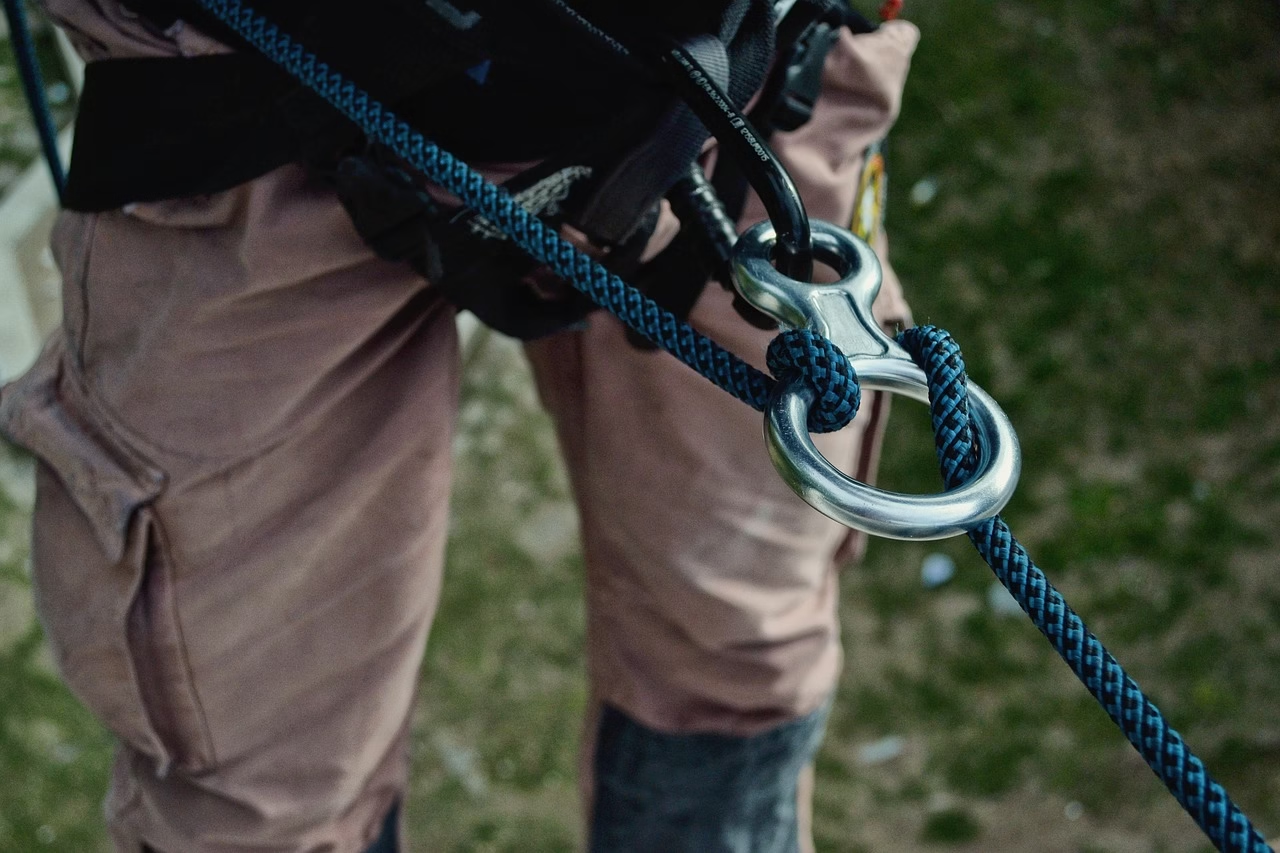
A fatal bungee jumping accident at a popular recreational site has triggered a sweeping investigation after instructors admitted they could not confirm who was responsible for securing the victim’s safety cord. The incident, which occurred last weekend, resulted in the death of a female participant after she plummeted from the platform during a jump attempt that went critically wrong.
The Critical Failure of Operational Oversight
Investigators from local law enforcement and recreational safety boards are currently examining the procedural gaps that allowed a participant to leap without a tethered connection. Preliminary reports indicate that the jump instructors on duty have provided conflicting statements regarding the specific safety checks performed moments before the launch.
Standard industry protocols require a dual-verification system where two separate staff members must confirm the integrity of the harness and the attachment of the bungee cord before a jumper is cleared. The failure to identify a singular point of responsibility suggests a breakdown in both training compliance and site-wide safety management.
Context of Bungee Safety Standards
Bungee jumping has long operated under a framework of self-regulation and voluntary adherence to international safety standards, such as those established by the North American Bungee Association (NABA). These standards emphasize redundant safety systems, including backups for every attachment point and a mandatory “pre-flight” checklist.
Historically, fatalities in the sport are rare, with most accidents attributed to equipment malfunction rather than human error. However, this case highlights a growing concern among regulators regarding the professionalization of adventure tourism and the consistency of staff training in high-risk environments.
Expert Analysis of Operational Risks
Industry safety consultants note that the “diffusion of responsibility” is a common psychological hazard in team-based high-risk activities. When multiple staff members assume that a colleague has completed a safety task, critical steps are frequently overlooked.
“In high-adrenaline environments, human error is the most significant variable,” says Dr. Marcus Thorne, a consultant in extreme sports safety. “Without rigid, automated checklists that require physical sign-offs, the risk of a catastrophic oversight increases exponentially. The absence of a clear chain of command during the final moments of a jump is a systemic failure, not just an individual one.”
Regulatory Implications for the Industry
This incident is expected to prompt a nationwide review of safety permits for bungee operators. Industry analysts predict that insurance premiums for adventure tourism companies will likely surge as underwriters demand stricter adherence to documented safety procedures and more rigorous background checks for instructors.
For the average consumer, this tragedy serves as a sobering reminder of the inherent risks involved in extreme sports. Experts advise participants to inquire about the specific safety protocols and certification levels of instructors before choosing a facility, rather than relying solely on the company’s marketing or popularity.
Future Oversight and Industry Watch
As the investigation continues, authorities are expected to release a comprehensive report on whether the facility operated in violation of state safety mandates. Observers are now watching to see if this incident will lead to new, mandatory federal licensing requirements for bungee jumping operators, which would replace the current patchwork of regional regulations. Future scrutiny will likely focus on whether the facility maintained an adequate log of safety audits and if the staff had undergone recurrent training in the months leading up to the accident.




















Leave a Reply