


Across the United States this year, Jewish American communities are navigating an increasingly hostile social and security environment as escalating public criticism of Israel’s foreign policy spills over into domestic civic life. Recent tracking data and national surveys reveal a marked decline in feelings of safety among Jewish citizens, driven by a sharp rise in antisemitic rhetoric, campus protests, and localized threats following the ongoing military conflict in the Middle East.
A Fractured Landscape: Contextualizing the Shift
The current atmosphere marks a significant turning point in American domestic politics and community relations. While public debate over Middle Eastern diplomacy has long existed in the United States, historical tensions rarely produced such widespread, immediate repercussions for domestic religious and cultural institutions.
The rapid deterioration in public sentiment accelerated dramatically after late 2023, following the escalation of hostilities between Israel and Hamas. As graphic imagery and news coverage saturated digital platforms and national broadcasting, public opinion within the United States fractured along generational, ideological, and political lines.
For Jewish Americans—a demographic representing roughly 2.4 percent of the adult U.S. population—this geopolitical divide has fundamentally altered everyday social interactions, professional settings, and educational environments.
Data Reveals Unprecedented Rise in Incidents
Statistical evidence underscores the growing sense of apprehension felt across Jewish communities. According to audit figures released by the Anti-Defamation League (ADL), recorded antisemitic incidents in the United States reached historic highs over the past twelve months, encompassing physical assaults, targeted vandalism, and aggressive harassment.
Federal law enforcement reports mirror these findings. The Federal Bureau of Investigation (FBI) recently noted that religion-based hate crime statistics show a disproportionate number of offenses targeted against Jewish individuals and institutions, accounting for over 50 percent of all reported religiously motivated hate crimes nationwide.
Simultaneously, survey data from the Pew Research Center indicates a dramatic shift in how younger demographics view the Middle East conflict. Americans under the age of 30 express significantly higher levels of skepticism toward Israeli government policies compared to older generations, creating acute ideological friction on college campuses and within progressive political circles.
The Conflation of Foreign Policy and Local Identity
A primary driver of the current chill felt by Jewish Americans is the increasing conflation of Israeli state actions with the identity of American Jews. Community leaders emphasize that held opinions on foreign governance are being weaponized as a litmus test for civic and social inclusion in the United States.
Many Jewish Americans report feeling sidelined in civic spaces, cultural coalitions, and academic circles simply due to their heritage or perceived stance on Israel. This dynamic has left individuals feeling isolated from traditional political allies and social networks.
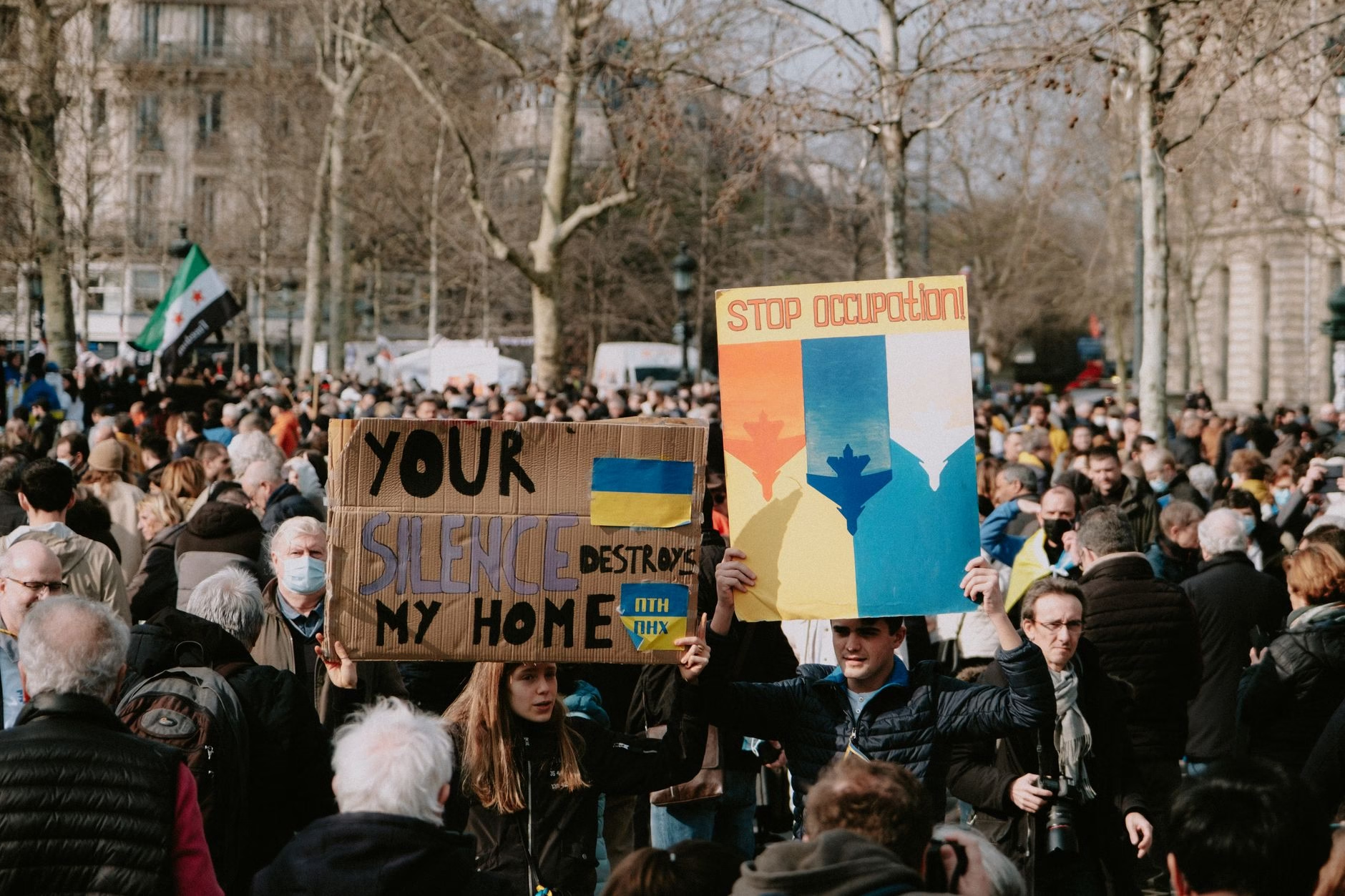
On university campuses, Jewish students have described an atmosphere where institutional dialogue has largely given way to intimidation. Pro-Palestinian demonstrations, while often focused on foreign policy critiques, have repeatedly intersected with rhetoric that directly targets Jewish student organizations and institutions.
Institutional Adaptations and Heightened Security
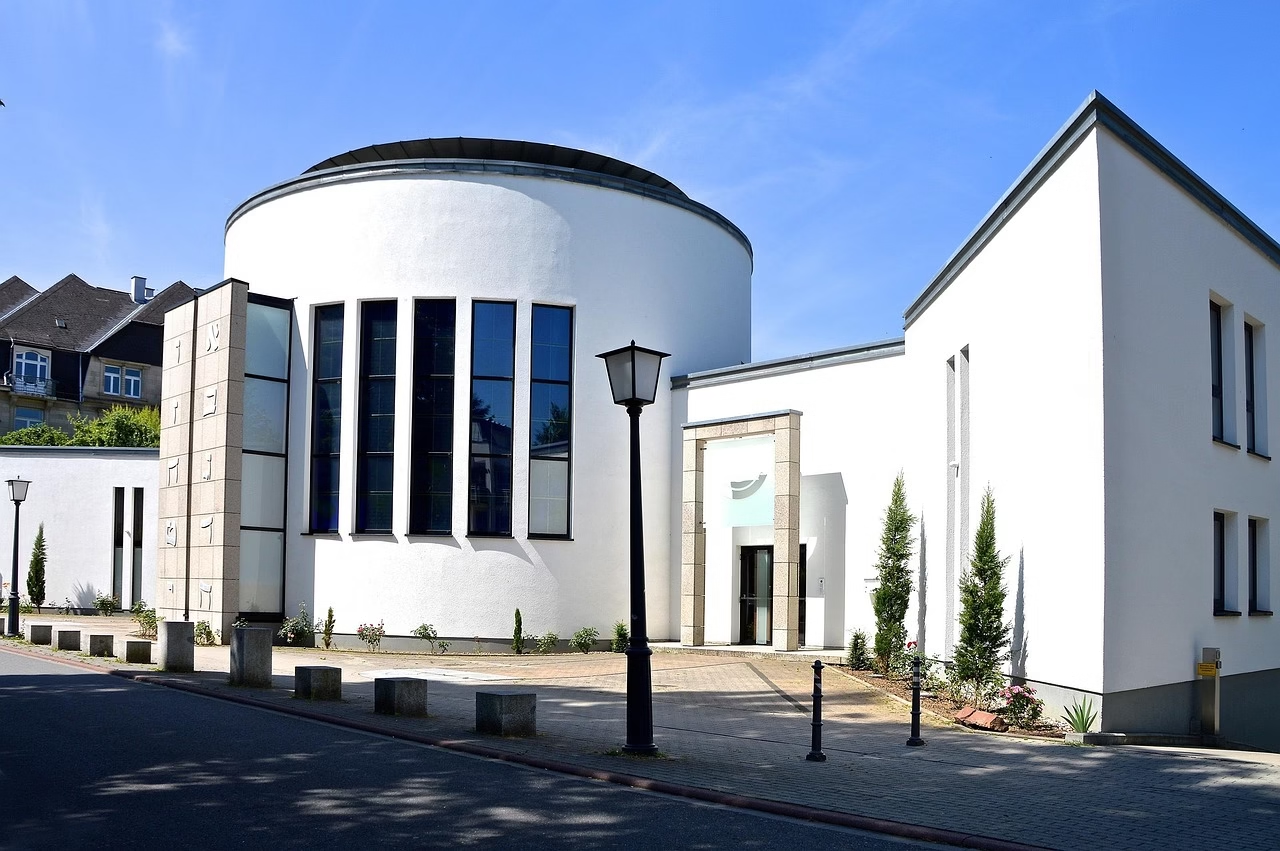
In response to perceived and real threats, Jewish communal organizations across the nation have been forced to allocate record funding toward physical security infrastructure. Synagogues, day schools, and community centers now routinely deploy armed security officers, enhanced surveillance systems, and access-control measures.
The financial strain of these measures is substantial, diverting millions of dollars away from community outreach, educational programs, and charitable initiatives. Local municipal police departments in major urban centers have also increased routine patrols near Jewish cultural hubs to deter potential violence.
In the corporate and academic worlds, leadership teams are struggling to balance free speech protections with civil rights obligations. Numerous universities are facing civil rights investigations under Title VI of the Civil Rights Act of 1964, which prohibits discrimination based on shared ancestry or ethnic characteristics in federally funded programs.
Evolving Policies and Future Outlook
Looking ahead, the intersection of domestic civil rights and international diplomacy will remain a major flashpoint across the American policy landscape. Federal agencies and legislative bodies are currently reviewing legal frameworks to clarify the boundaries between protected political speech and targeted ethnic harassment.
Observers are closely monitoring how university administrations implement newly revised campus demonstration guidelines ahead of the upcoming academic terms. Furthermore, legal scholars expect additional federal Title VI enforcement actions that could redefine liability for educational institutions failing to protect religious minorities.
Politically, the growing sense of alienation among Jewish voters may influence key voting blocs and philanthropic trends in upcoming municipal and federal elections. As the conflict abroad continues without a clear resolution, the long-term cohesion of American civic life and the integration of minority communities remain under intense strain.
















Leave a Reply