



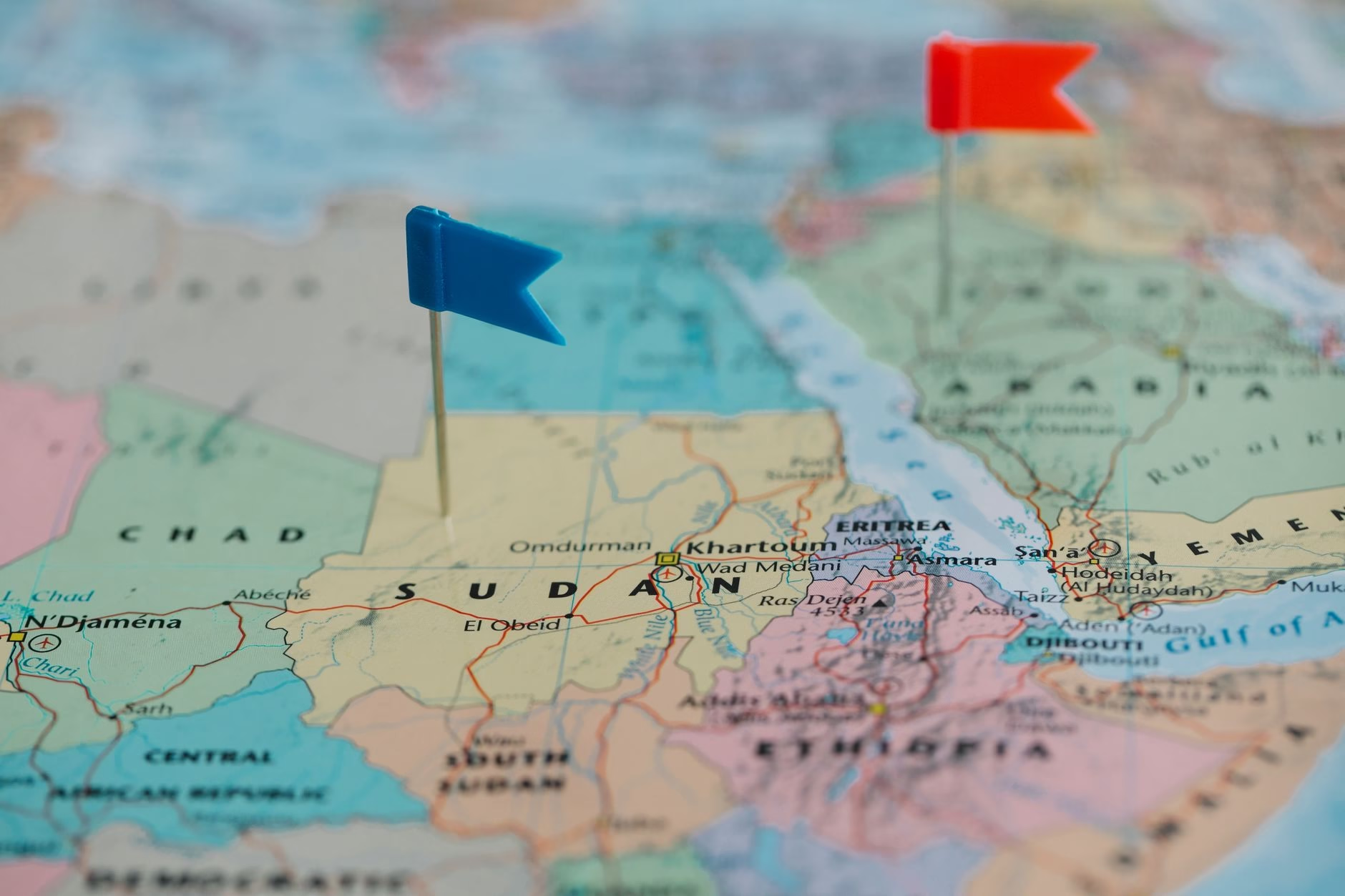
Tehran, Iran – Iran’s Islamic Revolutionary Guard Corps (IRGC) issued a stern warning on Wednesday, threatening to expand the ongoing regional conflict beyond its current borders if the United States and Israel resume military actions against the Islamic Republic. The statement, delivered by IRGC officials, signals a potential broadening of hostilities in an already volatile Middle East.
Rising Tensions and Retaliatory Threats
The IRGC’s declaration follows a period of heightened tensions and retaliatory strikes between Iran and its adversaries. While specific details of any potential renewed attacks were not provided, the threat from Iran’s elite military force underscores the precarious security situation in the Middle East.
This warning comes as regional dynamics remain fluid, with various actors engaged in proxy conflicts and diplomatic maneuvers. The IRGC’s statement emphasizes Iran’s readiness to respond forcefully to any perceived aggression, indicating a willingness to escalate the conflict beyond its immediate geographical vicinity.
Historical Context of Regional Conflict
The Middle East has long been a complex geopolitical landscape, marked by intermittent conflicts and a delicate balance of power. Iran, a significant regional player, has been involved in numerous standoffs with the U.S. and Israel, often through proxy groups or direct confrontations.
Past incidents have frequently led to cycles of escalation, with each side responding to perceived provocations. The IRGC’s current posture suggests a strategic decision to deter potential future attacks by signaling a broader, more impactful response.
Expert Analysis and Potential Ramifications
Analysts suggest that Iran’s threat to extend the conflict is a strategic communication aimed at deterring future military action. “By invoking the possibility of a wider war, Iran seeks to raise the stakes for any nation considering an attack,” commented Dr. Anya Sharma, a Middle East security analyst at the Global Policy Institute. “This is a classic deterrence strategy, albeit one that carries significant risks of miscalculation.”
The implications of such an escalation could be far-reaching. A conflict extending beyond the region could disrupt global energy markets, trigger further humanitarian crises, and draw in additional international actors. The interconnectedness of regional security means that any significant expansion of hostilities could have ripple effects worldwide.
International Reactions and Diplomatic Efforts
International bodies and key global powers are closely monitoring the situation. Diplomatic channels are reportedly active behind the scenes, attempting to de-escalate tensions and prevent a wider conflagration. However, the current geopolitical climate presents significant challenges to effective diplomacy.
The United States and Israel have not yet formally responded to the IRGC’s latest statement. Their future actions will be critical in determining whether Iran’s threat remains a rhetorical one or translates into a genuine expansion of conflict.
What to Watch Next
The coming days and weeks will be crucial in assessing the trajectory of this developing situation. Observers will be looking for any signs of increased military posturing from any party involved, as well as any shifts in diplomatic engagement. The resolve behind Iran’s warning and the strategic calculus of the U.S. and Israel will be key factors to monitor as the region navigates this heightened period of uncertainty.

















Leave a Reply