


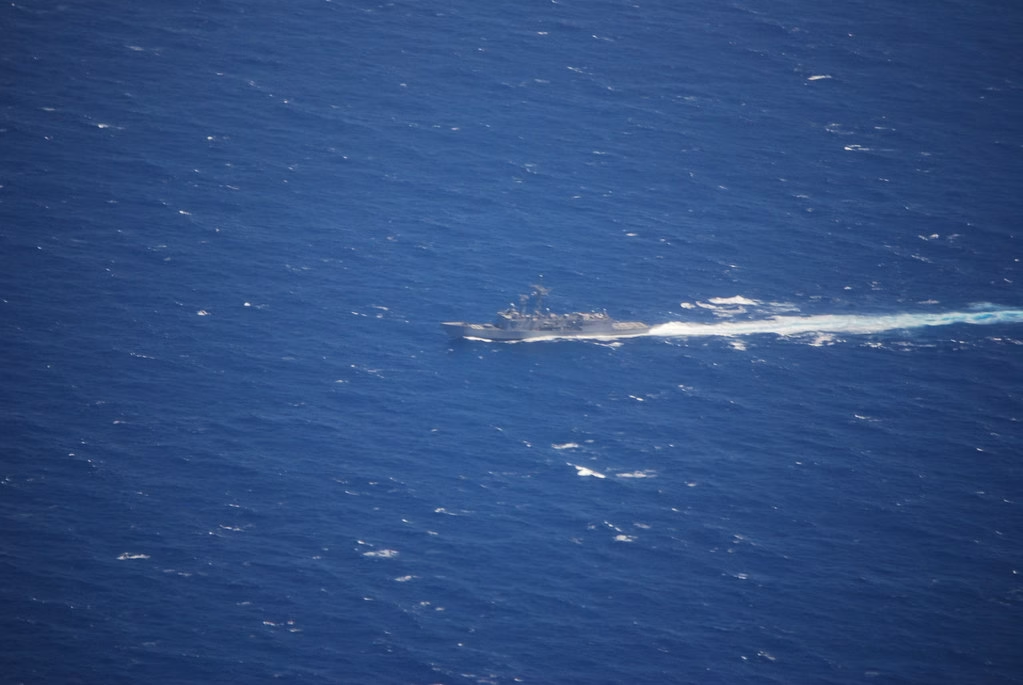
World leaders have officially welcomed a breakthrough agreement between the United States and Iran this week, marking a significant pivot after months of geopolitical volatility. Following more than three months of intermittent negotiations and localized military skirmishes that began in late February, the deal aims to restore stability to the Persian Gulf and alleviate mounting pressure on global energy and commodity markets.
Context of the Conflict
The recent tensions, which roiled international trade, were largely centered on the strategic Strait of Hormuz, a critical maritime chokepoint for global oil supplies. Since late February, intermittent fighting and regional posturing created a climate of uncertainty that pushed crude oil prices to multi-month highs.
Negotiations were characterized by a stop-start process, hampered by deep-seated distrust and shifting regional alliances. Diplomats from several nations played a crucial role in mediating the impasse, ultimately pushing both parties toward a framework that prioritizes the reopening of essential shipping lanes.
The Path to De-escalation
The agreement hinges on a phased approach to de-escalation, with initial reports suggesting an immediate cessation of hostilities in the region. In a coordinated response, European powers have signaled that they are prepared to offer targeted sanctions relief, provided that verification mechanisms confirm compliance with the terms of the deal.
Energy analysts note that the immediate impact of the news has been a cooling effect on oil futures. Market volatility, which had been exacerbated by fears of a total blockade of the Strait of Hormuz, began to subside within hours of the announcement.
Expert Perspectives and Economic Impact
“The primary concern for global markets was the continuity of supply chains,” says Sarah Jenkins, a senior energy strategist at Global Insight Group. “While this deal is not a panacea for all bilateral tensions, it provides the necessary breathing room for global logistics to normalize.”
Data from the International Energy Agency suggests that roughly 20% of the world’s total petroleum consumption flows through the Strait of Hormuz daily. Any disruption to this transit point has historically triggered immediate inflationary pressure on energy-importing nations.
Beyond energy, the agreement is expected to stabilize shipping insurance premiums, which had surged in response to the heightened risk environment. Insurance providers had previously categorized the region as a high-risk zone, forcing many commercial vessels to reroute or delay shipments.
Future Implications
The coming weeks will prove critical as the international community watches for the tangible reopening of regional shipping lanes. The success of this deal rests on the strict adherence to the new maritime protocols established by both Washington and Tehran.
Observers are now tracking the extent of the promised sanctions relief, which will serve as a bellwether for the durability of the agreement. If the de-escalation holds, the focus will likely shift toward long-term regional security frameworks designed to prevent a return to the instability seen in the first quarter of the year.






















Leave a Reply