


The Landscape of Modern Law Enforcement Technology
Communities across the United States are increasingly integrating advanced surveillance technologies into their public safety infrastructure. Among these tools, automated license plate readers have become ubiquitous on street corners and major thoroughfares. These devices capture detailed images of passing vehicles, logging time, location, and plate numbers into searchable databases for law enforcement agencies.
The Most Widespread Reader Network
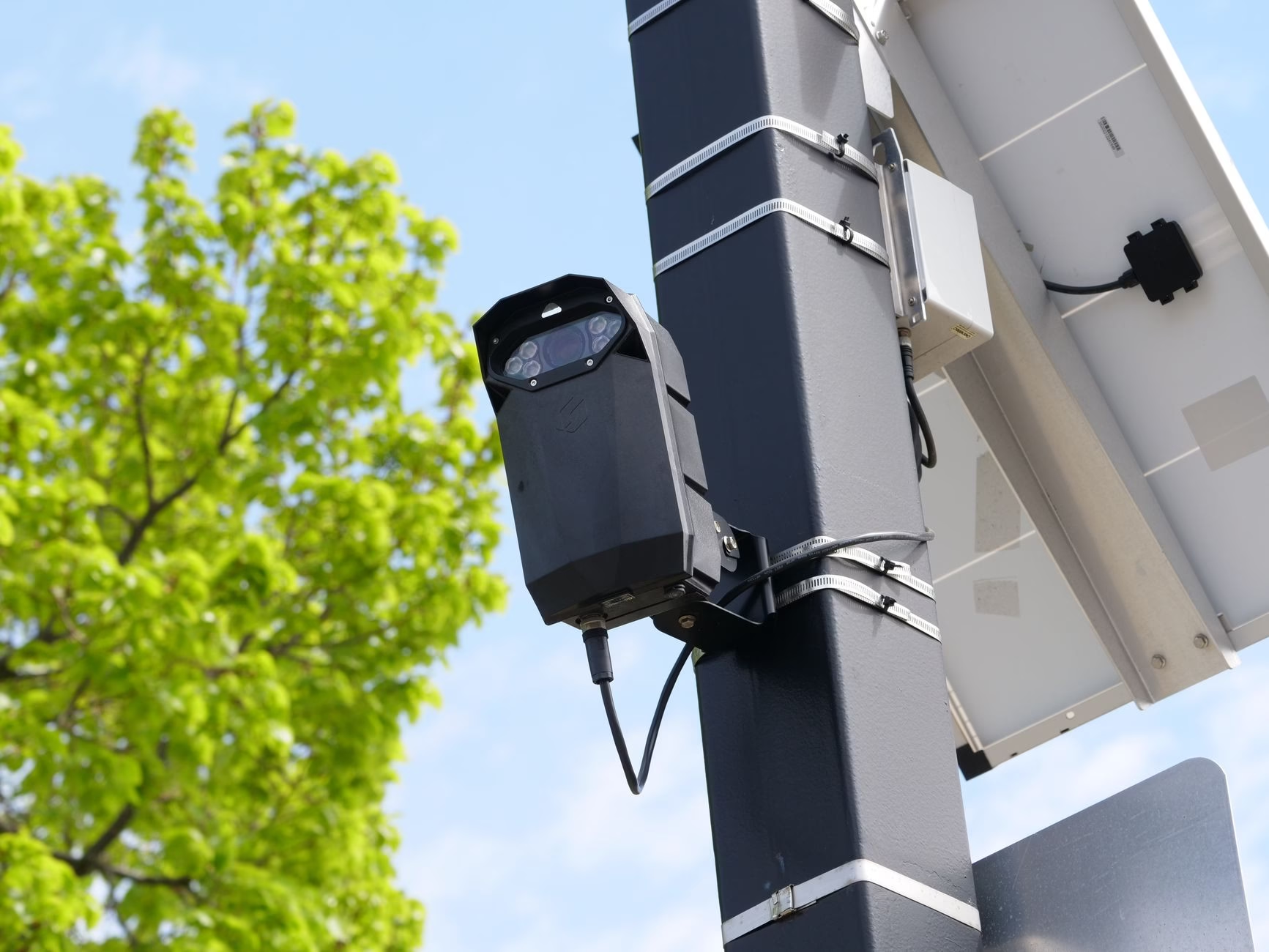
Flock Safety cameras currently represent the most widely deployed automated license plate reading system in the nation. Municipalities and police departments rely on these solar-powered devices to track vehicle movements in real time. The technology promises to help officers locate stolen vehicles, track suspects, and solve crimes efficiently by analyzing patterns of movement across entire regions.
Emerging Privacy Concerns and Public Pushback
Despite the operational advantages cited by municipal leaders, the proliferation of these monitoring devices has triggered significant resistance. Privacy advocates and civil liberties organizations argue that continuous tracking of everyday citizens violates fundamental expectations of privacy. Critics point out that these systems store vast amounts of data regarding people who have committed no crime, creating a permanent historical record of daily travel habits.
Questions Surrounding Data Sharing and Access
A primary source of anxiety among community members involves how captured information is managed and shared. Local police departments frequently share access to their reader networks with outside agencies, sometimes extending visibility across state lines. Residents often express frustration over a lack of transparency regarding who can view this data, how long the information is retained, and whether the gathered intelligence could be misused for unintended purposes.
Legislative Battles and Municipal Pushback
In response to mounting public unease, several towns and cities are reconsidering their contracts with private surveillance providers. Local councils are facing intense pressure from constituents demanding stricter regulations or outright bans on automated tracking devices. Community meetings frequently feature heated debates concerning the balance between public safety initiatives and individual constitutional rights.
The Future of Automated Monitoring
As the debate continues to unfold, manufacturers and law enforcement partners face the challenge of addressing legitimate privacy concerns while maintaining investigative utility. The outcome of these local battles will likely shape the future of municipal surveillance policy nationwide. City leaders must navigate an increasingly complex landscape where technological capability intersects with the public demand for accountability and transparency.






















Leave a Reply