


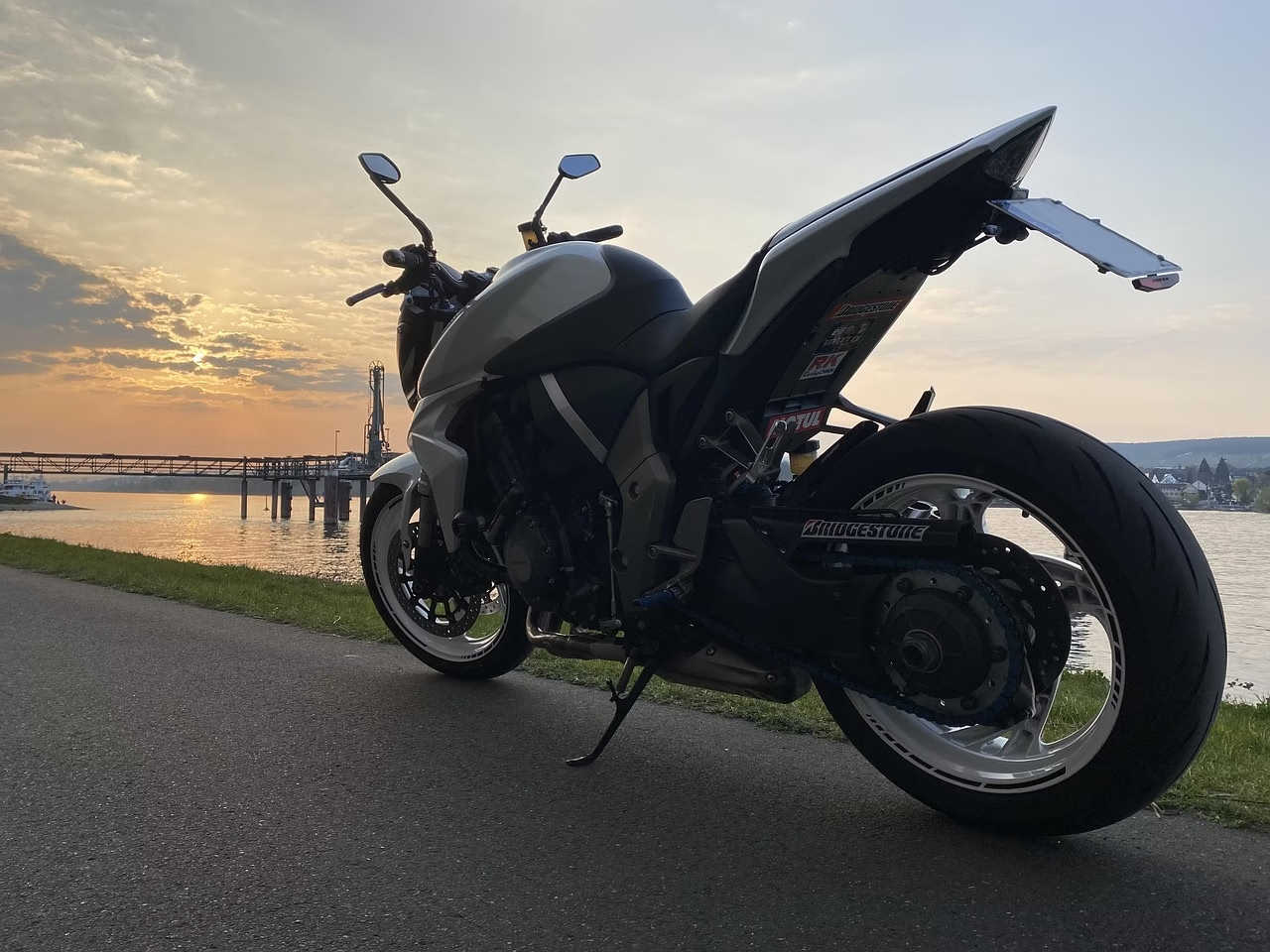
A Coastal Showdown of Custom Engineering
The annual Wheels and Waves festival in Biarritz, France, served as the theater for a high-stakes design competition this June, pitting two of Honda’s most iconic platforms—the Hornet and the Transalp—against one another in a creative duel. Honda Europe challenged its national dealerships to push the aesthetic and functional boundaries of these mid-sized machines, resulting in a display that transformed production motorcycles into bespoke art pieces.
The Evolution of a Platform
The Honda Hornet and Transalp share a common 755cc parallel-twin engine, a powerplant that has been lauded for its versatility and reliability in the modern middleweight segment. By utilizing the same core architecture, Honda provided a blank canvas for custom builders to demonstrate how a single chassis can be adapted for disparate riding styles, ranging from aggressive streetfighters to rugged scramblers.
Diverse Approaches to Customization
Participating dealerships from across Europe showcased drastically different interpretations of the base models. The Hornet builds leaned heavily into the ‘streetfighter’ aesthetic, featuring stripped-down bodywork, exposed subframes, and high-performance exhaust systems designed to emphasize the bike’s agility and urban prowess.
Conversely, the Transalp modifications focused on rally-raid heritage and off-road capability. Builders equipped these machines with long-travel suspension upgrades, knobby tires, and reinforced bash plates, drawing inspiration from Honda’s historic Dakar Rally dominance.
Expert Insights on Design Trends
Industry analysts noted that this trend of ‘dealer-custom’ projects reflects a broader shift toward personalization in the motorcycle industry. According to data from the European Association of Motorcycle Manufacturers (ACEM), consumer interest in customization has grown by 15% over the past three years, with younger riders prioritizing unique visual identities alongside mechanical performance.
‘The goal was to highlight that the platform is not just a commuter, but a starting point for self-expression,’ said a representative from Honda’s custom division. By decentralizing the design process, the manufacturer allowed local shops to tap into regional trends, resulting in a diverse portfolio that ranges from neo-retro café racers to futuristic rally machines.
Implications for the Motorcycle Industry
For the consumer, these projects demonstrate the modular potential of modern motorcycle platforms. As emissions regulations tighten and engine technology becomes increasingly standardized, the ability for owners to modify their bikes for specific niche uses—such as adventure touring or circuit racing—becomes a key selling point for manufacturers.
Looking ahead, the success of the Wheels and Waves exhibition suggests that OEMs will continue to leverage ‘platform-sharing’ strategies to foster community engagement. Observers should watch for an increase in factory-backed ‘custom kits’ that allow owners to achieve these bespoke looks without the need for extensive fabrication, effectively bridging the gap between mass production and boutique craftsmanship.
















Leave a Reply