


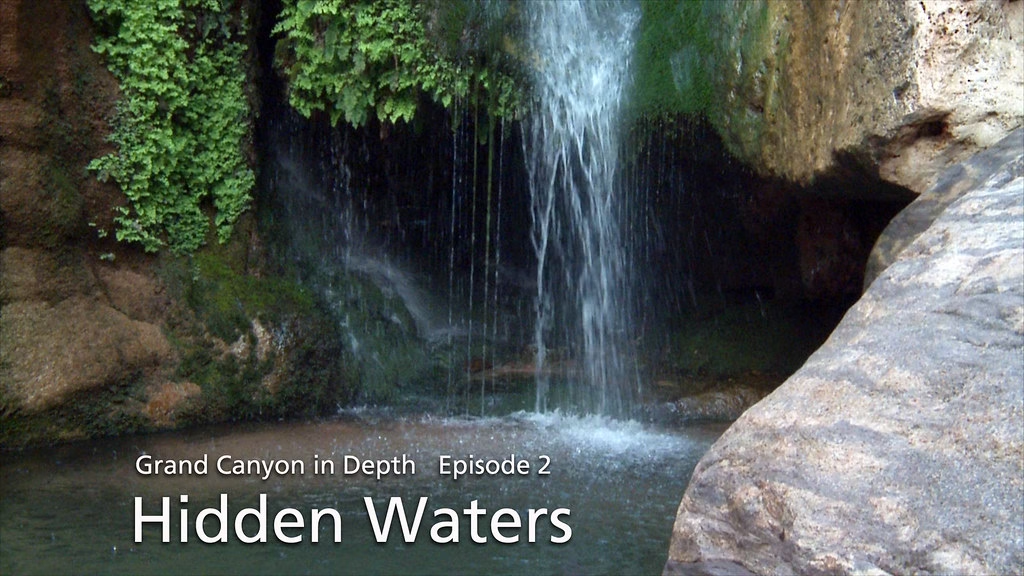
A remote, unnamed canyon in the heart of the Indonesian archipelago has rapidly emerged as a premier destination for international filmmakers and content creators this year, drawn by its pristine geological formations and unique light-filtering canopy. Located deep within the dense rainforests of East Java, the site offers a rare combination of sheer basalt cliffs and crystalline waterfalls that have become a focal point for high-end cinematography and adventure travel photography.
The Rise of Untouched Locations
For decades, Indonesia’s tourism industry centered largely on the beaches of Bali and the cultural hubs of Yogyakarta. However, a recent shift in consumer demand—fueled by social media platforms like Instagram and TikTok—has pushed explorers toward more rugged, isolated environments.
The canyon, which remained largely undocumented by mapping services until 2022, provides a visual aesthetic that production companies describe as “cinematically perfect.” The natural amphitheater created by the canyon walls acts as a light diffuser, creating consistent, soft illumination that is ideal for high-resolution video equipment.
A Technical Haven for Cinematographers
Professional film crews are increasingly bypassing traditional studio sets in favor of this location due to its unparalleled natural production value. The site features a series of tiered waterfalls that cascade into turquoise pools, offering a diverse array of angles within a compact geographic footprint.
According to field reports from local production fixers, the canyon has hosted at least twelve major international commercial shoots in the last six months alone. The primary draw is the “Golden Hour” effect, which lasts significantly longer here than in open landscapes because the high canyon walls trap and refract sunlight, extending the prime shooting window for directors.
Data and Environmental Impact
Regional tourism boards note a 40% increase in permit applications for professional photography and film production in the surrounding regency. While this economic influx is welcomed by local communities, environmental agencies are closely monitoring the impact on the canyon’s delicate ecosystem.
Dr. Aris Prasetyo, a conservationist specializing in tropical biodiversity, notes that the increase in human traffic requires a structured approach to land management. “The geological integrity of these canyon walls is sensitive, and the introduction of heavy lighting rigs and drones requires strict adherence to environmental protocols to prevent degradation,” Prasetyo said.
Implications for the Industry
The success of this canyon serves as a bellwether for the future of global location scouting, where “hyper-local” and “hidden” sites are becoming more valuable than established landmarks. For filmmakers, this means a shift toward investing in logistical infrastructure to reach these remote areas, as the demand for unique, authentic visuals continues to outpace the supply of accessible film sites.
Industry analysts predict that the next eighteen months will see an uptick in “location-first” production strategies, where the setting dictates the script rather than the other way around. As technology improves, viewers should expect to see these hidden Indonesian landscapes appearing with greater frequency in mainstream media, fashion campaigns, and feature-length adventure documentaries.


















Leave a Reply