



The United States military launched a coordinated series of overnight airstrikes against military targets in Iran, following President Donald Trump’s warning of an impending “massive attack” after Tehran expanded its aggression into global trade corridors. The military engagement occurred in strategic areas surrounding the Persian Gulf after Iranian forces targeted international shipping routes and energy infrastructure in an effort to exert economic pressure on Western nations. U.S. officials confirmed the operation was aimed at neutralizing active threats to commercial vessel navigation and restoring deterrence in vital maritime choke points.
Escalation in Strategic Maritime Waterways
The latest military strikes represent a significant escalation in ongoing geopolitical hostilities between Washington and Tehran. Over recent weeks, Iranian forces shifted tactics from regional proxy engagements to direct maritime coercion in international waters.
Central to the friction is the Strait of Hormuz, a narrow waterway handling approximately 20 percent of the world’s petroleum transit. Tehran’s opening of a second conflict front specifically targets commercial oil tankers and trade routes, aiming to leverage global energy supply vulnerabilities for political concessions.
This tactical pivot forced international shipping conglomerates to re-evaluate risk profiles for vessels operating in the Middle East. Consequently, several commercial carriers preemptively altered routes, adding thousands of nautical miles and millions of dollars in operational costs to global trade journeys.
Military Operations and Presidential Warnings
U.S. Central Command confirmed that overnight precision strikes targeted Iranian radar installations, drone launch sites, and naval command centers. Defense officials stated the targets had been actively utilized to track and harass international commercial maritime vessels.
In a press briefing following the operations, President Trump emphasized that the United States will use decisive force to protect economic infrastructure. He warned that continued military or economic provocation from Tehran would trigger a far broader military campaign.
“If Iran continues to jeopardize global commerce and target international shipping, they will face a massive attack unlike anything they have previously experienced,” the President stated. Defense officials confirmed all coalition aircraft returned safely from the overnight missions and reported high operational success rates across targeted facilities.
Economic Shockwaves and Market Reaction
Financial markets reacted swiftly to the military strike news, sparking immediate volatility across global energy sectors. Crude oil futures jumped over 4.5 percent during early morning trading, reflecting growing anxiety over potential supply chain disruptions in the Middle East.
Data from marine insurance providers indicates that war risk premiums for commercial vessels operating in the Persian Gulf surged by more than 150 percent within 48 hours. The abrupt increase in transportation costs threatens to exacerbate broader inflationary pressures across international supply chains.
“Market pricing is reflecting heightened political risk that extends beyond regional geography,” noted Dr. Marcus Vance, senior energy analyst at the Global Maritime Security Institute. “If trade routes through the Strait of Hormuz remain vulnerable, energy importers in Europe and Asia will face sustained operational cost spikes.”
Diplomatic Responses and Coalition Pressure
International reaction to the overnight strikes was immediate, with world leaders urging restraint while highlighting the necessity of open maritime trade. European Union diplomatic representatives called for emergency de-escalation talks while acknowledging the importance of maintaining international freedom of navigation.
Several Gulf Cooperation Council members increased naval security protocols within their territorial waters, signaling shared concerns over potential retaliation. Meanwhile, Iranian state media denounced the American strikes as an unprovoked act of aggression, threatening defensive measures across multiple regional theaters.
Diplomats at the United Nations convened an emergency session to deliberate on maritime security measures and international law protections for neutral commercial shipping. The Security Council faces growing pressure to establish safe transit corridors in disputed international waters.
Strategic Outlook and What to Watch Next
Defense analysts and global market observers are closely monitoring key indicators to determine whether the conflict will escalate into a broader regional war or settle into calibrated military exchanges. Analysts emphasize that Iran’s response to American deterrence tactics will dictate immediate market trajectories.
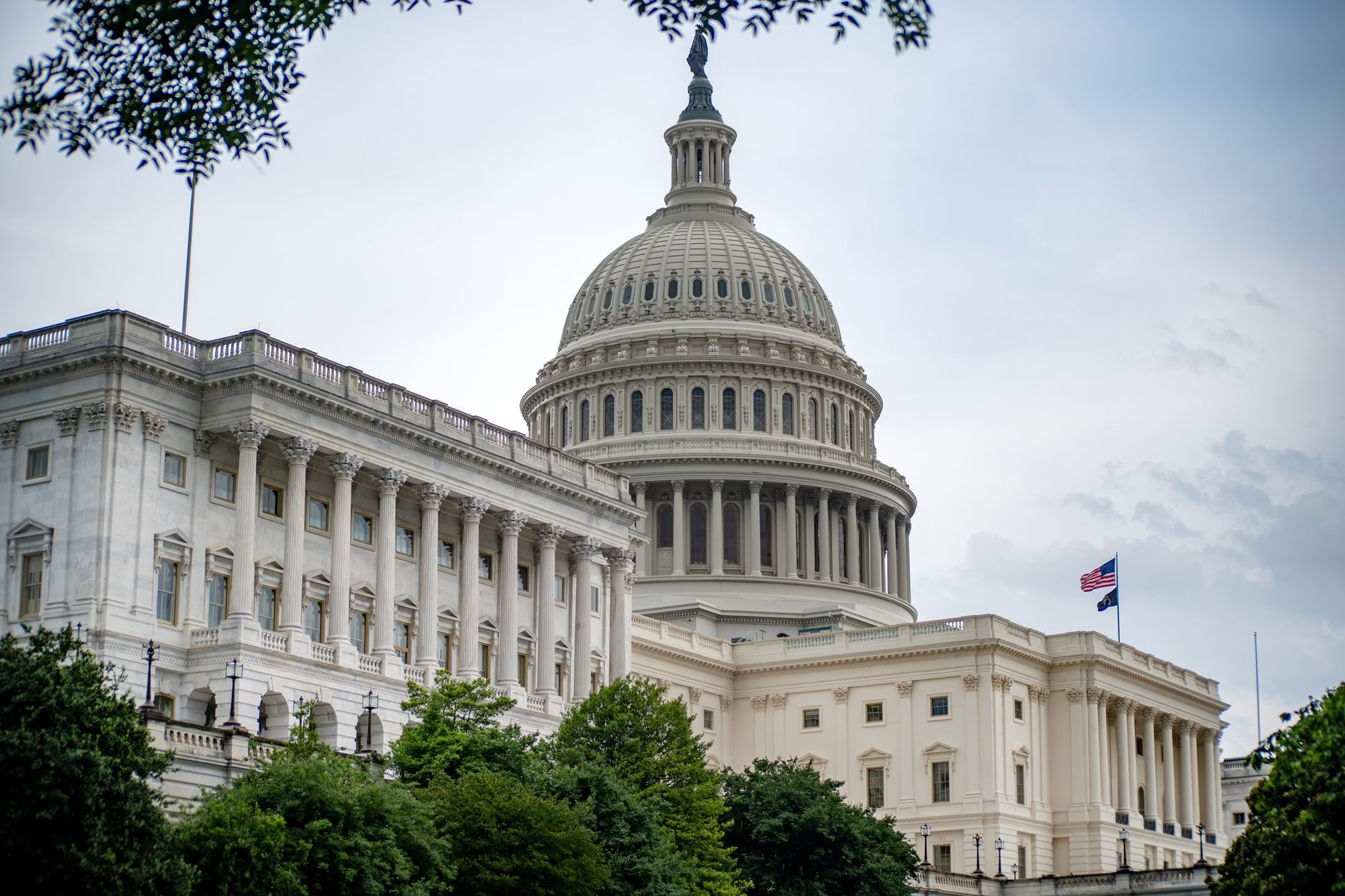
Key developments to monitor include potential cyber operations targeting critical infrastructure, asymmetric naval maneuvers near commercial shipping lanes, and formal policy debates within the U.S. Congress regarding war powers authority.
Whether diplomatic channels can re-establish operational boundaries before further military action occurs will remain the critical variable shaping international trade stability and energy market security in the days ahead.




















Leave a Reply