



The mBridge Shift: How Real-Time CBDC Settlements Are Redefining Trade Risk
On May 19, 2026, the geopolitical landscape of global finance has hit a critical pivot point. Project mBridge—the multi-Central Bank Digital Currency (mCBDC) platform—has officially transitioned from its pilot phase into a primary settlement engine for the ‘Triple Corridor’ involving the UAE, China, and Thailand. For business owners and logistics managers, this isn’t just a technical update; it is a fundamental shift in how money moves across borders.
The Intelligence: Why This Matters Now
For decades, the US Dollar and the SWIFT messaging system served as the singular highway for international trade. This required ‘correspondent banks,’ which added 2-5 days of delay and 3-7% in hidden fees. As of this month, mBridge has enabled instant, peer-to-peer settlement between the Digital Dirham and the e-CNY, bypassing the dollar entirely for energy and electronics shipments.
Strategic Tool: Monitoring the Shift
To track the liquidity and adoption of these new digital corridors, analysts are now utilizing the Bank for International Settlements (BIS) Innovation Hub Dashboard and OANDA’s real-time volatility maps. These tools show a marked divergence: while USD liquidity remains high, the ‘spread’ on mBridge-settled transactions has dropped by 40% this quarter, making non-dollar trades significantly cheaper for high-volume logistics.
Impact on Your Bottom Line
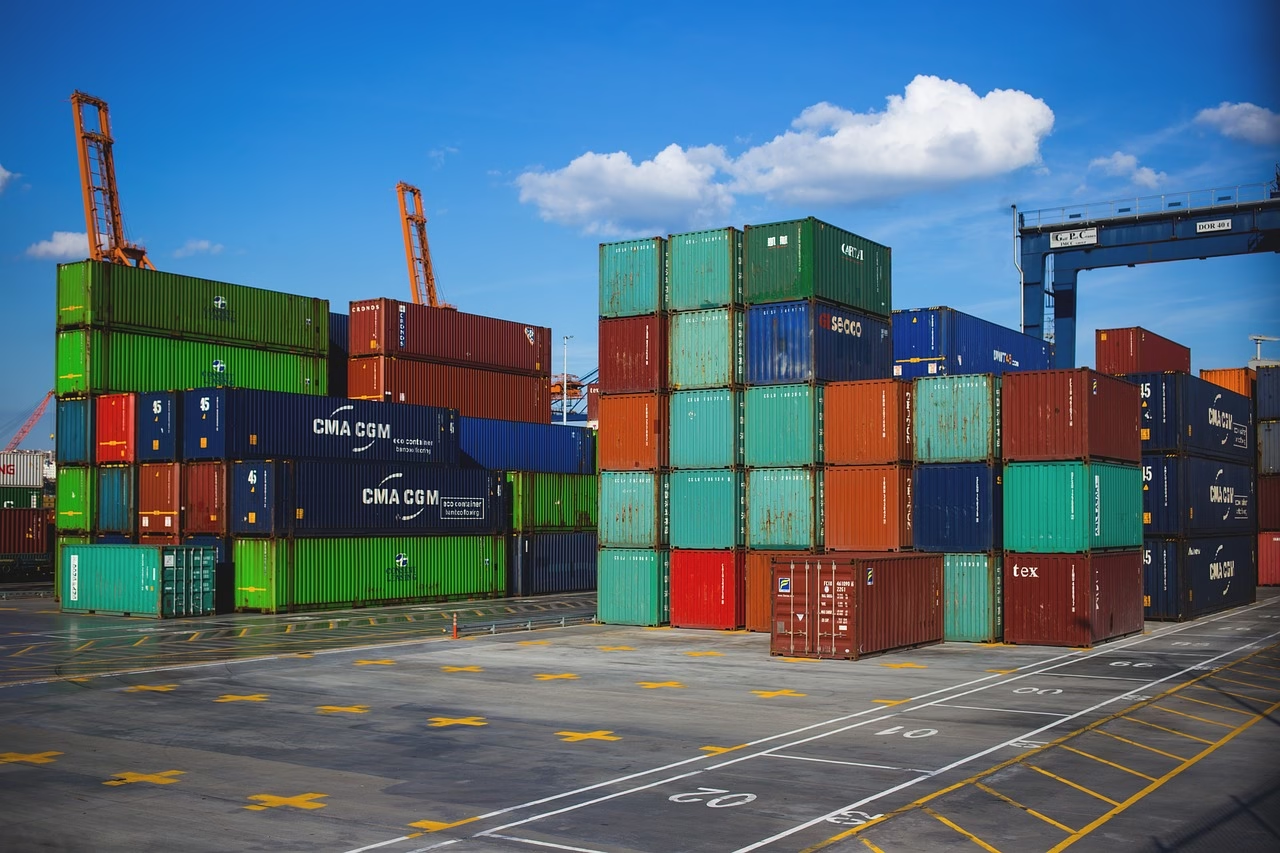
- Logistics Managers: Shipping payments that used to take 72 hours to clear can now be settled in seconds. This eliminates ‘vessel-at-dock’ delays caused by pending wire transfers, potentially saving thousands in daily demurrage fees.
- Global Investors & Freelancers: Currency volatility is shifting. As trade moves to e-CNY or Digital Dirhams, the demand for local currency increases. If you are holding contracts in USD, you face new ‘conversion slippage’ when dealing with Southeast Asian or Middle Eastern suppliers.
- Supply Chain Risk: The use of mBridge makes transactions ‘invisible’ to traditional Western sanctions tracking. This creates a bifurcated global market: a ‘Green Zone’ (SWIFT/USD) and a ‘Grey Zone’ (mBridge/CBDC).
Actionable Advice for Businesses
- Audit Your Banking Stack: Ensure your treasury department or payment processor (like Wise or Airwallex) has a roadmap for CBDC integration. You don’t want to be the only one paying 3% fees when your competitors are paying 0.1%.
- Re-evaluate Contracts: If you are an international freelancer or consultant, consider offering ‘Multi-Currency Settlement’ in your contracts to avoid being trapped in a devaluing currency pair.
- Monitor Geo-Regulatory Risk: Use the Atlantic Council’s CBDC Tracker to see if your primary trade partners are moving toward mBridge. A sudden shift could mean your current bank will no longer be able to facilitate your transfers without heavy compliance delays.
The Bottom Line: Geopolitics is no longer just about where the ships go—it’s about the digital rails the money moves on. If you aren’t watching the mBridge expansion, you are overpaying for your own global operations.

























Leave a Reply