



The Current Situation: Persistent Instability in the Bab el-Mandeb
As of mid-May 2026, the Red Sea corridor remains the world’s most volatile maritime chokepoint. Despite international efforts to stabilize trade routes, non-state actors in the region have shifted tactics from drone strikes to long-range underwater autonomous vehicles (UAVs), specifically targeting the emerging India-Middle East-Europe Economic Corridor (IMEC) infrastructure. This isn’t just a military standoff; it is a direct challenge to the alternative logistics routes designed to bypass traditional Suez dependency.
Why This Matters for Your Bottom Line
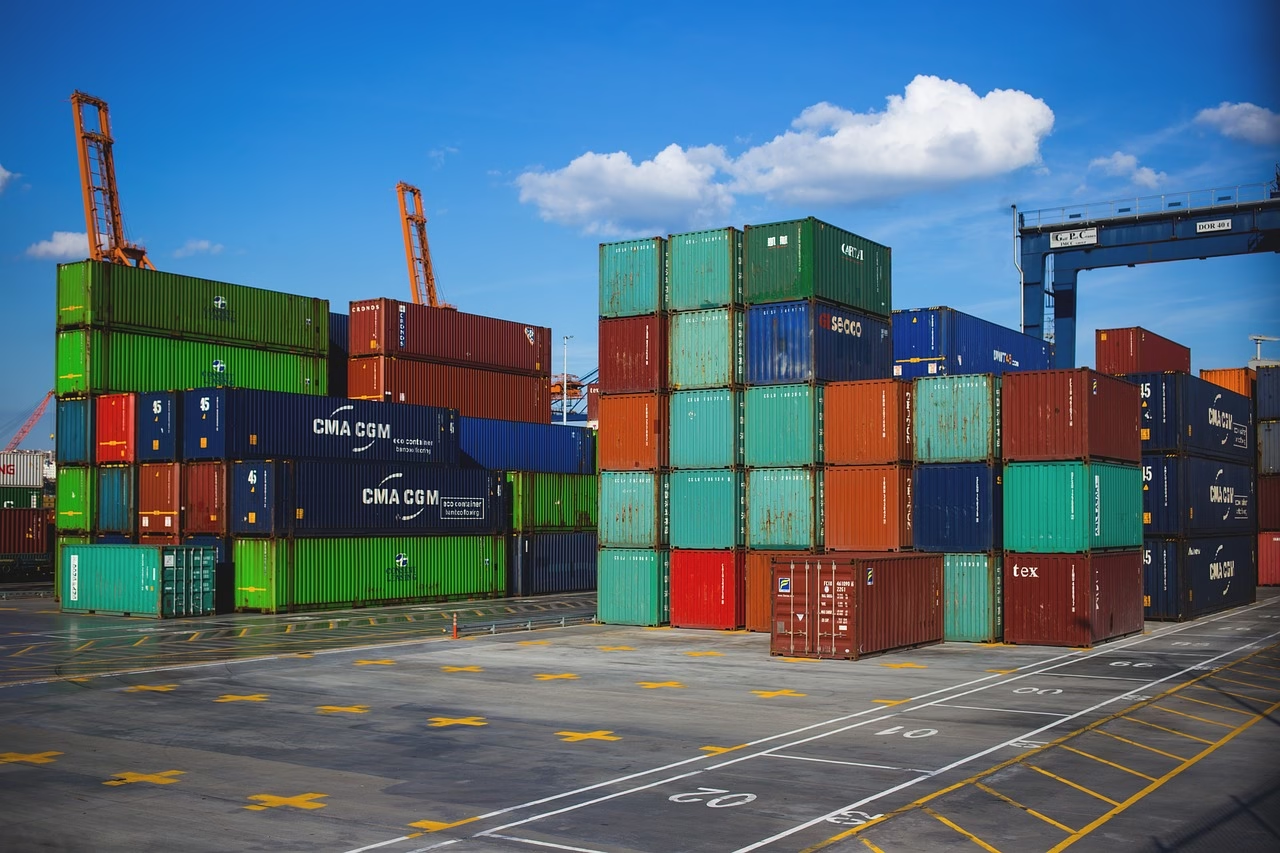
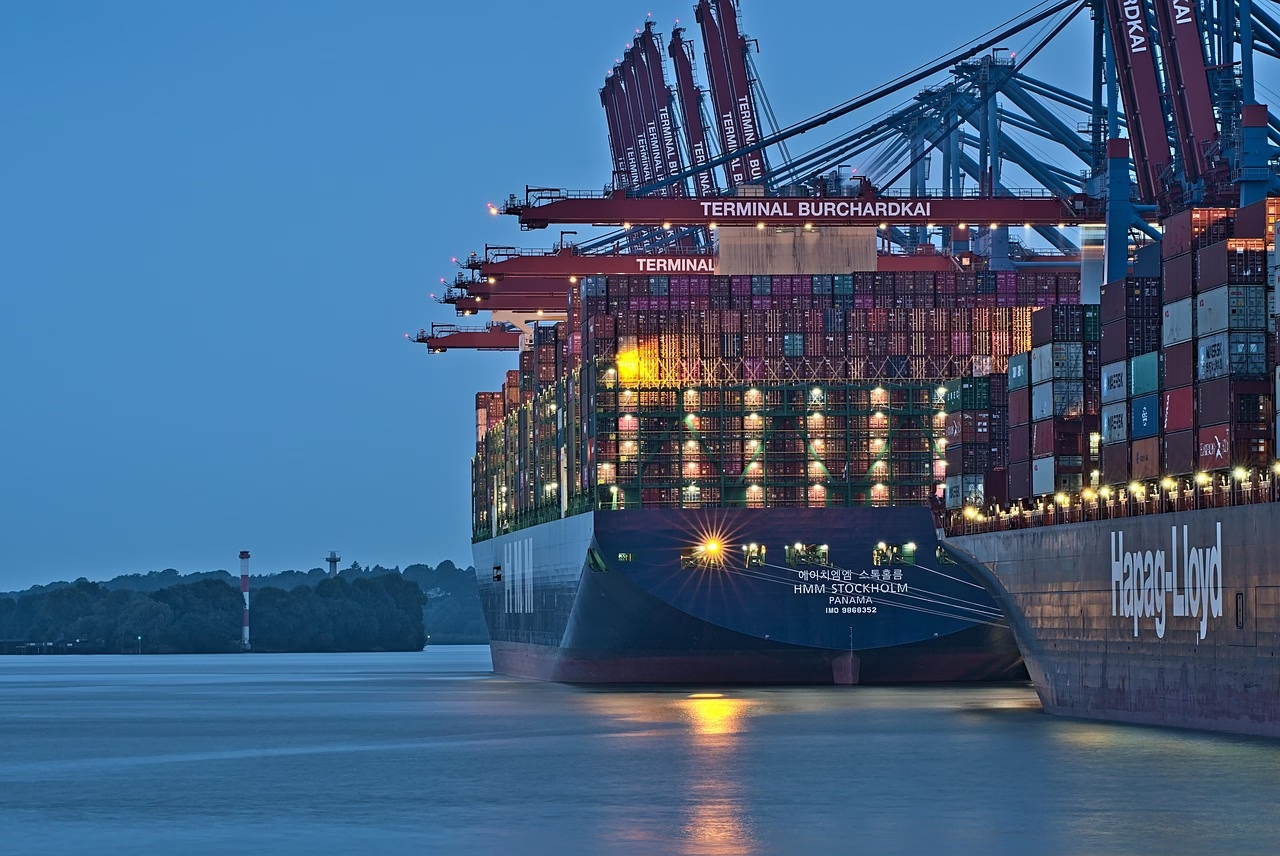
For business owners and logistics managers, the ‘new normal’ of 2026 means that shipping schedules are no longer fixed. The primary impact is ‘Terminal Congestion Echoes.’ When ships reroute around the Cape of Good Hope, they arrive at European ports in clusters, causing massive offloading delays that ripple back to Asian manufacturing hubs. For freelancers and investors, this volatility is driving currency fluctuations in the UAE Dirham and Indian Rupee, as these nations are the primary stakeholders in the IMEC project.
The Strategic Tool: ACLED Conflict Mapping
To move beyond headlines, professional analysts use the ACLED (Armed Conflict Location & Event Data Project). Specifically, for this crisis, you should monitor the ACLED Maritime Risk Dashboard. This tool allows you to track the exact coordinates of kinetic activity. If you see a cluster of ‘Remote Violence’ events shifting toward the Port of Haifa or the Gulf of Oman, you can predict a freight rate hike 72 hours before it hits the mainstream news.
Practical Action Plan for Businesses
- Audit War-Risk Surcharges: Review your shipping contracts for ‘Force Majeure’ clauses that have been updated in 2026. Many carriers are now implementing ‘Dynamic Risk Premiums’ that change weekly based on ACLED data.
- Diversify via Air-Sea Hybrid: Logistics managers should shift high-value/low-weight components to Jebel Ali (Dubai) via sea, then utilize air freight into Europe to bypass the Red Sea bottleneck entirely.
- Monitor the Xeneta Index: Use the Xeneta Real-Time Ocean Freight Index. If the spread between contract rates and spot rates exceeds 25%, it is a signal for global investors to hedge against inflation in the retail and electronics sectors.
The Historical Context
Historically, global trade relied on the ‘just-in-time’ model. The 2026 Red Sea crisis has officially killed that model, replacing it with ‘just-in-case’ inventory management. We are seeing a return to 19th-century maritime strategy where geopolitical alignment dictates your shipping speed more than your budget does. If your business is tied to the IMEC route, you are currently positioned in the most contested economic zone of the decade.

























Leave a Reply