



The Bab-el-Mandeb Bottleneck: Navigating the May 2026 Maritime Escalation
As of May 18, 2026, the maritime corridor through the Red Sea has hit a critical failure point. Following the breakdown of the Jeddah peace talks last week, a new wave of advanced drone interventions near the Hanish Islands has forced the Joint War Committee (JWC) to expand the ‘Listed Area’ for high-risk hull insurance. For business owners and logistics managers, the ‘Red Sea shortcut’ is no longer a viable calculation—it is a liability.
The Intelligence Tool: ACLED Data & MarineTraffic
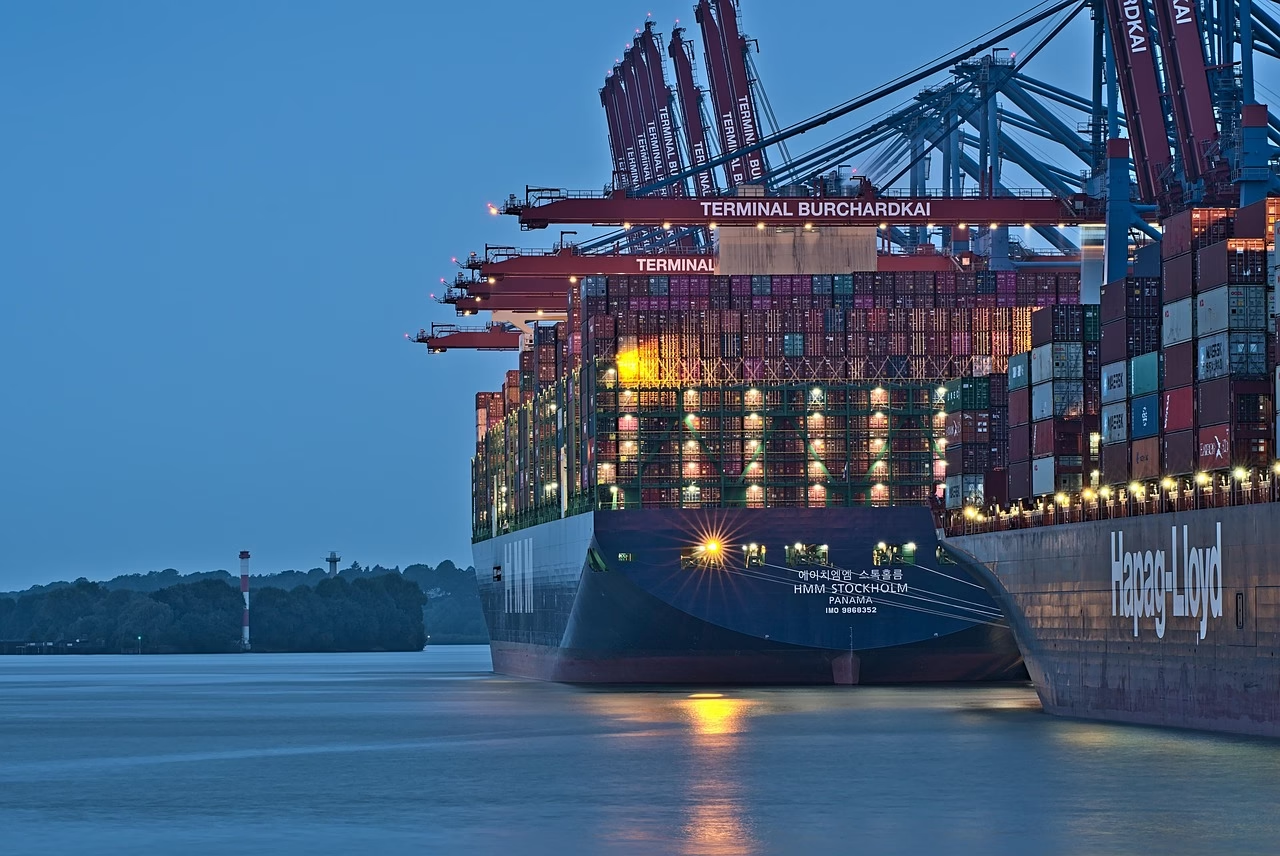
To monitor this risk in real-time, strategic analysts are utilizing the ACLED (Armed Conflict Location & Event Data Project) dashboard. By filtering for ‘Remote Violence’ and ‘Political Stability’ in the Yemen-Sudan corridor, we can see a 40% increase in kinetic events over the last 14 days. Complementing this with MarineTraffic’s Density Maps, we observe a massive ‘vessel vacuum’ in the Suez Canal, with a 70% diversion rate toward the Cape of Good Hope.
Impact on Global Business Operations
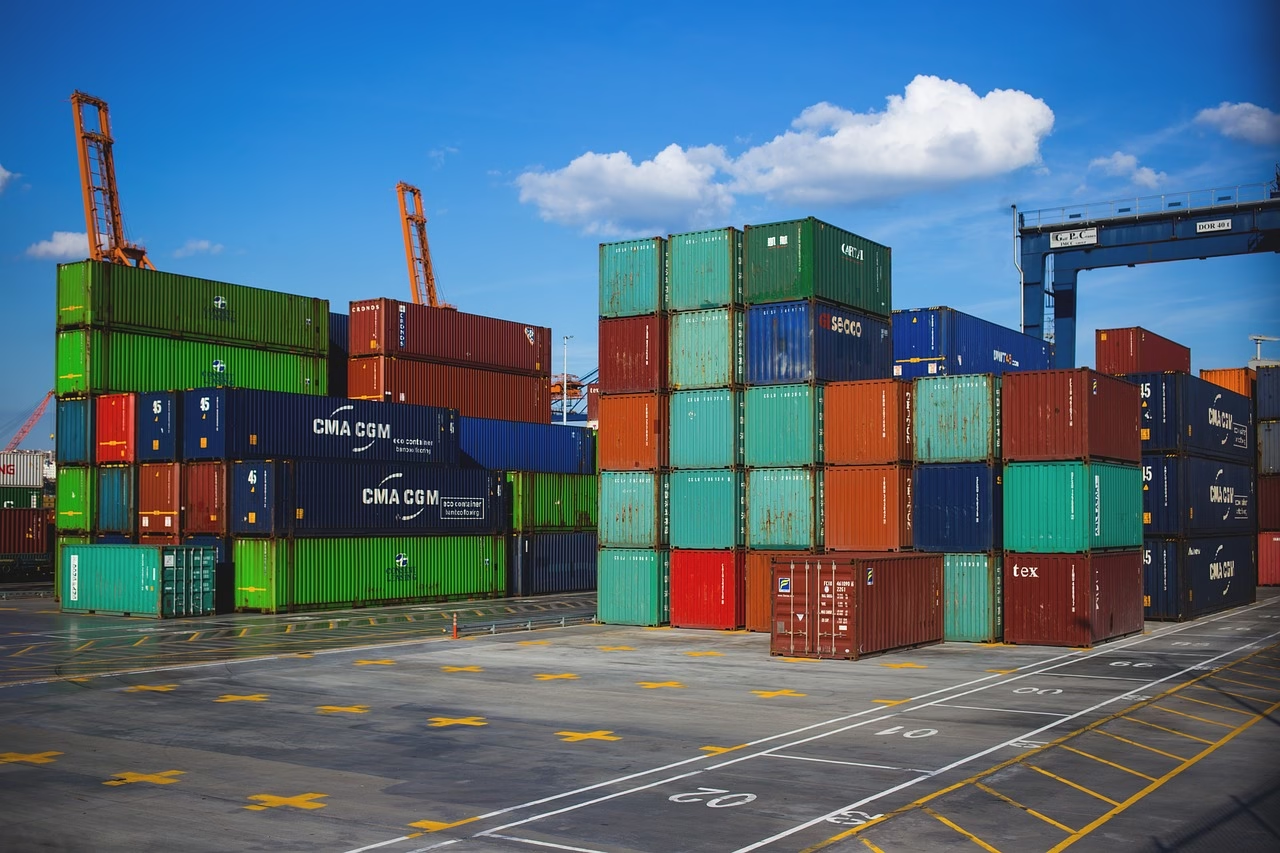
- Logistics Managers: The diversion around Africa adds 12–15 days to transit times between Shanghai and Rotterdam. This is not just a delay; it is a container equipment imbalance. Expect a shortage of empty 40ft units in Asian hubs by mid-June.
- Global Investors: Brent Crude has seen a $7/barrel ‘risk premium’ baked in since Monday. Watch for inflationary pressure on European energy stocks and a surge in freight rate indices (SCFI).
- International Freelancers & Small Businesses: Currency volatility is hitting the Egyptian Pound (EGP) and the Euro. If you are invoicing in EUR for services rendered in Asia, your margins are being eroded by fluctuating intermediate bank fees and hedging costs.
Strategic Action Plan
1. Audit Force Majeure Clauses: Business owners must review contracts immediately. Ensure that ‘geopolitical instability’ and ‘maritime blockade’ are explicitly covered to avoid breach-of-contract penalties during these delays.
2. Dynamic Pricing for Freight: If you are a logistics provider, move away from long-term fixed rates. Implement ‘War Risk Surcharges’ (WRS) that can be adjusted weekly based on the JWC’s risk assessments.
3. Inventory Buffer: Transition from ‘Just-in-Time’ to ‘Just-in-Case’ for critical components. The current maritime delay means your Q3 inventory needs to be on the water 20 days earlier than scheduled in 2025.
The Bottom Line
The 2026 Red Sea crisis isn’t just a military event; it’s a structural shift in global trade routes. By using data-driven tools like ACLED and adjusting your logistics footprint today, you can mitigate the 15-20% increase in landed costs that your competitors will likely face by next month.

























Leave a Reply