


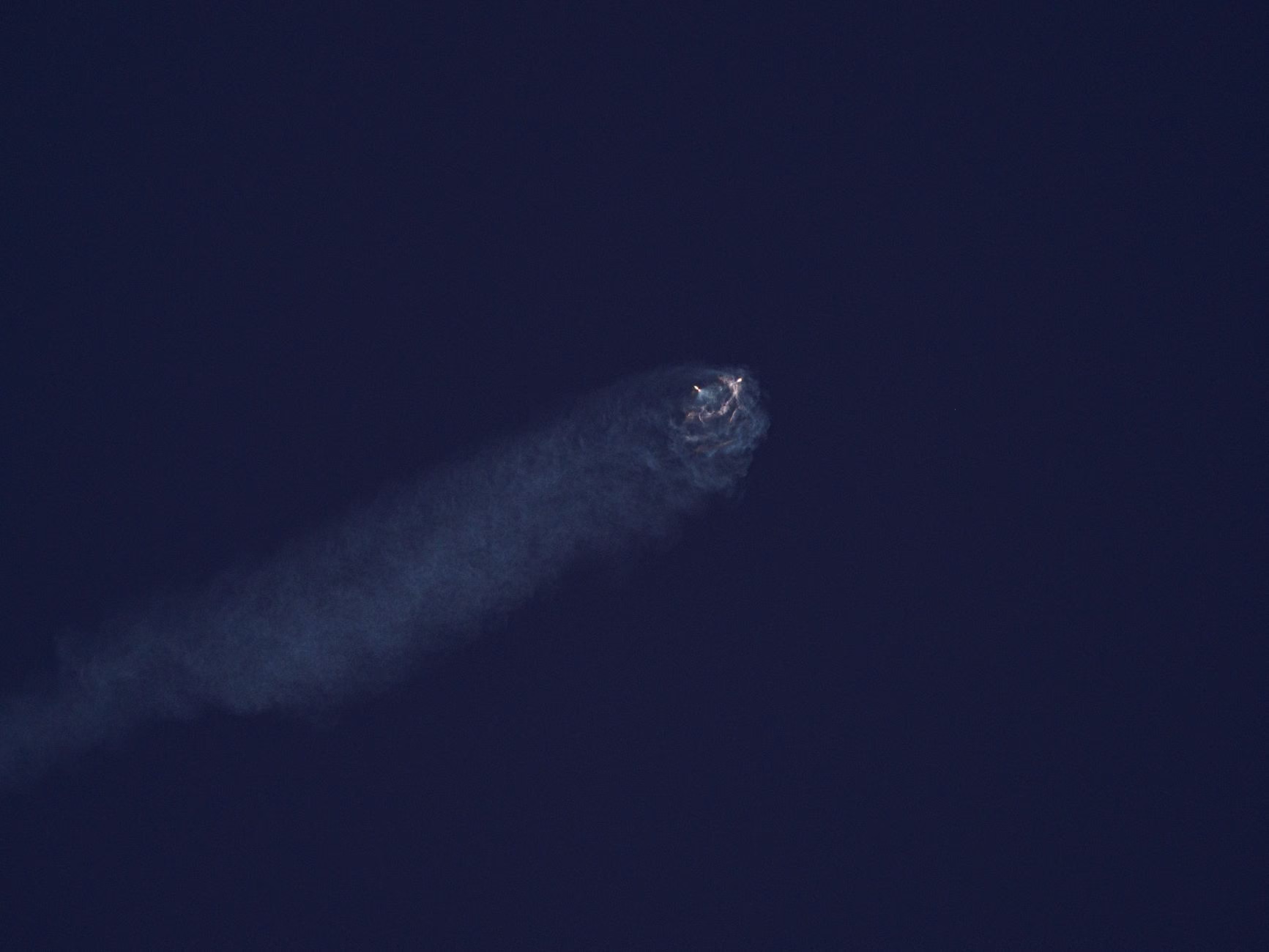
In a major escalation of Middle Eastern hostilities, Iran launched a barrage of ballistic missiles and explosive drones at Kuwait early Tuesday morning, wounding several civilians and damaging infrastructure, according to statements from the Kuwaiti military. The pre-dawn strikes targeted multiple installations across the Gulf nation, prompting Kuwaiti air defense systems to activate and sending residents to shelters. Kuwait’s Ministry of Defense confirmed that while several projectiles were intercepted, others penetrated defenses, marking the first direct Iranian attack on Kuwaiti soil in decades.
Geopolitical Context and Preceding Tensions
Kuwait, a key non-NATO ally of the United States, hosts approximately 13,500 American troops, primarily stationed at Camp Arifjan and Ali Al Salem Air Base. While Kuwait has historically maintained a diplomatic tightrope, acting as a mediator in regional conflicts, its close security relationship with Washington has long drawn ire from Tehran. The attack follows weeks of heightened rhetoric between Iran and Western-aligned Gulf states over maritime security and regional influence.
Military analysts point out that Kuwait’s geographic position makes it highly vulnerable to short- and medium-range ballistic missiles launched from southwestern Iran. The strike represents a significant departure from Iran’s typical reliance on regional proxies, such as the Houthis in Yemen or militias in Iraq, representing a direct state-on-state confrontation.
Details of the Strike and Tactical Response
According to Kuwaiti military spokesperson Brigadier General Fahad Al-Otaibi, the attack commenced at approximately 3:45 AM local time. Air defense units deployed MIM-104 Patriot missile batteries to counter the incoming threats, successfully neutralizing a majority of the unmanned aerial vehicles (UAVs) and several ballistic missiles over uninhabited areas. However, debris and unintercepted payloads impacted northern industrial zones and residential outskirts of Kuwait City.
The Ministry of Health reported that at least seven civilians sustained moderate to severe injuries from shrapnel and falling debris, with all victims currently receiving treatment at local hospitals. First responders quickly contained several localized fires sparked by the impacts, preventing further damage to critical energy infrastructure. Kuwait’s state-owned oil company, Kuwait Petroleum Corporation (KPC), confirmed that while security protocols were activated, production and export operations remained uninterrupted.
International Condemnation and Security Realignment
The international community reacted swiftly to the strikes, with Western and regional allies condemning the attack as a flagrant violation of international law. The United States State Department issued a strong condemnation, declaring its “ironclad” commitment to Kuwait’s security and sovereignty. U.S. Central Command (CENTCOM) confirmed it is actively coordinating with Kuwaiti forces to assess damage and bolster air defense coverage across the northern Gulf.
The Gulf Cooperation Council (GCC) convened an emergency session in Riyadh, Saudi Arabia, to address the aggression. In a joint statement, the GCC called the attack an assault on the collective security of all member states, warning that such actions threaten the stability of global energy markets. European Union officials also urged immediate de-escalation, warning of the potential for a wider regional conflagration.
Expert Perspectives and Economic Fallout
Defense experts suggest that the strike may have been designed to test the limits of Western air defense systems in the Gulf. “By targeting Kuwait directly, Tehran is sending a clear message to both the Gulf states and the United States that no nation in the region is beyond its reach,” said Dr. Amanda Vance, a senior fellow at the Institute for Middle East Security. “This is a high-stakes gamble aimed at establishing a new baseline of deterrence.”
Global energy markets reacted immediately to the news of the strikes. Brent crude futures surged by 4.2% in early trading, rising above $85 per barrel as traders factored in the increased risk of supply disruptions in the Strait of Hormuz and the wider Persian Gulf. Shipping registries have already advised commercial vessels transiting the northern Gulf to exercise extreme caution and implement enhanced security protocols.
Strategic Implications and What to Watch Next
In the coming days, observers will closely monitor the diplomatic and military responses of both Kuwait and its international partners. The United Nations Security Council is expected to hold an emergency closed-door meeting to discuss the incident, which could lead to renewed international sanctions against Iran’s missile program. Additionally, the attack is likely to accelerate efforts among Gulf nations to integrate their air and missile defense networks, a long-sought goal of U.S. defense planners.
Whether this attack represents an isolated warning or the opening salvo of a broader military campaign remains the critical question. The level of U.S. military retaliation, if any, will play a decisive role in determining whether the situation escalates into a wider regional conflict or subsides into a tense, heavily armed standoff.



















Leave a Reply