


Jared Kushner, the son-in-law of former President Donald Trump, is facing significant public backlash in Albania this month as environmental activists and local residents protest his proposed luxury resort development on the protected Sazan Island and Zvernec coastline. The project, which seeks to transform historically preserved Mediterranean landscapes into high-end tourism hubs, has triggered a wave of demonstrations in Tirana, centered on concerns regarding ecological destruction and the potential displacement of local wildlife.
The Context of Balkan Investment
The Albanian government, under Prime Minister Edi Rama, has been aggressively courting foreign direct investment to bolster the nation’s tourism sector. The proposed development by Affinity Partners, Kushner’s investment firm, falls under a broader initiative to rebrand Albania as a luxury destination for international travelers.
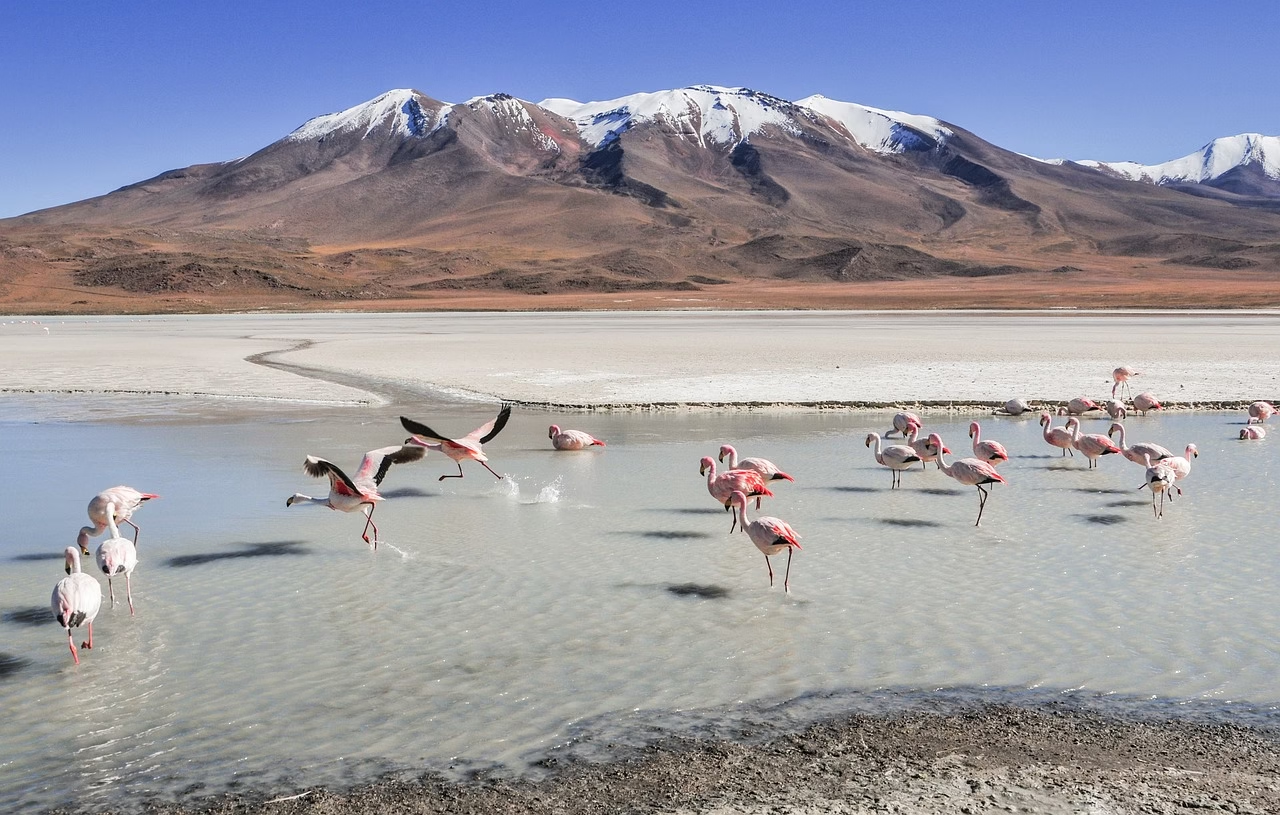
Sazan Island, a former military outpost, remains a site of significant cultural and historical importance. Zvernec, meanwhile, is home to a protected lagoon system that serves as a critical habitat for migratory birds, including the iconic pink flamingo.
Ecological and Social Tensions
Environmental groups, most notably the Committee for the Protection of the Vjosa and the Vjosa Explorer network, argue that the construction of luxury villas and high-density resorts will irreparably damage the Narta Lagoon ecosystem. The presence of pink flamingos in the area has become a symbol of the resistance, with activists highlighting that the birds rely on the undisturbed mudflats for feeding and nesting.
Beyond the environmental impact, local residents have raised concerns regarding transparency and the privatization of public land. Critics claim that the government’s fast-tracked approval process bypasses necessary environmental impact assessments and denies local communities a voice in the future of their coastline.
Expert Perspectives and Economic Data
Economic analysts note that while tourism accounts for roughly 20% of Albania’s GDP, the shift toward luxury-exclusive developments may not benefit the local population as intended. Dr. Elena Marku, a researcher focused on Mediterranean urban development, notes that ‘top-down, large-scale projects often result in the leakage of capital, where profits flow to international investors rather than reinvesting in local infrastructure.’
Data from the Albanian Institute of Statistics indicates that despite a record-breaking year for tourism, poverty rates in coastal regions remain stagnant. This disparity provides the foundation for the current unrest, as citizens demand a model of development that prioritizes environmental sustainability over rapid, foreign-led expansion.
Industry Implications and Future Outlook
The conflict in Albania serves as a bellwether for the broader tension between post-Soviet nations seeking rapid economic integration and the global push for conservation. If the project proceeds without significant concessions to environmental groups, it could set a precedent for future development in the Balkans, potentially alienating eco-conscious tourists and international NGOs.
Industry observers should watch for upcoming government rulings on the environmental impact studies currently under review. The outcome will likely determine whether Affinity Partners can proceed with construction or if they will be forced to scale back plans to accommodate ecological safeguards. As the pressure mounts, the case remains a litmus test for the balance between private investment interests and the preservation of natural heritage in the Mediterranean.
















Leave a Reply