


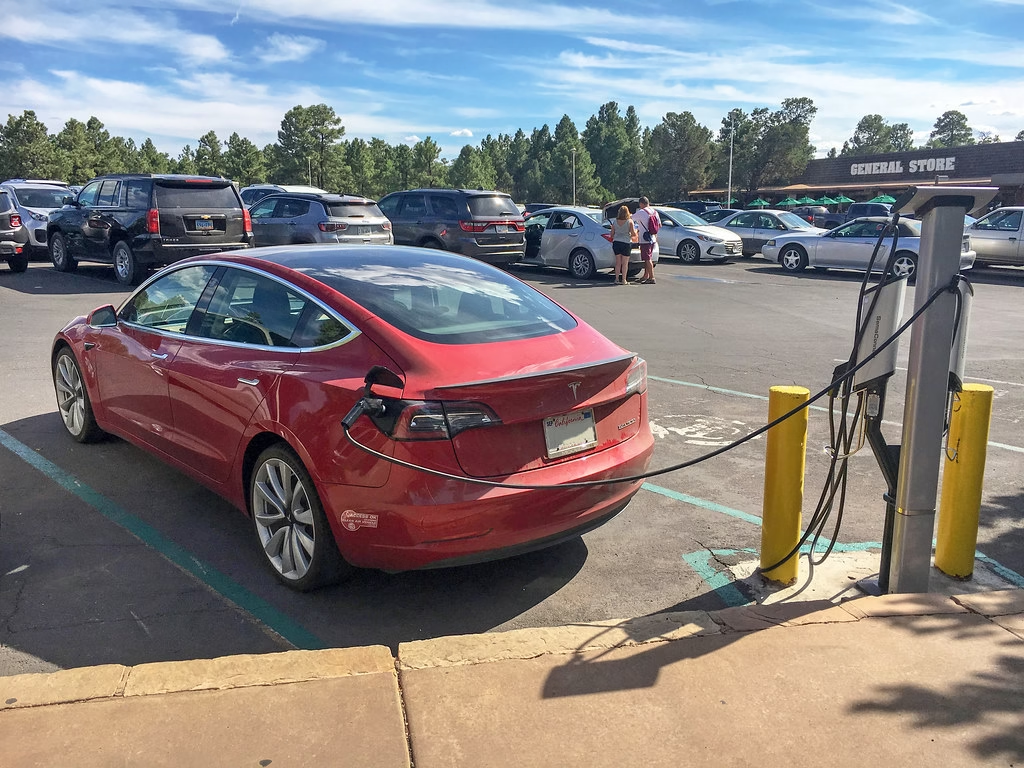
Ford Motor Company has officially granted its electric vehicle (EV) owners access to Tesla’s vast Supercharger network across the United States and Canada, marking a significant milestone in automotive industry collaboration that began in early 2024. This integration allows Ford drivers to utilize over 15,000 Tesla fast-charging stations, effectively addressing one of the most persistent barriers to widespread EV adoption: the scarcity and reliability of public charging infrastructure.
The Evolution of Charging Standards
For over a decade, the North American EV market was fragmented by competing charging standards, with Tesla’s proprietary North American Charging Standard (NACS) operating independently of the Combined Charging System (CCS) used by most other manufacturers. This divide created a “walled garden” effect, where non-Tesla owners often struggled to find compatible, high-speed charging options during long-distance travel.
The shift began in earnest when Ford announced it would adopt the NACS port for its future vehicles, prompting a domino effect across the industry. Major automakers including General Motors, Rivian, and Volvo subsequently followed suit, signaling a move toward a unified charging ecosystem that mirrors the convenience of traditional gas stations.
Operational Integration and User Experience
To access the network, Ford EV owners must utilize a specifically designed NACS adapter, which bridges the physical connection between the vehicle’s CCS port and Tesla’s charging hardware. The integration is managed through the FordPass app, which handles authentication and payment processing, ensuring a seamless “plug-and-charge” experience for the user.
Data from the Department of Energy indicates that public charging availability remains a primary concern for 40% of potential EV buyers. By tapping into Tesla’s network—widely considered the gold standard for reliability and uptime—Ford is effectively neutralizing a major competitive disadvantage. Industry analysts suggest that this move could boost consumer confidence in Ford’s F-150 Lightning and Mustang Mach-E models significantly.
Expert Perspectives on Market Consolidation
“Standardization is the final piece of the puzzle for mass-market EV adoption,” notes automotive analyst Sarah Jenkins. “By aligning with Tesla, Ford is not just adding capacity; they are validating a unified standard that simplifies the consumer experience and incentivizes further infrastructure investment.”
While the transition is largely positive, some experts point to potential congestion issues as more non-Tesla vehicles flood the network. Tesla currently operates more than 50,000 Superchargers globally, but the influx of millions of new users from various manufacturers will require rapid scaling of hardware deployment to maintain current wait times.
Future Implications for the Automotive Sector
The collaboration underscores a broader trend of “coopetition” within the automotive sector, where rivals cooperate on infrastructure while competing on vehicle design and software. As the industry moves toward 2025, the focus will likely shift from building proprietary networks to expanding the existing NACS-based grid.
Observers should watch for how other legacy automakers accelerate their transition to NACS hardware in upcoming model years. Additionally, the industry will be monitoring whether this unified network approach encourages increased federal funding for charging corridors, as the unified standard simplifies the requirements for government-backed infrastructure projects.






















Leave a Reply