


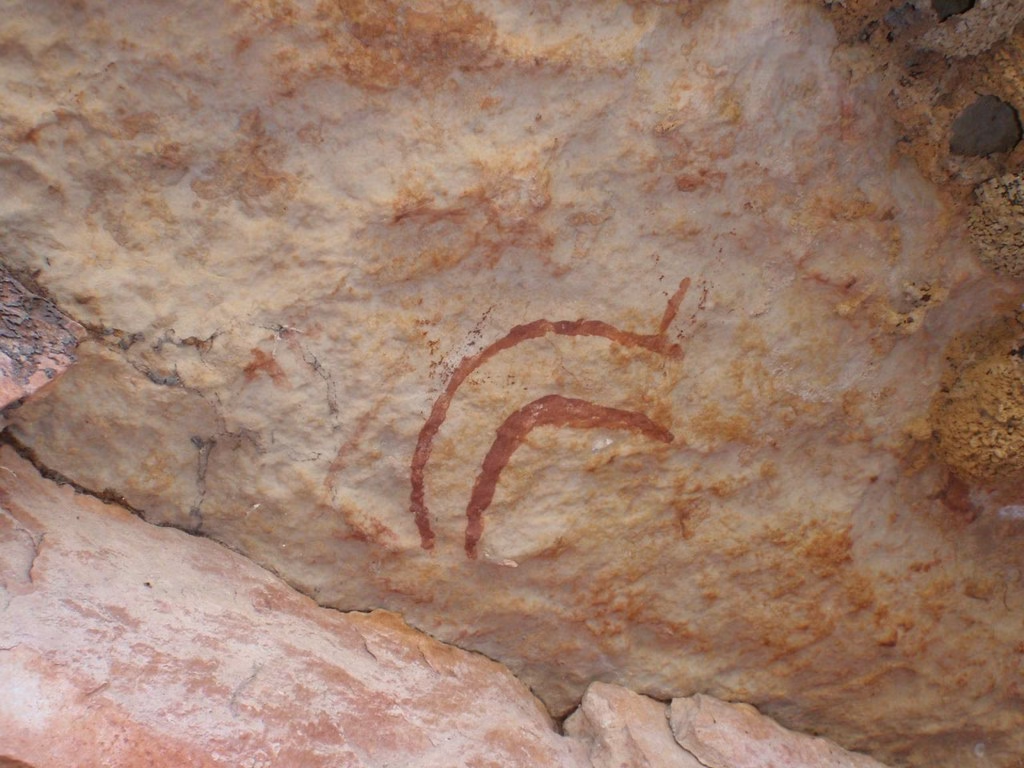
Archaeologists have officially identified a series of red ochre stripes inside a cave in the Gower Peninsula, Wales, as the oldest known prehistoric art in Britain. The markings, which were dismissed by experts as natural mineral deposits for over a century, were recently re-examined using advanced imaging technology that confirmed they were intentionally applied by humans during the Upper Paleolithic period.
A History of Dismissal
The cave, known as Cathole Cave, has been a subject of geological interest since the early 20th century. While researchers had long noted the distinct red lines on the limestone walls, the prevailing consensus among geologists was that the discoloration was caused by natural water seepage and iron oxide accumulation.
This interpretation remained unchallenged for decades, as the markings were largely considered geological noise rather than artistic expression. It was only through modern portable X-ray fluorescence (pXRF) analysis and multispectral imaging that researchers could distinguish between chemical staining and the deliberate application of pigment.
New Scientific Validation
The recent study, led by a team of specialists in prehistoric archaeology, utilized non-invasive scanning to map the chemical composition of the stripes. The results revealed high concentrations of iron-rich ochre, a material commonly used by ancient hunter-gatherers for artistic and symbolic purposes.
Dr. George Nash, a specialist in rock art, noted that the placement and intentionality of the lines align with established patterns seen in other European Paleolithic sites. The findings suggest that the creators were not merely staining the rock, but utilizing the cave’s natural morphology to enhance the visibility and impact of their work.
Cultural Significance in the Paleolithic Era
The discovery effectively shifts the timeline of artistic development in the British Isles, suggesting that early humans were engaging in symbolic behavior much earlier than previously assumed. This evidence places the makers of the art within the same cultural sphere as the creators of the famous cave paintings in France and Spain.
Experts argue that these markings likely served a ritualistic or communicative purpose. By marking the cavern, these early inhabitants were carving out a sense of place and identity within a landscape shaped by extreme climatic fluctuations at the end of the last Ice Age.
Industry and Academic Implications
For the field of archaeology, this discovery serves as a cautionary tale regarding the limitations of past methodologies. It highlights the necessity of revisiting long-standing assumptions as scientific tools become more sophisticated, potentially leading to the reclassification of other “natural” formations across Europe.
Moving forward, the site faces significant preservation challenges. The Gower Peninsula is a high-traffic area, and the vulnerability of the ochre to environmental changes means that rigorous conservation protocols must be established. Future investigations will likely focus on whether similar, overlooked markings exist in neighboring cave systems, potentially rewriting the map of prehistoric human settlement in the region.


























Leave a Reply