


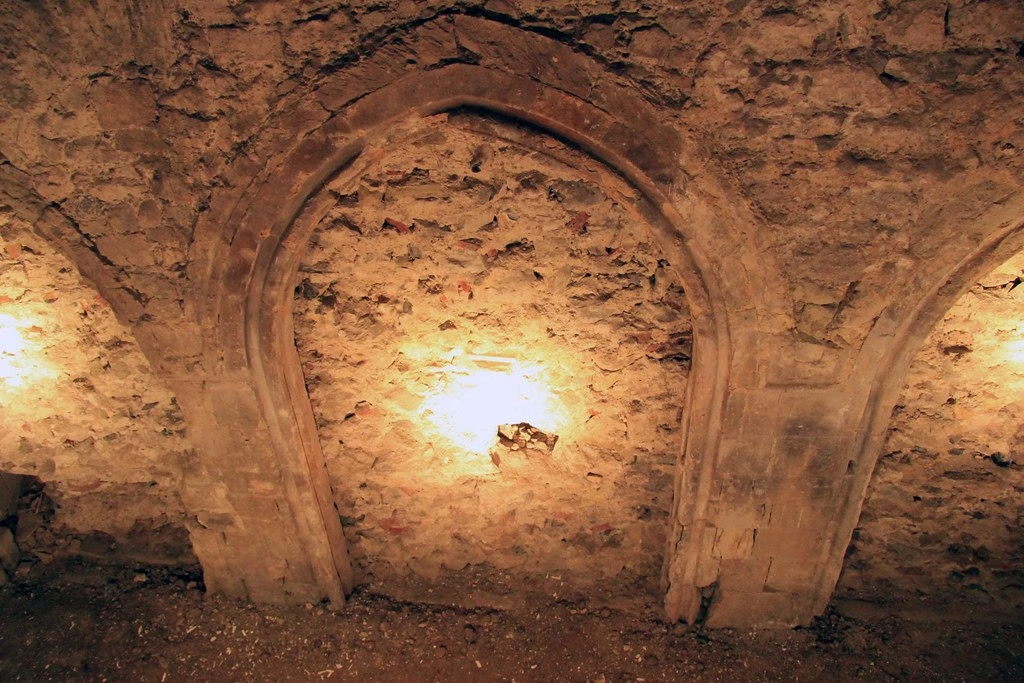
Race Against Time in Remote Laos
International rescue teams are working around the clock in a remote region of central Laos to reach two men trapped deep within a limestone cave system. The operation, which began following reports of the men failing to return from an expedition earlier this week, involves specialized divers and cave rescue experts navigating treacherous, narrow tunnels. Authorities have characterized the situation as a critical race against time due to the unpredictable nature of the cave’s internal environment and the risk of rising water levels.
Context of the Cave System
Central Laos is renowned for its expansive and complex karst topography, which attracts spelunkers and researchers from across the globe. These limestone formations often contain intricate networks of subterranean rivers and tight vertical shafts that remain largely unmapped. Historically, these systems are prone to rapid flooding during periods of intense rainfall, a factor that complicates search and rescue logistics significantly.
The Challenges of Subterranean Rescue
Rescuers are currently facing extreme logistical hurdles as they attempt to reach the stranded individuals. The primary obstacle remains the physical geography of the cave, which requires team members to crawl through claustrophobic passages that offer little room for equipment or maneuverability. These “squeeze” points often force rescuers to remove gear, increasing the risk of injury and exhaustion.
Communication remains another significant barrier for the operation. Because standard radio frequencies cannot penetrate thick layers of limestone rock, teams are forced to rely on physical relay lines or specialized low-frequency beacons. Current protocols involve mapping the cave in real-time while simultaneously attempting to stabilize the trapped men, who are believed to be positioned in an area that has become partially submerged.
Expert Perspectives and Safety Data
Cave rescue experts emphasize that time is the most critical variable in such environments. According to the International Commission for Alpine Rescue (ICAR), the primary risks in subterranean environments include hypothermia, dehydration, and the psychological impact of isolation. Even in tropical climates like Laos, underground temperatures remain significantly lower than surface temperatures, often leading to rapid heat loss for immobile individuals.
Local authorities have called upon international specialized cave-diving units to assist in the operation. These teams bring advanced rebreather technology and specialized lighting systems designed to function in high-humidity, low-visibility environments. While no specific cause for the entrapment has been confirmed, local geological surveys suggest that recent seismic activity in the region may have caused minor rockfalls that blocked the original exit route.
Industry and Safety Implications
The incident has prompted regional officials to re-evaluate safety protocols for cave exploration in Laos. Experts suggest that the growing popularity of adventure tourism in the region requires more stringent permitting processes and mandatory check-in procedures for all expeditions. This event serves as a stark reminder of the inherent dangers associated with exploring unmapped or high-risk cave systems.
Moving forward, stakeholders will monitor the success of this rescue operation to determine if stricter regulations on commercial spelunking are necessary. Observers should watch for updates from the Laos Ministry of Information, Culture and Tourism regarding the potential closure of specific cave sites until they can be fully mapped and assessed for structural integrity. The outcome of this mission will likely influence future international collaboration in cave rescue training and disaster response protocols across Southeast Asia.






















Leave a Reply