



The 2026 Red Sea Bottleneck: Assessing Strategic Risk for Global Trade
As we navigate the second quarter of 2026, the maritime corridor through the Bab el-Mandeb strait remains the world’s most volatile economic chokepoint. For business owners, logistics managers, and international investors, the ongoing regional conflict in the Middle East is no longer a temporary disruption—it is a structural shift in how global trade operates.
The Current Reality: Beyond the Headlines
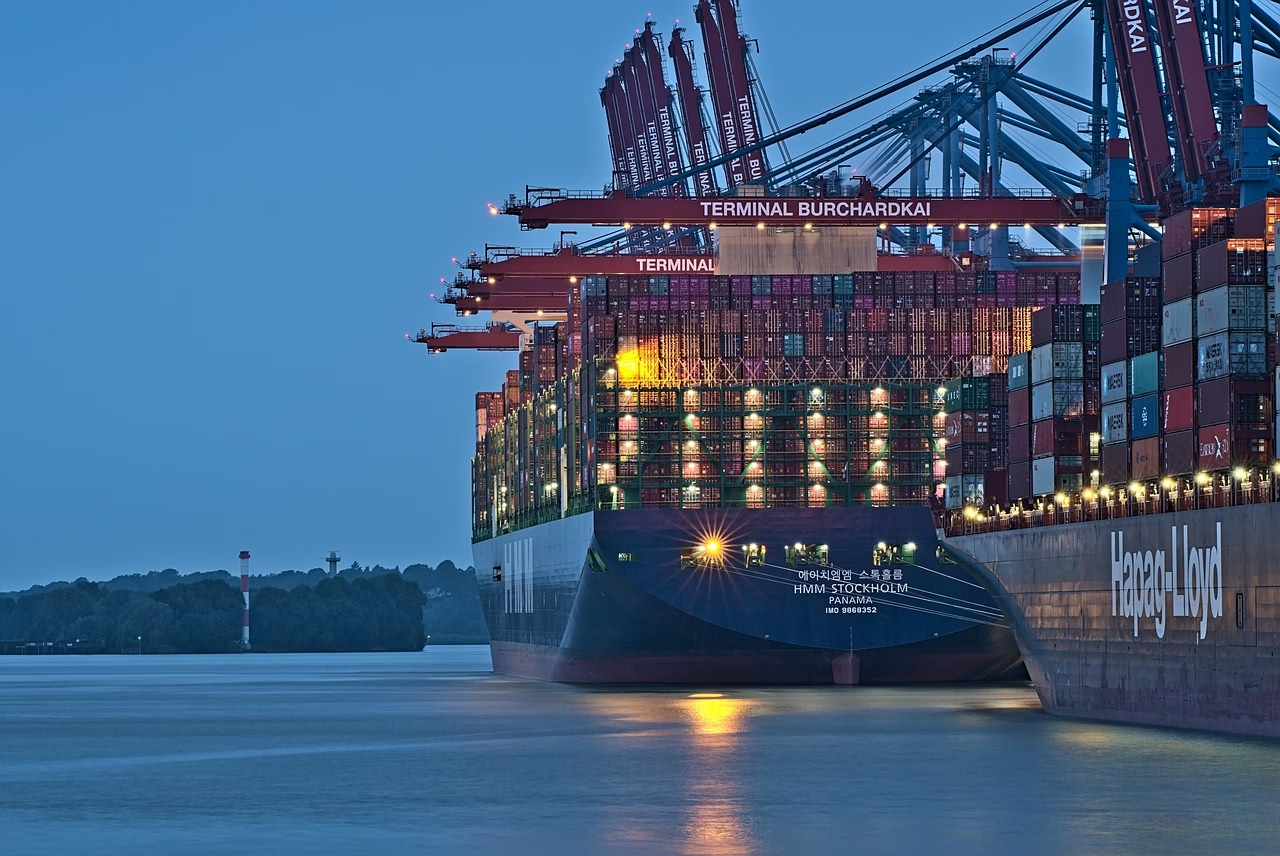
The escalation of kinetic strikes on commercial vessels has forced major carriers to indefinitely reroute around the Cape of Good Hope. This isn’t just about longer transit times; it’s about the complete recalibration of the ‘Just-in-Time’ delivery model. For a freelancer in Europe or a business owner in Asia, this means higher costs for raw materials and unpredictable inventory cycles.
The Pro Tool: Tracking the Crisis in Real-Time
To move beyond speculative news, professional analysts rely on primary data. To monitor this specific risk, we utilize two essential platforms:
- MarineTraffic (Live AIS Data): Use the ‘Density Maps’ feature to track real-time vessel diversions. If you see a sudden thinning of traffic in the Suez Canal, expect a spike in TEU (Twenty-foot Equivalent Unit) freight rates within 72 hours.
- ACLED (Armed Conflict Location & Event Data Project): This platform provides verified data on strike locations. Logistics managers use ACLED to determine if an escalation is localized or spreading to secondary ports, which directly impacts maritime insurance premiums.
Actionable Impact on Your Bottom Line
This conflict affects your operations in three specific ways:
- Insurance Surcharges: ‘War Risk’ premiums for Red Sea transits have increased by over 300% since the start of the year. Even if you don’t ship through this region, the global shortage of available vessels—caused by longer routes—drives up shipping costs on all major lanes.
- Currency Volatility: Regional instability is putting upward pressure on energy prices. Investors should watch the USD/oil correlation closely; a spike in Brent Crude typically precedes a dip in emerging market currencies.
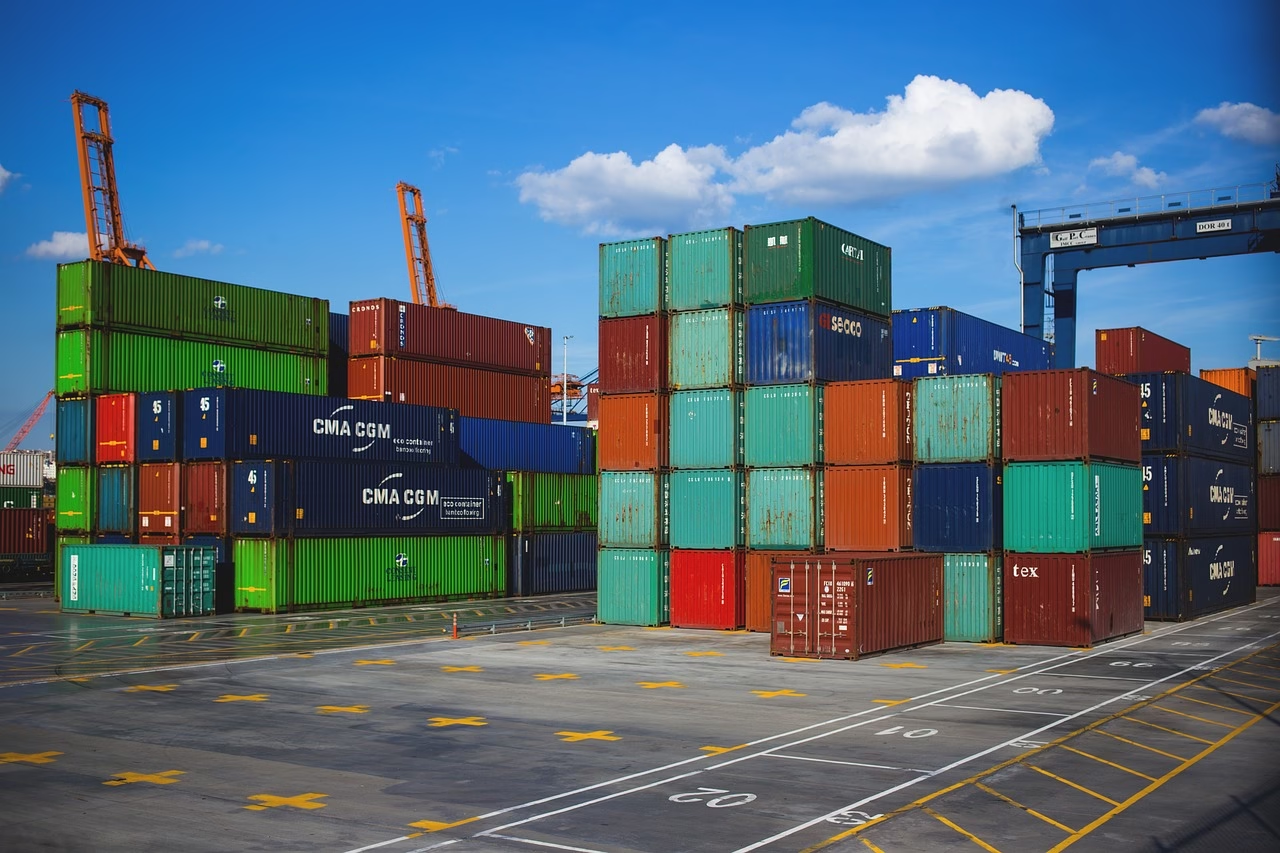
- Supply Chain Lag: The 10-14 day delay added by the Cape route is causing ‘port clustering’ in Rotterdam and Singapore. If you are a business owner, you must increase your safety stock levels by at least 20% to avoid stockouts.
Strategic Recommendation
Stop waiting for a ‘return to normal.’ The most resilient businesses in 2026 are those diversifying their supplier base away from single-route dependencies. Monitor the ACLED Dashboard weekly for conflict expansion and use MarineTraffic to verify if your carriers are being honest about ‘unforeseen delays.’ In the current geopolitical climate, information symmetry is your best hedge against loss.























Leave a Reply