


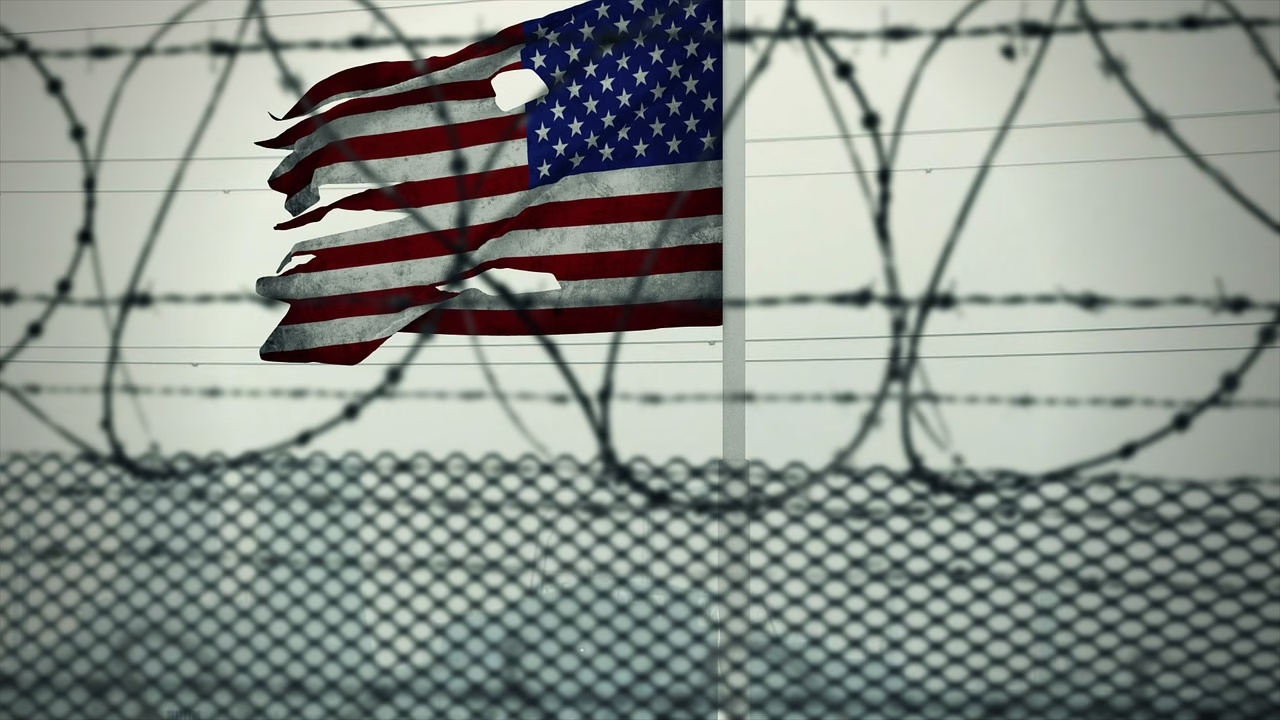
Diplomatic Engagement at Guantanamo Bay
General Laura Richardson, the commander of U.S. Southern Command, held a rare, high-level meeting with Cuban military officials near the U.S. Naval Base at Guantanamo Bay this week. The brief exchange, which focused primarily on operational security matters, marks a significant moment of direct communication between the two nations’ military establishments in a region historically defined by geopolitical tension.
U.S. officials characterized the meeting as a pragmatic effort to address security concerns surrounding the base’s perimeter. While the meeting was limited in scope, it signals a functional approach to managing long-standing bilateral friction through direct, albeit restricted, dialogue.
Context of U.S.-Cuba Military Relations
The relationship between the United States and Cuba has remained largely frozen since the 1960s, characterized by the U.S. trade embargo and limited diplomatic ties. The presence of the U.S. Navy base at Guantanamo Bay, established in 1903, has long been a focal point of contention, with the Cuban government regularly calling for the return of the territory.
Military-to-military engagement between the two countries is exceptionally rare. In recent years, communication has been relegated to low-level coordination regarding migration or maritime safety, making a meeting involving the head of Southern Command—which oversees U.S. military operations in Central and South America and the Caribbean—a notable departure from the status quo.
Operational Security and Regional Dynamics
The meeting occurred within the framework of maintaining operational security at the Guantanamo facility. Such exchanges are essential for preventing miscalculations in areas where U.S. forces operate in close proximity to foreign sovereign territory.
Analysts suggest that the discussion likely focused on regional security threats, including illicit trafficking and border stability. By keeping the conversation limited to operational matters, both sides avoid the political baggage that often stalls broader diplomatic negotiations.
Expert Perspectives on Strategic Communication
Foreign policy experts note that even minimal communication channels can serve as vital de-escalation tools. Dr. Elena Rodriguez, a senior fellow at the Center for Strategic and International Studies, suggests that such meetings prevent potential misunderstandings from spiraling into larger crises.
“Establishing a precedent for professional dialogue, even on narrow technical issues, provides a safety valve,” Rodriguez said. “It allows both militaries to manage the physical reality of their proximity without requiring a fundamental shift in their respective governments’ ideological stances.”
Long-Term Implications and Future Outlook
For the broader Caribbean region, this meeting suggests a preference for stability over escalation. While analysts do not expect an immediate thaw in U.S.-Cuba relations, the willingness to engage in direct military-to-military communication sets a practical tone for future interactions.
Observers will be monitoring whether these operational exchanges lead to increased transparency regarding military exercises or maritime operations in the Florida Straits. The ability of both nations to maintain these channels during periods of political volatility will be the key metric for regional security in the coming months.



















Leave a Reply