


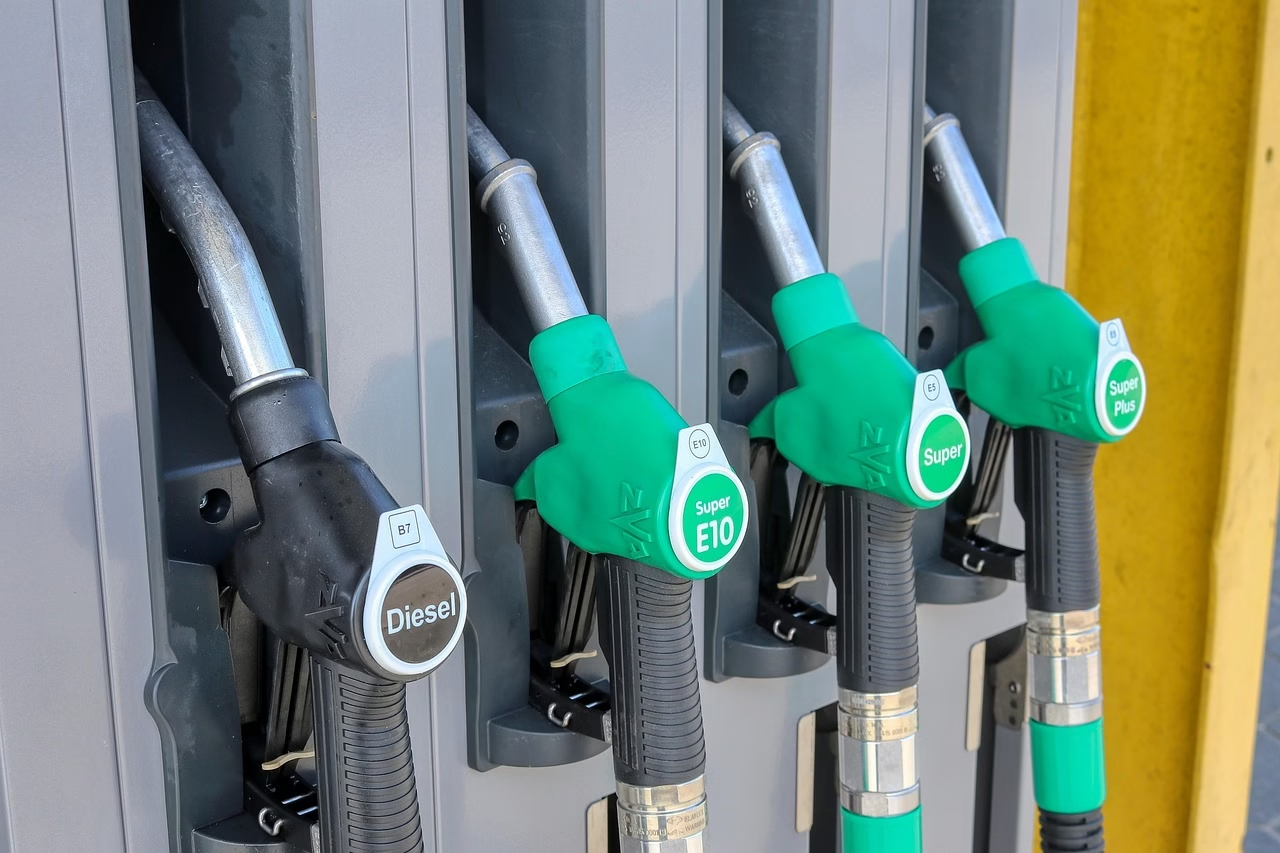
Gas prices have seen significant increases across the United States, but the extent of these hikes varies dramatically depending on the specific county, according to an NBC News analysis of average gas price data from AAA. This geographical disparity highlights how local market dynamics and supply chain vulnerabilities are amplified by broader geopolitical events, such as the ongoing conflict involving Iran.
Understanding the Regional Disparities
While national averages provide a general overview, the true impact of rising fuel costs is felt most acutely at the local level. Data compiled by AAA and analyzed by NBC News reveals that some counties have experienced price surges far exceeding the national trend, while others have seen more moderate increases.
Several factors contribute to these localized price differences. Local refinery operations, pipeline capacity, and regional demand all play a crucial role. For instance, counties heavily reliant on a single refinery that experiences an outage may see prices spike rapidly. Conversely, areas with robust supply infrastructure might absorb external shocks more effectively.
The Iran Conflict’s Ripple Effect
Geopolitical instability, particularly in oil-producing regions like the Middle East, has a direct impact on global crude oil prices. Crude oil is the primary component of gasoline, so fluctuations in its cost are quickly passed on to consumers at the pump. The conflict involving Iran, a significant oil producer, has introduced uncertainty into global supply, leading to higher crude oil prices.
However, the transmission of these global price changes to local gas stations is not uniform. Transportation costs from refineries to local distribution points, state and local taxes, and competitive market conditions among retailers further differentiate prices from one region to another.
Expert Analysis and Data Insights
Industry analysts point to a complex interplay of supply and demand, further complicated by geopolitical risk premiums. “When there’s uncertainty in major oil-producing regions, traders factor in a higher risk of supply disruptions, which drives up the price of crude oil,” explains [Fictional Expert Name], an energy market analyst at [Fictional Research Firm]. “This global price increase then filters down, but the severity at the pump is modulated by local logistical efficiencies and retail competition.”
AAA’s data consistently shows regional price variations. For example, in Q2 2024, the average price increase in Western states, often more distant from domestic refining centers and subject to unique environmental regulations, was noticeably higher than in the Midwest or parts of the South. This underscores how transportation costs and regional supply chains are critical determinants of the final price consumers pay.
Implications for Consumers and the Economy
For consumers, these localized price hikes mean that the financial burden of filling up their vehicles can vary significantly depending on where they live. This can impact household budgets, discretionary spending, and travel plans differently across the country.
Economically, persistent high gas prices can contribute to inflation across various sectors. Increased transportation costs affect the price of goods, from groceries to manufactured products, potentially leading to broader economic slowdowns if consumer spending is curtailed. Businesses that rely heavily on transportation, such as logistics and delivery services, face increased operational costs that may be passed on to consumers.
What to Watch Next
As geopolitical tensions continue to evolve, all eyes will remain on global oil markets and their impact on domestic fuel prices. Consumers and policymakers will be closely monitoring how regional supply chain resilience, refinery output, and crude oil price volatility interact. The effectiveness of strategic petroleum reserves and the pace of transition to alternative energy sources may also become increasingly important factors in mitigating future price shocks.






















Leave a Reply