


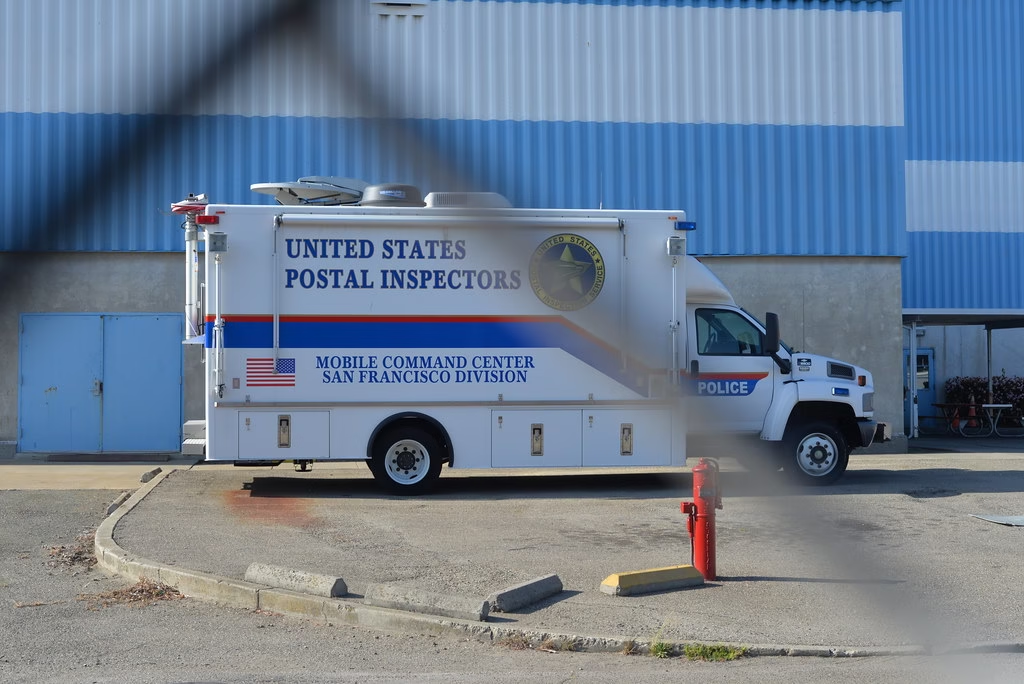
New Data Requirements for Election Mail
The United States Postal Service (USPS) formally proposed a new requirement this week that would mandate state election officials provide comprehensive voter registration lists for mail-in ballot processing. This policy shift, announced just one day after a federal judge declined to block a broader executive order regarding mail-in voting, places the agency at the center of a growing national debate over election administration and ballot integrity.
Context and Regulatory Landscape
The proposal arrives during a period of heightened scrutiny regarding the logistical capabilities of the USPS to manage record volumes of election-related mail. Historically, the agency has operated under broad mandates to deliver election mail, but it has functioned with significant autonomy regarding specific data sharing protocols with state governments.
The recent judicial ruling, which permitted the implementation of existing executive orders concerning mail-in ballots to proceed, provided the immediate backdrop for this announcement. Legal analysts suggest the USPS is attempting to standardize its internal verification processes to mitigate risks associated with potential delays or misrouting of ballots during high-turnout election cycles.
Operational and Legal Perspectives
Proponents of the measure argue that access to updated voter lists would allow the USPS to perform more accurate address verification and route optimization. According to agency officials, the integration of state data could significantly reduce the number of undeliverable ballots, which often stems from outdated registration information.
Conversely, civil rights groups and several state election officials have expressed concerns regarding privacy and the potential for federal overreach. Critics argue that requiring states to turn over sensitive registration databases creates new vulnerabilities for data breaches and could theoretically be used to influence the geographic distribution of election resources.
Data from the Election Assistance Commission indicates that while state-level voter list maintenance is already a legal requirement, the centralization of this data at the federal level represents a significant departure from standard operating procedures. The agency maintains that its goal is purely logistical, citing a 2022 internal report that identified address accuracy as the primary challenge in timely mail-in ballot delivery.
Industry and Voter Implications
For the average voter, this proposal could mean a more streamlined experience if implemented, as ballot tracking could become more precise. However, for state election offices, the mandate would require a substantial overhaul of existing IT infrastructure to ensure secure, real-time data transfers to the federal postal service.
The industry is now watching to see how the Department of Justice and the Election Assistance Commission coordinate with the USPS regarding these data security standards. Legal challenges are expected in the coming weeks, as states weigh the conflict between federal postal mandates and state-level control over voter registration records.
Future Outlook
Moving forward, the focus will shift to the public comment period required for such regulatory changes. Stakeholders should monitor upcoming congressional hearings, as lawmakers are likely to demand testimony from Postmaster General officials regarding the security protocols and long-term intentions behind this data collection effort. If adopted, the policy will likely face immediate injunction requests in federal court, setting the stage for a protracted legal battle over the boundaries of federal authority in state-run elections.






















Leave a Reply