


Strategic Shifts in the Middle East
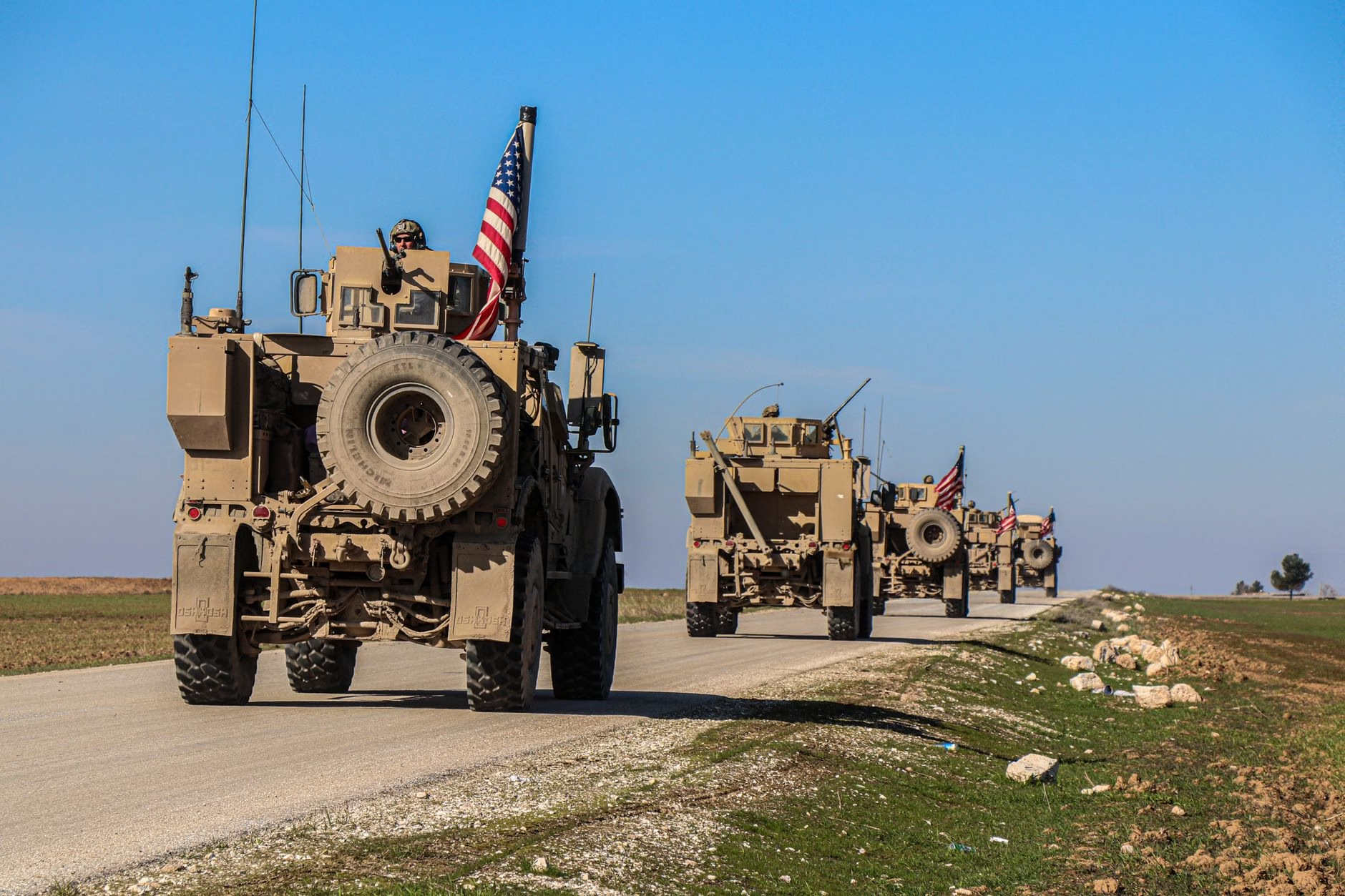
The United States is currently reevaluating its extensive military footprint across the Middle East. Following significant destruction and operational disruption caused by recent conflicts with Iran, defense officials are taking a close look at long-term regional strategy. This assessment could lead to the permanent closure of several key installations that have long defined American power projection in the region.
For decades, a heavy presence of personnel and hardware in the Gulf served as a cornerstone of national security policy. These facilities allowed for rapid response capabilities, deterrence against regional adversaries, and the protection of vital global shipping lanes. However, modern warfare and shifting geopolitical priorities are forcing a comprehensive review of these long-standing commitments.
Assessing Infrastructure Damage
The physical toll taken by recent hostilities has been a primary catalyst for this strategic pivot. Extensive infrastructure damage at multiple locations has prompted defense leaders to question the cost-effectiveness of rebuilding vulnerable outposts. Modern missile and drone technology has demonstrated that fixed, concentrated military hubs can face severe threats during large-scale conflicts.
Repairing damaged facilities requires substantial financial investment and logistical effort. As defense budgets face tighter constraints, decision-makers must weigh the utility of these heavily fortified locations against emerging security challenges in other parts of the world. The calculus of modern defense planning now places a higher premium on agility and resilience rather than permanent physical dominance.
Shifting Defense Priorities
Beyond immediate repair costs, the overarching global strategy of the United States is undergoing a profound transformation. Policymakers are increasingly turning their attention toward major power competition in other regions, most notably the Indo-Pacific. This shift necessitates a reallocation of military resources away from enduring regional conflicts and toward more mobile, flexible postures.
Maintaining a smaller, more distributed footprint allows forces to remain responsive without presenting high-value targets to adversaries. By reducing reliance on large regional installations, defense planners aim to mitigate risks while still maintaining the ability to project power when necessary. This decentralized approach represents a fundamental departure from the traditional base-heavy strategies of the past.
Implications for Regional Security
Any decision to permanently shutter installations in the Middle East will carry profound implications for regional stability. Local partners who rely on a robust American presence for defense assurance may need to assume greater responsibility for their own security. At the same time, regional adversaries will closely monitor these adjustments to gauge shifts in American commitment.
Diplomatic channels will play a critical role in managing the transition. Reassuring allies that a reduced physical footprint does not equate to complete abandonment is essential for maintaining regional partnerships. Defense officials emphasize that future engagement will likely rely more heavily on rotational forces, joint training exercises, and advanced technological deterrence rather than permanent garrisons.
The Future of American Strategy
The ongoing review of Middle East operations marks a turning point in modern defense history. As the United States adapts to the realities of contemporary conflict, the era of massive, fixed regional footprints may be drawing to a close. By prioritizing flexibility, risk reduction, and global strategic balance, the nation is preparing its armed forces for the security challenges of the decades ahead.






















Leave a Reply