


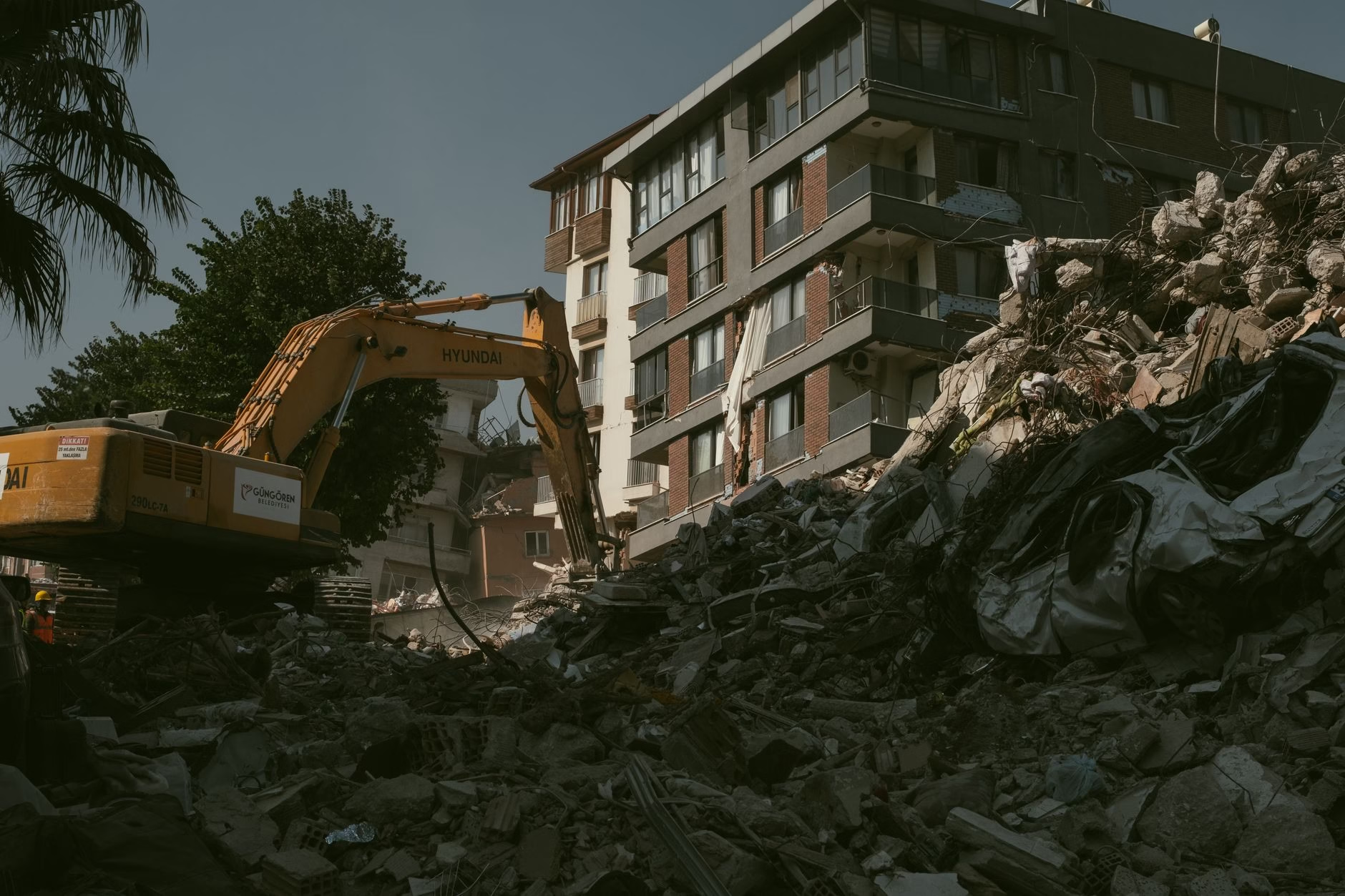
In the contemporary digital landscape, the rapid dissemination of information, both accurate and inaccurate, poses significant challenges. A recent instance of this involves a video depicting the aftermath of a severe earthquake, which has been circulating widely online. This footage, while authentic in its portrayal of devastation, has been erroneously linked to a projected seismic event in Colombia slated for August 2026. Such instances highlight a pervasive issue: the spread of earthquake misinformation and the critical need for vigilance in verifying digital content.
The Anatomy of a Viral Deception
The video in question showcases scenes of considerable structural damage, including collapsed buildings and debris-strewn streets, indicative of a powerful seismic tremor. Accompanying this visual content are claims asserting that it represents the preparatory stages or even the direct aftermath of an impending earthquake in Colombia, specifically prophesied for August 2026. The combination of compelling, albeit decontextualized, visuals and a precise, yet unfounded, future prediction creates a potent recipe for viral spread across various social media platforms and messaging applications.
Tracing the True Origins: The 2018 Venezuela Earthquake
Careful investigation reveals that the video does not originate from Colombia, nor does it pertain to any future event. Instead, the footage accurately depicts the consequences of a significant earthquake that struck Venezuela in 2018. This seismic event caused widespread damage across several regions of the country, leaving a lasting impact on infrastructure and communities. The images circulating online are genuine records of that specific disaster, completely unrelated to Colombia or any forecasted seismic activity in 2026. The misattribution represents a clear case of content being stripped of its original context and repurposed to support a false narrative.
The Impossibility of Precise Prediction
One of the most critical aspects to understand when confronting claims of future earthquakes with specific dates and locations is the current state of seismological science. Despite advancements in geological research and monitoring technologies, scientists worldwide consistently affirm that it is not possible to predict earthquakes with the precision seen in the circulating claims. While experts can identify fault lines, assess seismic risk in certain areas, and provide probabilities over long timescales, pinpointing the exact day, time, and magnitude of a future earthquake remains beyond current scientific capabilities. Any assertion of a precise future seismic event should therefore be regarded with extreme skepticism.
Why Misinformation Spreads
Several factors contribute to the rapid propagation of earthquake misinformation. The inherent human fascination with natural disasters, coupled with the dramatic visual nature of earthquake aftermath, makes such content highly shareable. The urgency often embedded in false claims, particularly those involving future threats, can trigger an emotional response, prompting individuals to share without critical evaluation. Furthermore, the decentralized nature of online platforms allows information, regardless of its veracity, to bypass traditional editorial gatekeepers, reaching vast audiences in moments. The desire to inform or warn others, even with unverified information, can inadvertently fuel the spread of hoaxes.
The Real-World Impact of False Claims
The consequences of widespread earthquake misinformation extend beyond mere confusion. Such false alarms can induce unnecessary panic and anxiety among populations, particularly in regions already prone to seismic activity. They can also divert valuable resources, as emergency services or concerned citizens might react to unfounded warnings, potentially impacting their ability to respond to genuine crises. Over time, a continuous stream of unverified information erodes public trust in legitimate news sources and scientific institutions, making it harder for accurate, critical information to penetrate when it is truly needed. This erosion of trust can have long-term societal implications, hindering effective communication during actual emergencies.
Navigating the Digital Landscape: Strategies for Verifying Information
To combat the proliferation of earthquake misinformation and other forms of digital deception, individuals must adopt a proactive and critical approach to online content. Firstly, always consider the source of the information. Is it a reputable news organization, a scientific institution, or an unknown social media account? Secondly, look for corroborating evidence from multiple, independent, and credible sources. If a significant event or prediction is being discussed, it should be reported by established news outlets and scientific bodies. Thirdly, perform reverse image or video searches to determine the original context of visual content. Tools are readily available to help identify when and where a video or image first appeared online. Finally, be wary of emotionally charged language or claims that demand immediate sharing without verification. A moment of critical thought before sharing can significantly curb the spread of falsehoods.
Conclusion
The case of the Venezuela earthquake video falsely linked to a future Colombia jolt serves as a powerful reminder of the pervasive challenge of earthquake misinformation in the digital age. While the desire to stay informed and share important news is understandable, it is paramount that individuals exercise discernment and employ verification strategies. Upholding the integrity of information is a collective responsibility, crucial for maintaining public trust, preventing unnecessary alarm, and ensuring that accurate data prevails, especially concerning matters of public safety and natural phenomena.


















Leave a Reply