


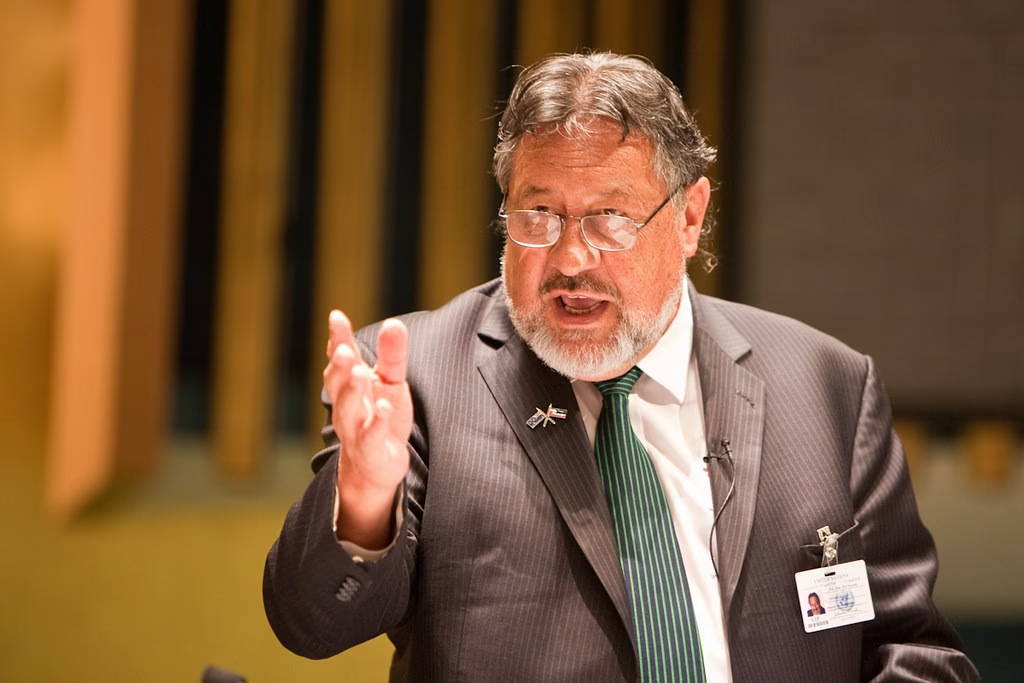
United Nations High Commissioner for Human Rights Volker Türk faces a contentious vote at the UN General Assembly in New York this Friday as several member states mount opposition to extending his mandate for a second four-year term. The pushback highlights deepening geopolitical divisions over global rights monitoring during a period of expanding armed conflict and diplomatic polarization.
Navigating a Fragmented Global Rights Landscape
Volker Türk, an Austrian career diplomat and veteran UN official, took office in October 2022 after succeeding former Chilean President Michelle Bachelet. His tenure has coincided with severe humanitarian crises across the globe, requiring his office to monitor conflicts in the Middle East, Ukraine, Sudan, and Myanmar.
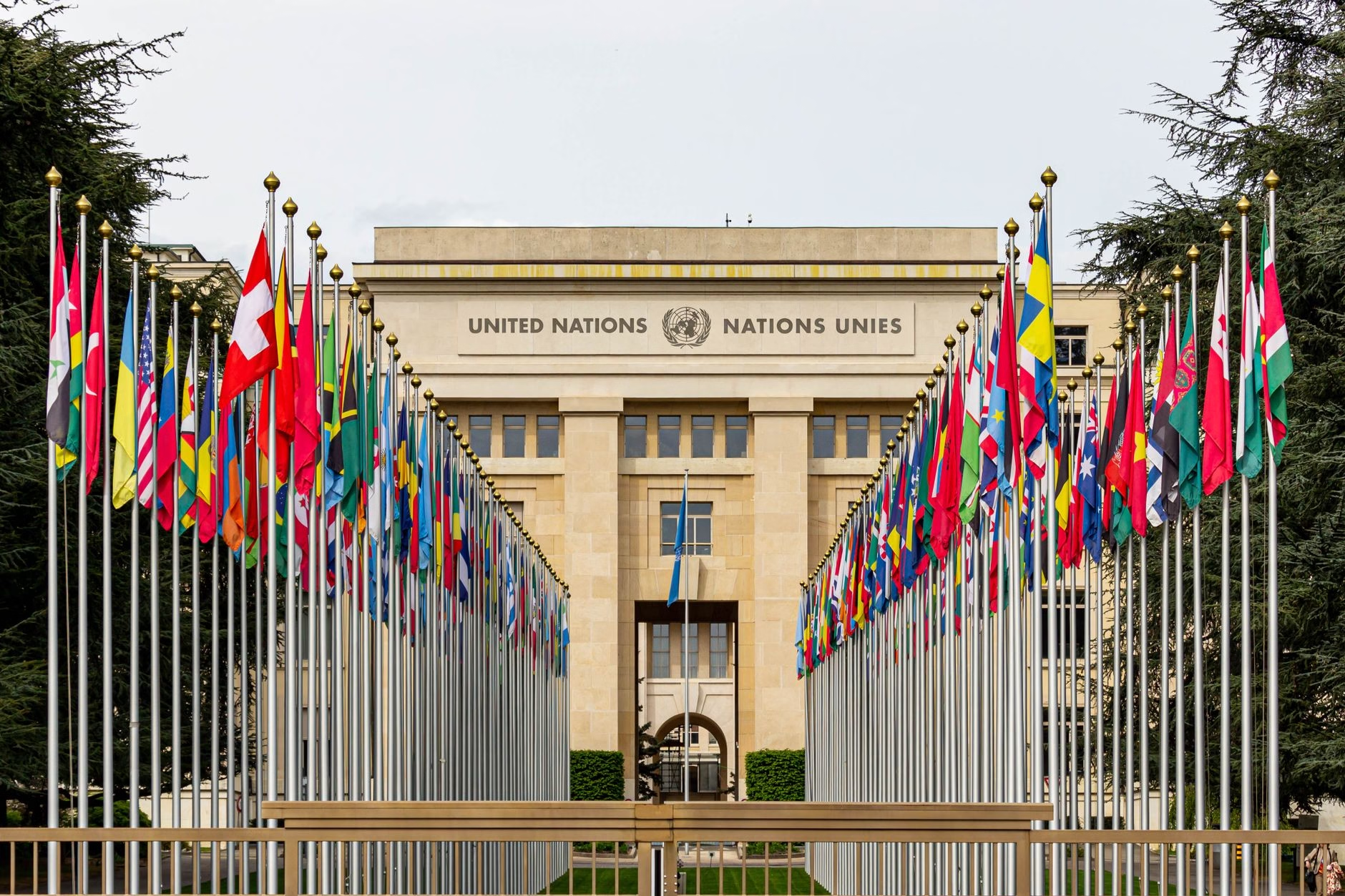
Headquartered in Geneva, the Office of the High Commissioner for Human Rights (OHCHR) functions as the principal UN entity dedicated to protecting universal human rights standards. The position requires independent oversight, investigation of alleged state abuses, and direct advocacy for victims worldwide.
Leadership extensions for the High Commissioner position traditionally pass through the UN General Assembly via consensus approval. The emergence of explicit opposition to Türk’s second term reflects a growing rift between sovereign member states and international oversight bodies.
Diplomatic Rifts and Allegations of Bias
Opposition to Türk’s re-appointment comes from multiple geopolitical blocs raising contrasting grievances regarding his performance. Diplomats familiar with the non-public consultations report that several nations accuse the OHCHR of selective scrutiny and political overreach.
Critics among developing nations and non-aligned blocs argue that global human rights mechanisms disproportionately target states in the Global South while under-scrutinizing Western powers. These governments contend that the High Commissioner’s office should focus more on economic and social rights rather than civil and political interventions.
Simultaneously, prominent human rights organizations have scrutinized Türk from the opposite direction, urging him to deploy stronger rhetoric against major global powers. Advocacy groups have called for more assertive action regarding human rights conditions in China, Russia, and during the ongoing war in Gaza.
Resource Constraints and Systemic Obstacles
The political battle over Türk’s term unfolds against a backdrop of severe structural and financial challenges for the UN’s rights architecture. Official UN budgetary reports indicate that the OHCHR receives approximately 4.3% of the total UN regular budget, despite human rights being classified as one of the organization’s three primary pillars.
“The UN High Commissioner for Human Rights carries one of the most politically exposed mandates in international diplomacy,” stated Dr. Aris Thorne, a senior fellow at the Center for International Governance Studies. “The office is tasked with holding sovereign governments accountable, yet it depends entirely on those same governments for access, cooperation, and funding.”
Human rights defenders warn that undermining the High Commissioner’s authority during a mandate vote weakens the entire system of international accountability. Analysts note that state pushback often intensifies when UN rapporteurs produce detailed findings on state-sanctioned violence or political suppression.
Stakes for Multilateral Governance
The upcoming vote serves as a crucial test for UN multilateralism and the future independence of human rights monitoring. A heavily contested vote or a high number of abstentions would signal diminishing international consensus for UN-led rights enforcement.
A weakened mandate could hinder the OHCHR’s capacity to deploy investigative missions, establish fact-finding bodies, and provide technical assistance to vulnerable populations. Furthermore, it could embolden non-compliant regimes to restrict access to UN investigators and civil society groups operating on the ground.
What to Watch Next
All eyes turn to Friday’s General Assembly session, where voting patterns will reveal the exact composition and size of the opposition movement. Analysts will evaluate vote tallies across regional groupings, particularly key coalitions such as the Non-Aligned Movement, the European Union, and the African Group.
Following the vote, observers will monitor how Türk addresses state concerns in his opening address to the UN Human Rights Council in Geneva next season. The strategic adjustments made by the High Commissioner’s office in response to this diplomatic challenge will dictate the trajectory of global human rights advocacy over the next four years.
















Leave a Reply