


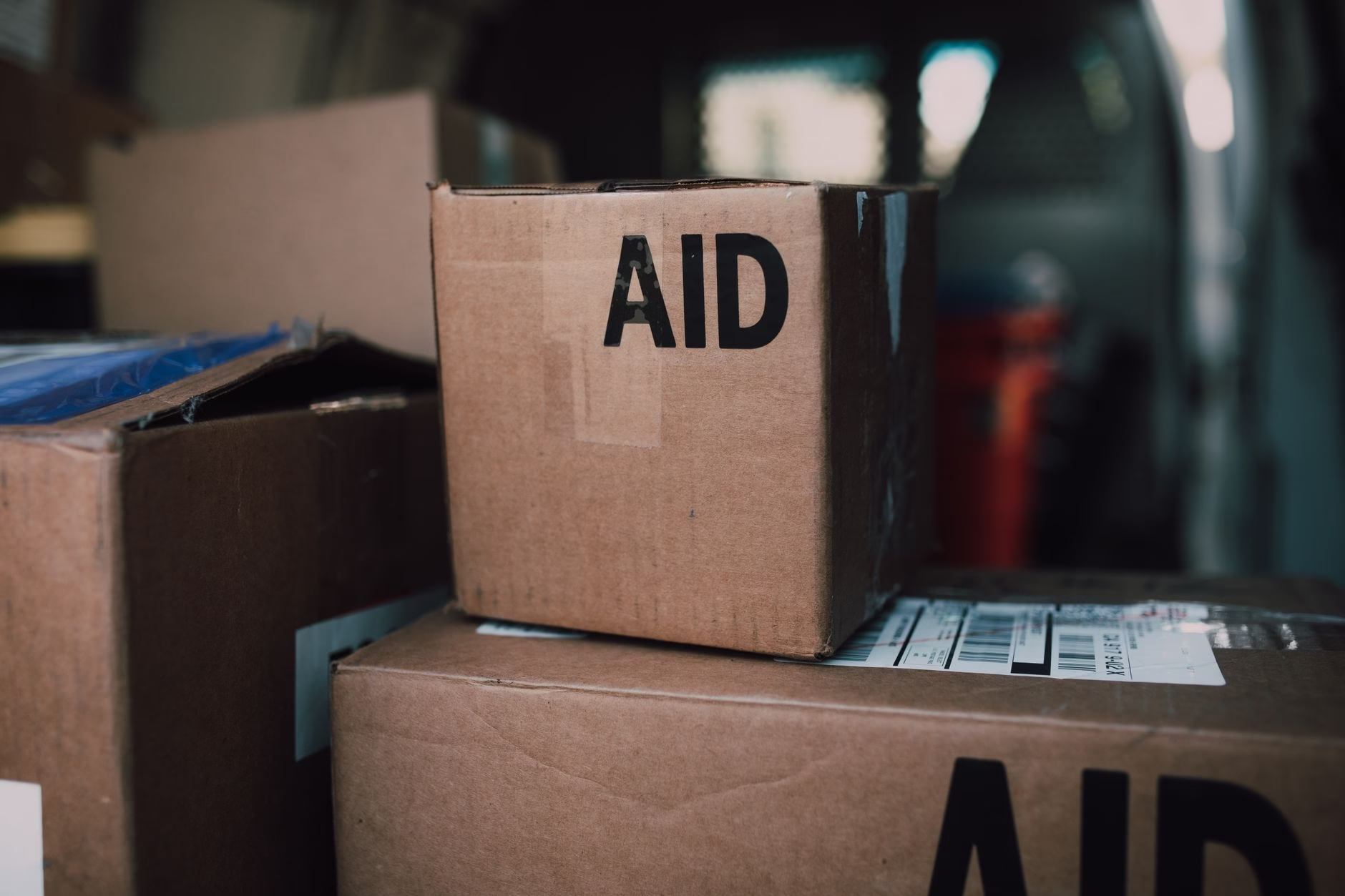
The United Nations is actively assessing the feasibility of relocating its humanitarian supply operations underground in Ukraine. This strategic shift comes in response to escalating security risks and recurring missile strikes that have severely damaged essential aid warehouses across the country. Ensuring the safety of relief workers and preserving critical supplies for vulnerable populations have become top operational priorities for international organizations.
Escalating Threats to Humanitarian Infrastructure
Recent military escalations have directly targeted logistics hubs and storage facilities used by international relief agencies. When essential provisions such as food, medical kits, and winter shelter materials are destroyed, the humanitarian impact on civilians is immediate and profound. The sheer frequency of these incidents has forced leadership to rethink traditional above-ground storage models entirely.
Protecting Critical Supplies and Personnel
Moving logistical operations beneath the surface offers a viable method to shield vital relief materials from ongoing aerial bombardments. Subterranean storage spaces provide structural reinforcement against explosive impacts, drastically reducing the risk of catastrophic supply losses. Furthermore, these secure locations help safeguard humanitarian personnel who manage the daily distribution networks under exceptionally dangerous conditions.
Logistical Complexities of Subterranean Operations
While shifting operations underground significantly enhances physical security, it introduces formidable logistical challenges. Subsurface facilities often require extensive retrofitting to accommodate heavy machinery, climate-controlled environments for perishable goods, and secure transport access points. Humanitarian planners must carefully balance the high costs and time constraints of these engineering projects against the urgent need for continuous aid delivery.
Maintaining the Flow of Aid Across Regions
Despite the architectural and logistical hurdles, maintaining an uninterrupted lifeline to affected communities remains paramount. International agencies are coordinating closely with local authorities to identify secure subterranean sites that can function as central distribution nodes. As the security landscape continues to evolve, these adaptive measures will be crucial in sustaining humanitarian relief efforts throughout the ongoing conflict.




















Leave a Reply