


The Ukrainian leadership has firmly rejected the notion of holding national elections during the ongoing conflict, a decision articulated by President Volodymyr Zelenskyy. This stance comes in response to public discussions, including a call from a former defense official, regarding the possibility of conducting polls amidst martial law. The primary justification for this position centers on the profound risk such an undertaking would pose to the nation’s fragile unity and stability at a critical juncture.
The Context of Prolonged Conflict
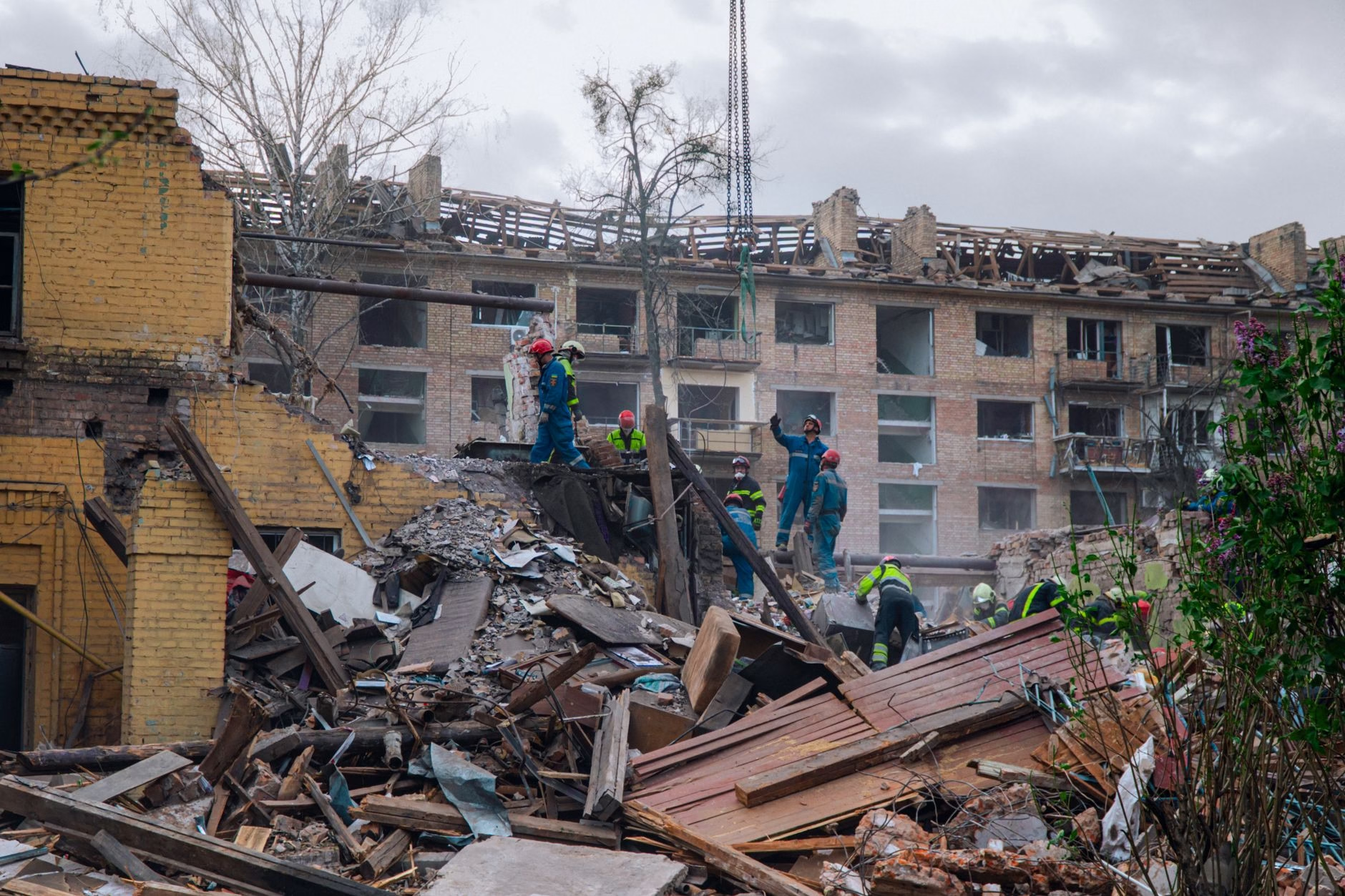
Ukraine has been engaged in a full-scale defensive war for an extended period, a situation that has profoundly reshaped every aspect of national life. The imposition of martial law across the country reflects the extraordinary circumstances, granting the government expanded powers while suspending certain civil liberties, including the regular electoral cycle. This environment of constant threat and national mobilization forms the backdrop against which any discussion of political processes must be evaluated. The nation’s resources are overwhelmingly directed towards defense, and the population remains under significant duress, facing daily challenges to security and infrastructure.
Calls for Electoral Processes
Despite the prevailing conditions, the idea of holding elections has periodically surfaced within public discourse. Notably, a former high-ranking defense official publicly advocated for the possibility of conducting elections even while hostilities persist. Proponents of such a move might argue for the importance of democratic continuity and the regular renewal of political mandates, even in times of crisis. However, these calls have been met with a clear and consistent rebuttal from the presidential office, emphasizing the unique challenges and dangers inherent in the current situation regarding Ukraine wartime elections.
President Zelenskyy’s Rationale for Rejection
President Zelenskyy’s rejection of Ukraine wartime elections is rooted in a comprehensive assessment of the potential consequences. His central argument highlights the “huge risk” of national fragmentation. In a nation striving for cohesion against an external aggressor, any process perceived as divisive could undermine the collective war effort. The logistical complexities alone present an insurmountable hurdle. Millions of Ukrainians have been displaced internally or have sought refuge abroad, making voter registration and participation a monumental, if not impossible, task. Ensuring the security of polling stations and electoral personnel across a war-torn country, particularly in front-line regions or occupied territories, is another critical concern.
Challenges to Fair and Free Elections
Beyond the immediate security and logistical issues, the integrity of a wartime election would be severely compromised. The principles of free and fair elections—including equal access to information, freedom of assembly, and the ability for candidates to campaign unhindered—are fundamentally incompatible with martial law and active conflict. Media censorship, restrictions on movement, and the pervasive psychological impact of war would inevitably distort the electoral process, potentially leading to results that lack legitimacy both domestically and internationally. Such an outcome could further deepen internal divisions rather than resolve them, thereby jeopardizing national unity.
Constitutional and Legal Framework
Under Ukraine’s current legal framework, the constitution explicitly prohibits the conduct of elections during a state of martial law. This provision is designed precisely to prevent the nation from engaging in potentially destabilizing political contests when its very existence is under threat. Adhering to this constitutional mandate is not merely a procedural formality but a safeguard for national stability. Any attempt to circumvent this provision would require significant legal amendments, which themselves could become a source of political contention during a period requiring maximum unity, further complicating the prospect of Ukraine wartime elections.
Prioritizing National Unity and Stability
The overarching objective of the Ukrainian government during this period is to maintain national unity and ensure the stability necessary to resist aggression. Political competition, while a cornerstone of democracy in peacetime, could become a dangerous distraction and a source of internal strife during war. The focus remains on consolidating efforts, resources, and public will towards achieving victory and safeguarding sovereignty. Introducing the complexities and potential divisiveness of an election campaign would divert critical attention and resources from these paramount goals, making Ukraine wartime elections an untenable option.
International Perspectives and Support
The international community generally supports Ukraine’s efforts to defend its sovereignty and maintain stability. While democratic principles are highly valued, there is a broad understanding that extraordinary circumstances necessitate extraordinary measures. The focus of international partners remains on providing military, financial, and humanitarian aid to help Ukraine withstand aggression. Prematurely pushing for elections that could destabilize the country might be viewed as counterproductive to the broader objective of supporting Ukraine’s resilience.
Future of Democratic Processes
The decision to postpone elections is not a rejection of democratic principles but rather a pragmatic recognition of the current realities. The commitment to democratic governance remains a fundamental aspiration for Ukraine. Once conditions permit, and martial law is lifted, the nation will undoubtedly return to its regular electoral cycle, with renewed emphasis on strengthening its democratic institutions. The current priority is survival and the restoration of territorial integrity, paving the way for a truly free and fair democratic process in a secure and peaceful environment.
Conclusion
President Zelenskyy’s firm rejection of Ukraine wartime elections underscores a strategic prioritization of national unity and stability over immediate political processes. Faced with an existential threat, the Ukrainian leadership has determined that holding elections would introduce unacceptable risks of division and logistical chaos, undermining the collective defense effort. This decision aligns with constitutional provisions and reflects a pragmatic approach to governance during an unprecedented national crisis, with the ultimate goal of preserving Ukraine’s sovereignty and ensuring its future as a democratic state.















Leave a Reply