


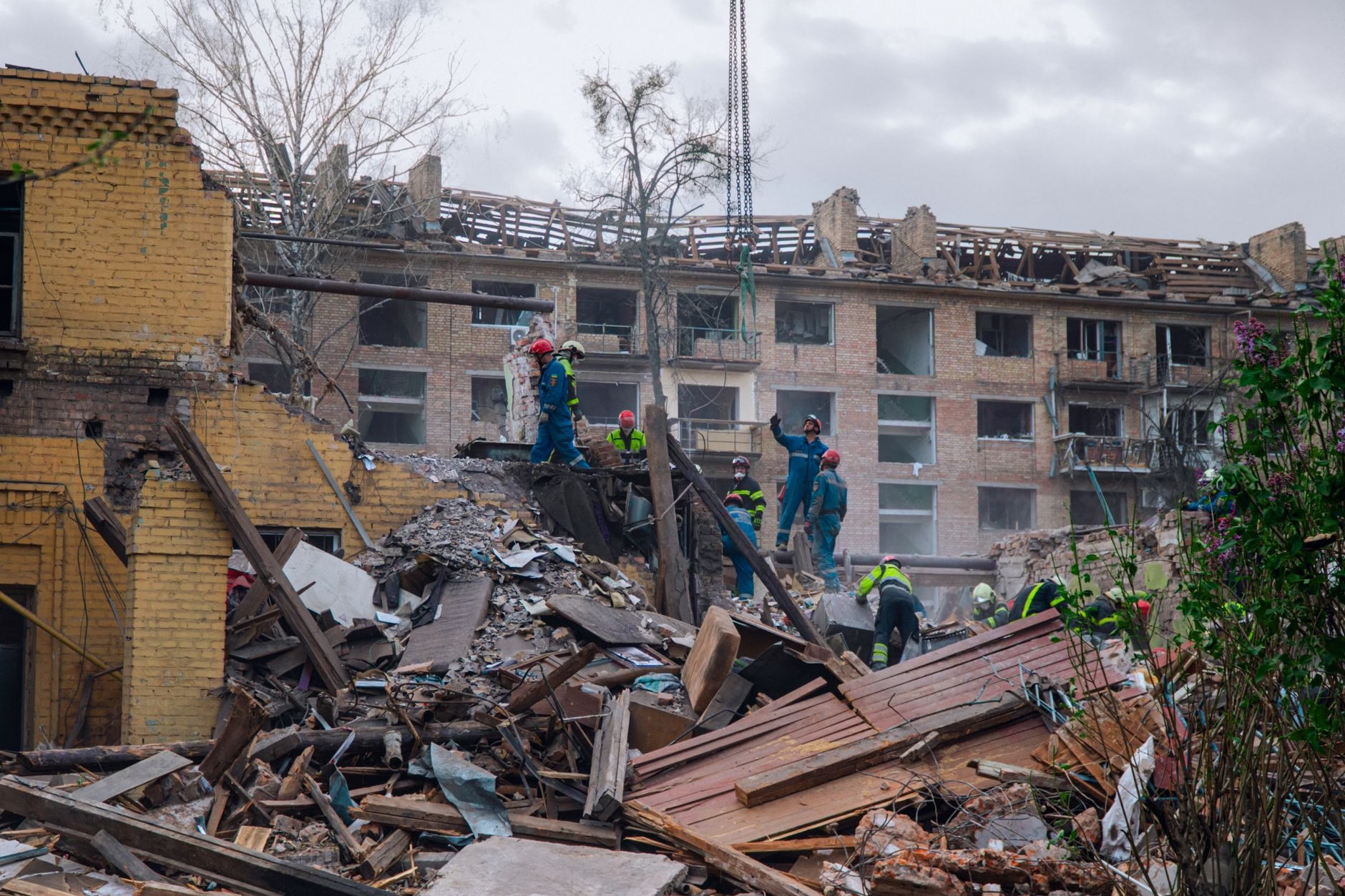
The ongoing conflict in Ukraine has presented numerous unprecedented challenges, not least among them the delicate balance between national security and the preservation of democratic institutions. A significant recent development in this complex landscape is the call from Mykhailo Fedorov, Ukraine’s former Defense Minister, for the nation to hold elections even as hostilities continue. This proposition reignites a crucial debate about the viability and necessity of democratic processes during a period of intense national struggle.
Fedorov’s argument centers on the imperative of restoring Ukraine’s democratic process. He emphasizes that despite the exigencies of war, the foundational principles of democracy, including accountability and the regular renewal of mandates through elections, should not be indefinitely suspended. This perspective suggests that upholding democratic norms, even under duress, is vital for the nation’s long-term health and its commitment to the values it is fighting to defend.
Understanding the Constitutional Dilemma
Under normal circumstances, Ukraine’s constitution mandates regular elections for its presidency and parliament. However, the declaration of martial law, a necessary measure implemented following the full-scale invasion, typically suspends such electoral activities. This legal framework is designed to ensure national unity and focus all resources on defense without the distractions or divisions that political campaigns can entail. The current situation thus presents a profound constitutional and practical dilemma: how to reconcile the legal suspension of elections with the desire to maintain democratic vitality.
Arguments for Democratic Renewal
Proponents of holding elections during wartime often highlight several key benefits. A renewed electoral mandate could bolster the legitimacy of the government, both domestically and internationally. It could provide a fresh injection of public trust and demonstrate the resilience of Ukraine’s democratic spirit in the face of aggression. Furthermore, elections offer a mechanism for accountability, allowing citizens to evaluate the performance of their leaders and make informed choices about the nation’s direction. This democratic exercise could be seen as a powerful statement against authoritarianism, reinforcing Ukraine’s identity as a free and democratic state.
Significant Obstacles to Wartime Voting
Despite the principled arguments for holding elections, the practical challenges are immense and multifaceted. Security is paramount; ensuring the safety of voters, polling staff, and electoral infrastructure across a vast country under constant threat of attack would be an extraordinary undertaking. The logistics of organizing a nationwide vote are staggering, particularly in regions close to the front lines or those still experiencing regular shelling.
Moreover, the displacement of millions of Ukrainians, both internally and as refugees in other countries, presents a formidable hurdle. Establishing mechanisms for these citizens to cast their ballots, while ensuring fairness and accessibility, would require unprecedented coordination. Voter registration, the integrity of electoral rolls, and the prevention of fraud become exponentially more complicated in a wartime environment. The financial cost of conducting such an election would also be substantial, diverting resources that are critically needed for the war effort and humanitarian aid.
Maintaining Fairness and Transparency
Beyond the logistical difficulties, ensuring the fairness and transparency of an election during conflict is crucial. The presence of foreign observers, typically a hallmark of democratic elections, might be constrained by security concerns. The ability of political parties to campaign freely, disseminate information, and engage with voters without intimidation or censorship would be difficult to guarantee. Furthermore, the psychological toll of war on the populace could influence voting patterns in unpredictable ways, potentially leading to outcomes that do not fully reflect long-term national interests.
The International Perspective and National Unity
The international community’s view on Ukraine holding wartime elections would also be a significant factor. While allies generally champion democratic principles, they also recognize the unique circumstances of a nation fighting for its survival. A premature or poorly executed election could inadvertently create divisions or instability, potentially undermining the war effort and the unified front that has been critical to Ukraine’s resistance. Conversely, a successful and widely accepted election could strengthen Ukraine’s international standing and reinforce its commitment to democratic values.
Navigating a Path Forward
The call for Ukraine wartime elections underscores a profound dilemma that many nations have faced during periods of intense conflict. There is no easy answer, and any decision would require careful deliberation, broad consensus among political stakeholders, and a comprehensive understanding of both the potential benefits and the inherent risks. Exploring alternative forms of democratic engagement, or considering a phased approach to electoral restoration once security conditions permit, might be part of the ongoing discussion.
Ultimately, the debate initiated by Mykhailo Fedorov highlights Ukraine’s unwavering commitment to its democratic future, even in the most challenging of times. The decision regarding the timing and feasibility of elections will have far-reaching implications for the nation’s governance, its unity, and its place on the global stage, reflecting the complex interplay between wartime necessity and democratic ideals.













Leave a Reply